Lesa Nichols on Lessons from Hajime Oba, TSSC, and Being a Production Manager at Toyota
Lesa Nichols worked closely with Hajime Oba at Toyota's Supplier Support Center (TSSC) and later became a production manager at Toyota's powertrain plant in Georgetown, Kentucky. In this episode, she shares lessons from Mr. Oba on overburden, learning from mistakes, and what he meant when he talked about “the soul” of a company.
Scroll down for video, how to subscribe, and more
My guest for Episode #399 of the Lean Blog Interviews podcast is Lesa Nichols, a former Toyota and TSSC employer who now works with organizations through her company, Lesa Nichols Consulting.
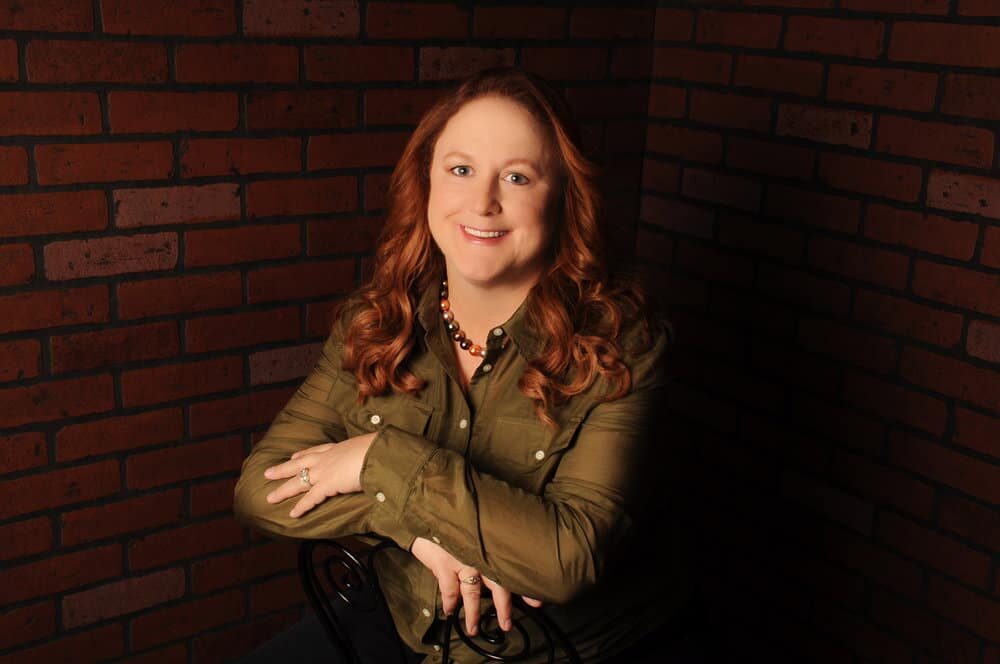
Today, Lesa shares reflections on working closely with the late Hajime Oba. This is the third podcast in a mini series, following my conversations with Steve Spear and with Hide Oba.
In the episode, we talk about topics including:
- Lisa's non-traditional path to TPS: From public relations to the shop floor
- Working with plant president (and future company chairman) Fujio Cho
- Choosing between being a “technical scientist” or a “social scientist” of TPS
- Meeting Mr. Oba and working with TSSC
- Helping find American expertise to learn from
- Becoming a powertrain production manager
- Key lessons from working with Mr. Oba:
- “Managers must fight to have floor time”
- “Safety is an assumed thing?” — what does this mean?
- Don't look for waste, look for overburden (both physical and mental)
- Why is openly admitting mistakes such an important thing at Toyota
- Why Toyota's “soul is around manufacturing”
Lesa was also a contributor of a chapter to the anthology book Practicing Lean. You can read her chapter here, for free.
The podcast is sponsored by Stiles Associates, now in their 30th year of business. They are the go-to Lean recruiting firm serving the manufacturing, private equity and healthcare industries. Learn more.
You can listen to the audio or watch the video, below. I hope you enjoy the discussion.

Video of the Episode:
Thanks for listening or watching!
This podcast is part of the Lean Communicators network… check it out!

Lesa Nichols on Lessons from Hajime Oba, TSSC, and Being a Production Manager at Toyota
Lean Blog Interviews: Episode 399 with Lesa Nichols
Mark Graban: Welcome to the podcast. This is episode 399 for February 3rd, 2021. For show notes, links and more, you can go to leanblog.org/399.
Well, hi. Welcome to the podcast. I'm Mark Graban. We're joined today by Lesa Nichols. Lesa, how are you?
Lesa Nichols: I'm doing great. Thanks, Mark.
Mark Graban: It's really good to have you here. In terms of background on Lesa, we're gonna talk about her experience at Toyota and I think we'll hear some of her career arc before Toyota and what she's been doing after Toyota. Her website is LesaNicholsConsulting.com — that's Lesa with an E, L-E-S-A, NicholsConsulting.com. We'll put a link to that in the show notes.
Lesa also wrote a chapter in our anthology book, Practicing Lean. You can read that chapter for free on Lesa's website, and we'll put a link to that in the show notes as well. So, Lesa, thank you for doing that chapter.
Lesa Nichols: That was fun.
Mark Graban: And you've got a book that you're working on right now. I'm gonna put you on the spot and ask about that.
Lesa Nichols: Well, it's not — yeah, I'm trying to — this all relates back to Mr. Oba, the book.
Mark Graban: Mm-hmm.
Lesa Nichols: So maybe if we could go through and share some of the stories about Mr. Oba, then I can tell you what I'm trying to do with it.
Remembering Hajime Oba
Mark Graban: Okay, sure. Today's episode with Lesa is in part an opportunity to reflect on Hajime Oba, who passed away in late 2020. We've done a couple other episodes talking about him and his work and the lessons from him. So we'll get into that a little bit more. Lesa, thank you for agreeing to talk about that and share about that.
But I think it would be interesting for the audience to hear about your career and what led up to you going to work at Toyota. It was a little bit of a non-traditional path compared to, let's say, the stereotypical industrial engineering path that somebody like me might have taken. Right?
From Political Science to Speech Writing for Fujio Cho
Lesa Nichols: Absolutely. Very different path. I started in the political science universe. I was curious since birth, I think. The political science route in college was very intriguing — you learn about history, put things in context. On the side of that, I was also interested in criminal justice.
I got an opportunity to go to Washington to work for a US Senator. I didn't have the luxury of being very specific about what I was gonna be assisting with, but I was gonna be working on legislative research and summarizing different positions and backgrounds and proposing positions for the senator. When I got involved in that, I realized I'm so interested in everything. It's not just criminal justice — it's financial systems, it's all of this.
I wound up talking to his chief of staff before I was gonna come back from Washington and said, “Look, I'm all over the place here. I'm just fascinated with it all.” She said, “Well, if that's the case, I would recommend communications for you.” I was a little disappointed because I thought, oh, that's so general. But I respected this person quite a lot. So when I came back and started college again and took a couple courses in communications, from then on I was like — the political science aspect, if you can't communicate about it… And then the organizational communication factors were just fascinating when I reflected back on working in the Senate. So I studied communication and got a joint political science and communication degree.
Then things started to really shift into an interesting universe. I went to intern for a public relations firm in Kentucky that had been asked to help with community and labor relations for the building of the first Toyota wholly-owned factory in the United States — Georgetown, Kentucky.
They needed a young, on-the-ground person who would do anything and everything to figure out the construction, how to communicate, and how to connect with the community. That was fascinating. I loved watching the facilities emerge.
Then Toyota said, we're gonna come to Kentucky, but we're not gonna have our staff yet. We're gonna have a trailer and that trailer's just gonna have a few people in it, but we do need somebody to help handle public relations. I was nominated for that, and that was just terrific because the people in that trailer were the ones that were going to be the initial runners of the operations. From there, I just followed my curiosity into trying to understand anything and everything about Toyota. Not so much about the culture, but about the technical infrastructure that I saw going up around me. And then listening — from the construction firm's viewpoint, but then starting to listen to the Toyota people talk about how they were going to utilize this space.
Accidentally — people say it's not, but I think it is — I wound up working with Mr. Cho, who was the president of that facility. He needed to make speeches out in the community. His English was not wonderful, but he had amazing depth and experience developing TPS in Japan working with Mr. Ohno. As did everybody, I felt an instant connection with him and I thought, if I can write anything for this man, I'm gonna try my best to do it.
So I became a speech writer and did that for about four years. I would work with him on what is it you want to communicate, and then I'd go to the shop floor to see it in real life so I could help explain what he wanted to communicate.
Through that, he asked me — I'd been out to look at the new die construction capability in stamping. He wanted to talk about that to an audience. So I went to see it and came back telling him all about it, so excited. And he asked me, “Lesa, what is it that you ultimately want to do?” I was like, “I don't know.” He said, “Well, you love TPS, but are you gonna become a technical scientist of TPS or a social scientist?”
I said, “I don't know the difference.” He explained that the technical side is what we can feel and touch and look at, but the social science is more about how we're structuring to manage the people and how we as individuals are behaving in the system.
I said I think I want to be a social scientist because I would be more equipped for that. That's where I'm curious. He said, “Good, because you're starting to sound like a technical scientist, so let's just be clear about where you want to be.”
The Creation of TSSC and Working Under Mr. Oba
Lesa Nichols: Then I started working on some big issues with Toyota as they were growing in North America and becoming a full partner in the auto industry. There were a lot of issues around domestic content and not having happy relations with the supply base that was here and was being asked to supply Toyota in a way that seemed different than the traditional automotive industry.
Toyota realized they were getting all this pressure from the United States to help them understand — are we doing business in the right way? Why is it so different? So Dr. Toyota and others decided to create Toyota Supplier Support Center, or TSSC. Its mission was — I saw it as a technology transfer, a corporate contribution that would not be just writing a check. It would be setting up an organization that could help the supply base and help US industry understand, take the mystery out of what TPS is by providing resources who would be on the ground in companies' environments and help them implement it in their stamping or casting or whatever kind of processing beyond assembly that they had.
Toyota creates that. Mr. Oba was assigned. Mr. Cho was somebody that Mr. Oba really looked up to. So Mr. Oba was completely excited to be connected to this project, and he was named as the general manager to get it up and running. Mr. Cho became the chairman of TSSC. We had a board of all the plants in North America, all their Japanese and American vice president and president level leaders became the founding advisory board. Mr. Oba was at the helm.
I was hired into one of three groups he had designed. It was called Toyota Supplier Support Center, but it was based off the Operations Management Consulting Division in Japan. Mr. Oba always took a unique tack on things. He said, okay, we're gonna have this technical group that will go out and help companies implement the production system. But I'm gonna create this other group called Research and Training — that's where I want Lesa and that team to come together. And then there was a third group for administration and planning.
The Research and Training group's responsibility was to connect with US industry. Mr. Oba's thinking was, who can we learn from? So we said, okay, there's industry leaders, government, we do want to hook up with some media people. And then the universities were a particular emphasis. Mr. Oba's thinking was that we only had so much expertise and we're coming into America — we need to understand from people who are experts in America, and the universities would give us some reflection of how we were doing.
I ran that group with him for about six years.
Meeting Mr. Oba — On Crutches
Lesa Nichols: Mr. Oba actually was not involved in interviewing me, so he hadn't met me. He just heard about me. One week before I started this job at TSSC, I broke my foot — broke it pretty impressively. So I came into the office for the first day on crutches.
I remember Mr. Oba came over to my desk, said hello, how are you doing? Very general. He goes away. And he watches me. I felt like that whole day and for a few days that week, because we had an open office. I'm thinking, what am I supposed to be doing other than learning this new job?
Towards the end of the week, he came over and said, “How about your foot?” I said, well, crutches. “How long will this be?” Maybe four to six weeks. He said, “Hmm, you can't go to see anything for four to six weeks.”
I said, well, I think “no” is not the right answer. Yes, sir. The question is, how am I going to do that? So he said, “Well, you're interested to go?” I said yes. He said, I'm gonna send you with one of our guys that works hands-on on the floor — I'm gonna send you to this place in New Jersey. And I literally went on crutches with this guy in the middle of a snow and ice storm. It was just crazy.
But I think that was probably the first test that I passed with him. I didn't let those crutches stop me.
Becoming a Production Manager at Toyota Powertrain
Lesa Nichols: After six years at TSSC, I asked for an opportunity to understand the reality behind these concepts. It seemed so difficult to implement. So I became a production manager for Toyota, and then after that went back to the Toyota headquarters and helped to set up the Operations and Management Development Division.
Mark Graban: I'm really intrigued about that transition to go into a production manager role. Can you help set context for people about what level that was within Toyota and what department?
Lesa Nichols: At the time that I did that, Toyota had grown up quite a bit in the US. We had multiple manufacturing operations and had already started to expand and put in powertrain organizations as well. Which looking back on it now, I really see as almost like being a supplier to Toyota.
When I asked Mr. Oba about the chance to rotate or have a position inside a Toyota plant, he said, “Well, you're at a manager level and that's really not heard of. You've gotta grow up from the production floor. You're gonna have a really hard time. I don't think they would accept you. But let me think about it.”
He did some investigation and came back and said, “What kind of place do you want to be in?” I said, well, it'd be good if I could go to assembly, because I'm not an engineer and it would maybe be easier for me to manage. He smiled at me and said, “Yeah, it also has a lot of people and you like people, right?” Right. “Okay, I think powertrain is better for you.”
To me — I was gasping. Could you find a more equipment-intensive environment for me? He said, “I think that's gonna be the best place because you are a supplier to Toyota. And you're gonna learn that the real aspects of manufacturing aren't about people or machines. It's about people and machines.”
Mark Graban: Powertrain, for listeners who don't know the auto industry — I started my career at General Motors Powertrain and I was in an engine plant. Powertrain is engines and transmissions.
Lesa Nichols: In the facility that I was in, there was a four-cylinder engine and a V6 engine, and then what we called axle — all the transmission components. In each of those shops, we had machining that took the rough material and basically machined it and polished it and got it to finished shape to send to the internal assembly lines.
In my case, we made steering arm knuckles and shafts — a lot of the wheel components. Those were machined, and then we would move those just in time to our assembly lines. The assembly lines at that time had a takt time — we needed to meet a pace to supply the vehicle plants. For Toyota, it was 27 seconds.
I had no idea what just in time really was until I went there. Because literally if you're making the whole axle component — the steering and brake mechanisms, the spring and strut tower — we would make those and put them in pallets of maybe 40 and ship them over literally just in time. If anything happened on one of our assembly lines, if we had a machine down or some kind of material trouble, if it was down for more than 15 minutes, parts of the Toyota assembly line would come to a halt.
Unfortunately I had a bit of that experience. I felt like the first year that's all I did was learn how to manage major breakdowns. That was the real world of just in time. I didn't really know that's what Mr. Oba was setting me up for.
It turned out that the guy who had followed in Mr. Cho's footsteps had worked under Mr. Ohno and was the manager of the same shop that I was in — in Japan. He was responsible for transforming it to TPS under Mr. Ohno. He became an amazing mentor to me because there was no trouble that we had in my area that he didn't come to see and have some really unique, almost comradery perspective on it.
Mark Graban: Because he had kind of seen it before, probably.
Lesa Nichols: Oh yeah, he'd seen it before.
The Screw Gun Lesson: Coaching on the Floor
Mark Graban: In that coaching style of mentoring you, somebody who has seen it before — the approach at Toyota would be not to come in and tell you the answer. “Oh, Lesa, I've seen this before. Here's what you need to do.” It's a different approach. Right?
Lesa Nichols: He was great at asking questions. These weren't Socratic method kinds of questions — it wasn't like he was arrogant and had the exact answer I needed to discover.
There was one time we were standing on the line, and I can only imagine what he was seeing that I wasn't. He said, “So this is the type of screw gun you want on this assembly line.” I'm looking at it thinking, well, these guns have been here a lot longer than I have and I don't really know the pros and cons of that. He said, “I don't really like those guns so much.”
I'm thinking, well, if you don't like them, why are they here? I said, “Why don't you like them?” He said, well, if you notice — and we went over to the team member — the team member can use the forward motion of the screw gun, but there's this button too where they can back it out.
I was like, oh, wow. That sounds like that wouldn't be exactly great. He said, “Why not?” So we're standing there and I said, well, if you can back out the screw, then you're covering up a problem and we're gonna wind up with trouble that isn't gonna show up on an Andon board. He said, “Exactly.”
But then it was obviously my problem. And he says to me, “How do you think something like this happened? How could we have these type of guns that I don't like here and that you don't know anything about? I know you just got here, but…” I said, well, I'm gonna learn all about the screw guns all over this place, I can tell you. He said, “Well, I want to know what you learned, and please come back to me so that we can improve.”
We wound up doing a big yokoten — looking across the whole powertrain facility to see how did these different types of guns get in, and what's the best fit for a system that's supposed to believe in stopping exactly when we have trouble.
GM vs. Toyota: A Different Philosophy of Inventory
Mark Graban: One quick other tidbit, comparing the General Motors environment in the mid-nineties to what you were experiencing between powertrain and the assembly plant — their comfort level would've been a couple of days' worth of inventory.
Lesa Nichols: Wow. Yep.
Mark Graban: That was the goal. It was not always held to, hence some of the problems that led to us getting a new plant manager. It's this different mindset of buffering to protect yourself from problems. Sure, on some level they would've rather avoided the problems, but I think the GM leadership style of pressuring people and yelling and blaming and putting quantity over quality ironically ended up undercutting the ability to deliver. It was just a completely different philosophy and it was not doing well compared to our benchmark plants.
Lesa Nichols: Yeah. I could talk about the whole NUMMI thing for a while and how we translated the knowledge. It's supposed to be a learning lab and then the people who learn there come to other facilities, back to GM facilities. But that's a pretty big order for people because you've only been living in the system that Toyota helped to set up. It's not the same as coming back to your home plant and implementing it from scratch. Big challenge for those people.
Mark Graban: My plant manager, Larry Spiegel, had been one of those original NUMMI General Motors people who was really successful. He was at a transmission plant and had done a successful turnaround, so they brought him into a slightly bigger job, the Livonia Engine Plant. For listeners who are interested in more of the NUMMI story, back in 2016 I did a two-part interview with one of those original GM NUMMI people, Steve Berra.
Lesa Nichols: I know his name.
Mark Graban: He was reflecting on that experience. Unlike Larry, who stuck with GM and retired and then taught at the University of Michigan, Steve said — I'm paraphrasing — “I can see no reasonable path forward of really transforming anything within General Motors. So I'm gonna leave.” He basically worked as a consultant because the one story was that some of the original NUMMI people wanted to band together and go as a team to a facility back in General Motors and turn it around. General Motors said, no, we're gonna throw you one here, one there. A lot of them looked and said, okay, I'm gonna be a drop of water in the proverbial ocean. That's not gonna work.
Lesa Nichols: I personally believe — I just felt really bad for the people that I worked with when we supported NUMMI and helped them with kaizen. I would interact a lot with plant managers who were gonna be going back to a GM facility. And I thought, wow, this is so hard for them to come here and learn this system, because they weren't exactly all on board from day one. They just wanted to say, this is my current thinking, I see this and it looks different and I'm not sure I accept this yet. Then over time they did or didn't accept it, but then they're tasked with going back and being that proverbial drop in the ocean. It's just too much to expect, I think.
Managers Must Fight to Have Floor Time
Mark Graban: I'm gonna ask a couple other questions — lessons that you learned from Mr. Oba. From some notes you shared with me in advance, number one on the list: managers must fight to have floor time. What creates that challenge? Why do managers really need to prioritize getting out to the floor?
Lesa Nichols: I'll say in Toyota's case, at least in Georgetown when I was a production manager, the pressure I felt was this: I knew conceptually that just in time balances quality, cost, and lead time. Safety is an assumed thing. But when I moved into that position, I inherited a schedule from the previous production manager who had grown up from the floor. That schedule was meeting after meeting after meeting — review your safety results, deep problem investigation. You go from a safety meeting to a quality meeting to a productivity meeting.
The plant manager came to me at one point and said, “Lesa, why aren't you coming to the productivity meeting?” I said, I'm focusing on safety and quality. I can't focus on everything at one time. He said, “Right, but the organization has to. So either it's you or it's somebody you designate.”
I wound up figuring out how to distribute the people who supported my role. Then I found I got kind of good at that, so I freed my time up to go to the safety and quality meetings and skip the others. That gave me floor time.
But what I realized is my peers that were managers were still in those meetings. They were in deep problem solving, but if you're not on the floor, how in the world are you supposed to know enough to represent the analysis and the countermeasures?
When Gary Convis came in, he listened to the managers, had forums with us, listened to what the barriers were for us to be doing some of the things we'd expect of Toyota leaders. And it was all these meetings. He freed it up. It was really wonderful. He said to every manager and above: between one and two, it's a meeting-free zone. Nobody can schedule any meetings. That means whenever any of you see each other, or I see you, between those hours, you should be on the floor.
That's what I mean by having to fight to get there.
Safety as a Prerequisite — Not an Afterthought
Mark Graban: Going back to what you were talking about being a speech writer, you had that curiosity and that drive to go out to the floor even then.
Lesa Nichols: That's the other thing — every manager in there besides me had grown up from the floor. Not that they aren't curious people, but they've pretty much seen it all before. When they were speaking to a countermeasure, they knew what they were talking about. For me, I'm not gonna explain something without knowing what we've done and what we're trying to improve. So I maybe fought for floor time more than others did.
Mark Graban: There was a phrase you used — you said “safety is an assumed thing.” But that doesn't mean safety was automatic. Can you elaborate on that idea of safety as assumed?
Lesa Nichols: That was probably one of my biggest learning points. Before I went to the shop floor as a manager, that's what I heard from Mr. Oba and others. We're talking about quality, cost, and lead time for just in time. And people at TSSC would say, well, wait a second, what about safety? Mr. Oba and others would say, no, no. It's assumed that safety is there.
I think what he was saying is it's a prerequisite. Of course it's safe. But when I got into operations, I realized the different levels of safety required. While I was there, Toyota started looking very seriously at ergonomics issues. In Japan, there's an aging workforce, and in the United States we were trying to see how we could make jobs as robust for people as possible.
Toyota in Japan came up with a system to assess whether the processes were green, yellow, or red. That would give you direction for what needs to be improved. It took probably nine months of my personal time focusing on nothing but ergonomics improvements with a team, because our materials were just so fundamentally heavy in machining. When you pick the thing up, it's already heavy.
I learned that safety should be a precondition, but it's not without a lot of effort to maintain and improve.
Mark Graban: Coming back to a communication issue, the mantra that had been brought into General Motors and other automakers was safety, quality, delivery, cost — and safety was articulated. But at Toyota plants, whether it's San Antonio or Japan, people enter walking through the safety arch. There might be a risk if it's not articulated — people hear, “They're not talking about safety. They only talk about quality, cost, and lead time.” That would be a potential disconnect.
Lesa Nichols: That was the thing. I've become what I'd call a hybrid. The TPS strategist, like Mr. Oba, would speak that way — of course it's a prerequisite, we must focus on quality, cost, and lead time. But from an operations side, I don't remember anybody in a management position that didn't start with safety and quality.
What I came away with is that it takes so much energy for people to get the product done safely with the quality that it is. It stunned me how much energy that takes. So that's why I spent my time on safety and quality, because the lead time systems were already in place inside Toyota. I didn't have to worry about that so much other than problem solving. But the safety and quality aspects were fascinating for me, and it stuck with me. When I come into a plant for the first time, I'm always looking first at safety and quality. Because if you're working with people to make sure their processes are safe and they can build quality, it's gonna be productive too.
Overburden, Not Waste: Mr. Oba's Starting Point
Mark Graban: There was alignment when you talk about Toyota wanting to learn from other companies. There was a partnership with Alcoa. Paul O'Neill, who was the CEO in the late eighties and through the nineties — we also lost him in 2020 — already had that strong belief that nobody should be hurt at work, putting safety as a prevailing focus. His view was, if you do all of the things in an organization and in leadership that are required to deliver your goal of perfect safety, then you'll build what he called habitual excellence — and everything else will follow. You can be the best in the world at safety and at the same time aim to be the best in the world at everything else you do. That must have been the reason for the collaboration.
Lesa Nichols: Mr. Oba really connected with him because of that strong — not just philosophy, but he acted on it.
One thing I would say about the safety aspect that I learned from Mr. Oba and others: we lean people or TPS people, we often want to look for waste. What I learned from Mr. Oba early on, thank goodness, is that no, we don't look for waste. We look for overburden. The Japanese term is muri. It could be physical overburden, which gets into ergonomics and acute injury potential. But the other is mental overburden. Those are so intertwined and hard to see. For me, they're not hard to see now.
Mr. Oba — I feel like he was a human systems engineer. He would look at the physical work, and he would not come from the viewpoint of, “How can we make this more productive?” It's, “How can we eliminate that overburden?” The physical overburden was a lot easier to see.
But I had one week with him where we just looked at and only dealt with mental overburden for people. That had a huge impact on me because we don't speak about these things all the time. You get used to overburden and so you don't bring it up anymore. But his teaching, and my feeling and belief, is that it's our responsibility to uncover and help.
Mark Graban: That seems like a very direct, practical manifestation of respect for people. Or respect for humanity. Not just talking about it, but driving priorities and actions.
Lesa Nichols: Right. And he was just a genius at those kinds of things.
Learning from Mistakes and Willingness to Share
Lesa Nichols: He was also a management development guru, I'd say, in that he didn't want to have special opportunities for people to learn. It was through the daily job. Everybody has a staff meeting, right? Well, we would have a TSSC staff meeting on Monday mornings, and that thing was not a staff meeting that I've been to since then. It was a learning meeting.
Mr. Oba would have somebody present. We've got like 15 people around the table with different perspectives, different plants they've worked in. Let's say in the last month we'd all been working with takt time or pacemakers. Mr. Oba would have heard enough to realize we didn't actually know why we were putting pacemakers in place. So we had — I remember thinking, wow, this is so intense, I can't imagine any other company doing this — we had a whole morning on the benefit of conveyors. And that was just the start. That became an ongoing theme. What's the purpose of a conveyor? What's the basic logic behind automation?
We would go out every week to these different companies we were working with and see all these different situations. He didn't feel good about launching us on the world if we didn't understand the basic thinking behind what we were working with them to apply.
I have to say, I don't work with people who do that kind of thing anymore. It's very liberating and motivating for people to be in that kind of management environment.
Mark Graban: One other thing about the environment. From your notes, the idea of learning from mistakes, willingness to share. This year I started a new podcast series called My Favorite Mistake, where we talk to people from all different walks of professional life who share willingly a story about a mistake and what they've learned. A lot of times the conversation goes into how do we create that culture in a workplace? What are your reflections around that?
Lesa Nichols: That one is so deep. I could give you 20,000 things.
Toyota sets up an environment where you are going to make mistakes. If there isn't buffer between the processes — or there isn't much buffer — we know things are gonna mess up. We want to do that because we want people to learn from the mistakes. But if we don't learn, then we keep making the same mistake. And it's quite costly. So we have to share. We have to learn and we have to share. And by sharing, you also learn more about what you really did.
Missing the Hidden Workaround at a Supplier
Lesa Nichols: We had a situation at a supplier that we worked with that was a kind of model plant for TSSC. They had a TPS system in place that was really good and we brought people there to take a look at it. I'd been a production manager at Georgetown, and I'd come back to TSSC. Mr. Oba said, “I want you to go take a look at that plant and tell me what problems Toyota is causing for it.”
I came in and I looked at the regular flow of processes, but I missed something very important that he knew about. And I shouldn't have, because I'd already been in production and knew about this stuff, but I missed it.
What happened was that Toyota had changed the mix of options for this company — the color changes that came with the new model caused their volume to spike. You wouldn't see it in the normal cells that I walked through, but because the volume was so crazy from Toyota, they had set up this offline center. It was just one person back there, but it was one person with a process set up, and that person was frantically working.
Mark Graban: Yeah, there's that overburden.
Lesa Nichols: Yes, and the overburden was caused by the fluctuation. We want to try to get everything as even as possible. What I had observed when I went through was the evenness of the regular specs from Toyota. But because of just this one color change, we had created a crazy spike for them. It was terrible.
I reported back to Mr. Oba and stayed there with that person to help kaizen that process. Then my job was to go back to the Toyota plant and help them understand the burden we'd put on that supplier.
It was tough to admit to my boss after all this time that I still didn't know how to find an offline workaround. And then I got the pleasure of going back to my peers at the Georgetown plants and helping them understand what happened. And then I had the chance to report it in our Monday morning staff meeting so that the people around me could learn from my mistake.
It was at that point in reporting out that I realized the value of it. It's tremendous. If they can avoid missing that for themselves, and they can see me as a bit of a humble leader, confident enough to go in there and report back to Mr. Oba, but with enough humility to come back and tell everyone I missed the big thing. It's creating technical learning, but then also hopefully some management development.
Mark Graban: I did record an episode of My Favorite Mistake with Isao Yoshino, who had an almost 40-year career at Toyota. I'll hold up the book that Katie Anderson wrote sort of with him, about him, about those lessons. Mr. Yoshino tells a story of a mistake — it fell in the category of human error. You mean to grab this and you grab that instead. It caused a problem in the paint shop. And his leaders took responsibility for having not created a system that could have mistake-proofed that. He said that was a very important lesson to learn at a pretty young age in his career.
Lesa Nichols: That's why I stayed at that plant — because I knew it's leadership's responsibility. If we at TSSC worked with that company to help them be a model, and my leadership didn't find that problem, then my leadership better be helping them overcome it. It's completely expected.
We had managers who came to TSSC from outside companies, and they were not at all comfortable to be on the hook all the time for the learning mistakes that their people were making. “Well, wait a second, I just got here and it's not me. That guy doesn't have this degree or he didn't know that.” Mr. Oba and others would just look at you and say, “What is your point? What are you gonna do about this? How are you gonna help them succeed?”
It is a cultural shift, but lucky for me, I grew up in Toyota pretty much.
Mark Graban: Well, I think of those General Motors people who came into NUMMI. It was really difficult. They had to unlearn and be willing to learn from Toyota.
The Soul of Toyota — and Whether It Translates
Mark Graban: One final question. I did an episode with Hajime Oba's son, Hideaki Oba. He talked about this idea of the soul of Toyota. I know that was something that made you think. What was your reaction to that?
Lesa Nichols: It's a word that you don't hear often in manufacturing. I noticed that when I was with Mr. Oba and Mr. Cho, they would use that word. It became a word that I used purposefully to figure things out.
My take on it is this: I was with Mr. Oba a million times when we'd been at a plant and come through for the first-pass assessment. Any kind of company. We would be with them, review the floor, talk about it with them, and then we'd come out and drive back to wherever we were going. And he would say, “I'm not so certain about their soul.”
When I first started hearing it, I thought, that's a little deep. But what I ultimately realized is that Toyota's soul is around manufacturing. Toyota does all these other things wonderfully well, but in the end they were born and grew from manufacturing. It's in their soul.
When we would go into a company, what Mr. Oba would think is: their soul might be in marketing. They might be a design company. They wouldn't say that to you, of course — they're like, we brought you here to look at manufacturing. But Mr. Oba's feeling was that if their soul isn't with manufacturing, if that's not their burning reason to get up in the morning and that's not where they naturally want to go, then we might be pushing them to do something that they're fundamentally not aligned with.
I wound up having dinner with a CEO of a plant I'd worked with for a while. He was a design guy originally, and he said, “I know where you're trying to get me on this manufacturing thing. I know you're disappointed that I'm not moving as quickly or as purposefully.” It got kind of heated, and I said, “I've just got a question. Where is your soul?”
He was taken aback. I said, I mean the soul of your company. I can't make it manufacturing. If it's not manufacturing, that's fine. That's your company. We need all of it. But I am gonna have a really hard time helping you if your soul isn't oriented to the floor. Or to operations.
Mark Graban: That's making me think — there's an interesting question for the healthcare audience. In healthcare, the soul of the organization is the delivery of patient care. For the frontline staff, yes. But as you get up through leadership ranks, is that the passion of the executives, or are they focused more on finance and other aspects of the organization?
Lesa Nichols: It is a deep question. Sometimes you'll have a disconnect. In healthcare, the frontline — most of those people are signing up because they do have a mission and purpose in life and a soul that is providing care. Then over time, as people get raised up to the executive ranks, maybe their personal objectives and focus start to disconnect with that frontline view.
Very lucky that our mutual friend Eric doesn't have that problem.
Mark Graban: Right. Eric Dickson from UMass Memorial Health. You can think of the accumulated overburden — for a lot of healthcare professionals, sadly, there is physical overburden, mental overburden. For leaders at different levels, they are facing mental overburden. And I think that was true before COVID.
Lesa Nichols: It's huge. It really is. But if we look at it from that view, then we've got a lot of possibilities and opportunities. If we just look at, “Okay, I know you guys are tired, but where's the waste? We gotta get out of this” — there's a different discussion. “I know you guys are worn out mentally and physically. What can we do to make your lives better? Because if you're not here and not having enough energy to get through a day, then none of us are okay.”
Mark Graban: Well, that's well said. And I'm very glad that you are helping Eric and working with him.
I want to thank you, Lesa. Thank you so much for sharing your story and your reflections and your lessons from Mr. Oba and what you continue to do. Our guest has been Lesa Nichols. You can find her online at LesaNicholsConsulting.com. I'll put links to all of that in the show notes. Lesa, I'll invite you to give the last word. Is there any other thought you might want to share before we go?
Lesa Nichols: Not really. I'll say one thing in Mr. Oba's case. I look back and he had an obituary that literally took me one minute to read. And I felt sad. But then I thought about what a network of enlightened people who are out there trying to do the right thing that he's left — and his sons. It's kind of joyous to see that his legacy is living on. Those of us that are really close to him are extremely motivated now to help keep the flame burning.
Mark Graban: One illustration of that legacy and impact — I think it's really inspiring, on the webpage with his obituary, the stories that people have posted as comments about the impact that he had on them. That's really great to see. I know he had a great impact on you, Lesa.
Lesa Nichols: I was blessed. Absolutely.
Mark Graban: Thank you for sharing some of that.
Lesa Nichols: Thanks, Mark. It's been a lot of fun to talk to you, as always.
Mark Graban: It has been. Great fun talking with you. Thanks.