Beyond Heroes in Healthcare: Kim Barnas on Lean Leadership and Management Systems
Why healthcare organizations need fewer heroes–and better systems–according to former ThedaCare leader Kim Barnas.
In memoriam: Kim Barnas (1956-2026)
I always valued my interactions with Kim and deeply admired what she accomplished–and how she treated people along the way. She stood out as someone who didn't view leadership as a “job,” but as a calling. She made a meaningful impact both locally and around the world, and she will be missed.
My deepest condolences to all who knew and loved her.
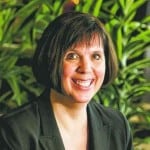
My guest for episode #197 is a hospital leader I really respect, Kim Barnas, author of the new book Beyond Heroes.
Until very recently, Kim was a Senior VP at ThedaCare, leading Appleton Medical Center and Theda Clark Hospital. I've seen Kim speak to groups at ThedaCare and a few conferences and she has a lot to teach us about Lean leadership, using her stories and experiences in a way that's very powerful. I hope you'll check out the book. Read a press release about it here.
In the podcast today, we talk about topics including her initial reactions to Lean when first introduced to it as a hospital leader, why “heroes” are overrated and sometimes create “chaos” in healthcare, and the importance of moving beyond tools and projects to a Lean culture and management system.
2018 Update: What's Going on at ThedaCare?
Kim talks about the need to “create more value” (not just reduce waste), saying “just trying to do more with less makes no sense – you need a plan.” We also talk about programs like GM's “Speak up for Safety,” where she says that speaking up “needs to be a conversation, not a reporting” transaction.
For a link to this episode, refer people to www.leanblog.org/197.
For earlier episodes of my podcast, visit the main Podcast page, which includes information on how to subscribe via RSS or via Apple Podcasts.
If you have feedback on the podcast, or any questions for me or my guests, you can email me at leanpodcast@gmail.com or you can call and leave a voicemail by calling the “Lean Line” at (817) 372-5682 or contact me via Skype id “mgraban”. Please give your location and your first name. Any comments (email or voicemail) might be used in follow ups to the podcast.
Podcast Conversation: Kim Barnas on Beyond Heroes, Lean Leadership, and Healthcare Management Systems
Introduction to Episode 197 and Guest Kim Barnas
Mark Graban: Hi, this is Mark Graban. Welcome to episode 197 of the podcast for April 29, 2014. I apologize, it has been over a month since the last episode, but I have a couple of great ones coming up, including today's discussion with a hospital leader I really respect. Her name is Kim Barnas. She is the author of a brand new book called Beyond Heroes that has just been published by the ThedaCare Center for Healthcare Value.
Until very recently, Kim was a Senior VP and a leader at ThedaCare, the health system where she was leading Appleton Medical Center and Theda Clark Hospital. She has a lot of great experience and a lot to teach all of us, regardless of industry, about lean leadership, lean culture, and what we can do from a really practical perspective. So, I certainly hope you will check out the book. Kim is also doing a free webinar for the Lean Enterprise Institute on May 6th. You can find links to that, to the book, and to the upcoming Lean Healthcare Transformation Summit that I will be attending and participating in this June. Kim is going to be a keynote speaker there. If you go to leanblog.org/197, there is a bunch of links for free things you can take advantage of. Spend $35 on the book, and if you have the budget for it, attend the Lean Healthcare Transformation Summit. It is now the fifth annual event. This is by far the best Lean Healthcare conference of the year, so I hope I will see you there.
The Problem with “Heroes” in Healthcare and General Motors
Mark Graban: Back to the podcast. Kim and I are going to talk about why the idea of heroes can be overrated or actually create chaos in healthcare, referring back to the title of the book, Beyond Heroes. We are also going to put her on the spot a little bit, asking her what she would do if she was leading General Motors. GM has a new “Speak up for Safety” campaign that the CEO announced, which I am somewhat skeptical about. I have blogged about that recently, but Kim has some really good thoughts about how to get the environment to a point where it is not just about employees speaking up, but about leaders listening and collaborating with people. So, lots of great insights from Kim. Again, go to leanblog.org/197 for links.
Well, Kim, hi. It is great to talk to you, and it is a real pleasure to have you as a guest on the podcast. Thanks for being here.
Kim Barnas: Well, I am delighted to be invited and excited about our conversation.
Mark Graban: We have so much to talk about between the great things you have been doing at ThedaCare, what you have been sharing and teaching with people through articles and talks, and now the new book, Beyond Heroes, that is available. We will talk about how people can find that later, and I will have links on the blog. I had a chance to read an early version of the book and really enjoyed it. I think it is a book that is going to be very helpful to a lot of organizations. So, congratulations on that, Kim.
Kim Barnas: Thank you. It certainly was a labor of love. I had lots of help and support, and I want to thank you for that. You were one of those folks who gave me some good advice, but I tried to take this book and make it a story so that it is less academic and more about our journey and the stories that I think will help people learn.
The Early Lean Journey: From Skepticism to Learning
Kim Barnas: It is fun to reflect on those days because I learned so much and I knew so little about Lean. In fact, I considered myself one of those spontaneous people that Lean would never be able to tame. So, it is interesting to look back and be in this position today. When we started Lean and John Toussaint brought it to ThedaCare, I was a vice president in the hospital division, and one of the first value streams was our open-heart value stream. My first Kaizen event, my first value stream experience, was with our open-heart team. We actually had brought in a consultant to teach us Lean, and the focus of that group was to really be on Value Stream analysis, Kaizen events, 2Ps, 3Ps, and projects that came out of those.
One day, when I was really struggling with this language–I had my lexicon book in front of me all the time–we had a new sensei who joined us. He said to me, “I don't know anything about healthcare.” I said, “I don't know anything about Lean.” So here is the deal: “If you teach me Lean, I will teach you healthcare.” That was José Bustillo, and we started our journey together. I still consider him my personal sensei. He helped me understand how deep Lean can go. He helped me understand how it really helps develop our people and build our people into stronger participants in the process to own the work and to see improvement as an opportunity for them rather than a burden.
Overcoming the Burden of New Lean Responsibilities
Mark Graban: There is a concern that taking on new roles and new responsibilities in a lean leadership style is adding new things to people's plates. This is something I end up talking with people about a lot. I am curious, from your own experience or what you have seen with other leaders, is there a period where it is a bit of an extra burden because we are learning something new and it is uncomfortable, and then we work through a cycle where it becomes more comfortable?
Kim Barnas: I think you summarized it really well. In the beginning, because you are on a learning curve and it is a big change, it is exhausting. You are trying to understand how this fits with your real work. Until people recognize that this becomes your real work, it feels additive. You have to create the capacity in your day, and in the day of your peers and your employees, to make sure that they have the time to learn, experiment with it, and celebrate it. Then, when it becomes part of their thought process, it changes the culture.
Mark Graban: That is a really interesting point–the idea of creating capacity. ThedaCare has become fairly well known for creative or systemic ways to try to free up time. Can you talk about that and some of the other ways you actually create that capacity?
Kim Barnas: In the beginning, we took people offline, hired facilitators, and gave them the time to learn through the Kaizen process. By the way, I think this is critical. I am going to talk later about our management system, but we don't believe you can have a management system without the rest of the lean package. That is just part of it. John was elegant in his perception that we needed to develop our leaders. So, many of our leaders left their leadership roles to become facilitators, and that created the capacity for them to learn. Then, as we moved into our events, we pulled people offline for the week to do that work. We created time to teach them in the work. We made them the communicators and the owners in the work. Also, in the beginning, rather than taking the waste out and cashing it in every time, sometimes the “cashing in” was investing in our people to create time in their day to do improvement work. That was a pretty significant investment, and it really paid off.
Creating Capacity: The “No Meeting Zone” Experiment
Mark Graban: Later on, there is the famous “no meeting zone.” Can you talk about that as a different way of freeing up time?
Kim Barnas: Yes. That came later as we decided we were going to develop a management system. One of my concerns was: how are we going to have the time to do this work? The leadership team in the hospital at that time had a conversation about it. I said, “I think we need an hour or two a day to learn how to manage and how to work on improvement.” One of my colleagues said, “I agree, I think we should have a no meeting zone.” I said, “I think it should be from 8:00 to 10:00. We should start our day that way.” The COO at that time, Matt Furlan, said, “I agree, let's have a no meeting zone from 8:00 to 10:00.” So, that is the scientific method that we used to get to the no meeting zone. It was profoundly effective. It still exists today. That was in 2008, I believe, that we formally set that. What we do in the no meeting zone is we go to Gemba, we work on projects, we influence each other, we look at our huddle boards, we do our stat sheets, we have conversations, and we may still have a meeting here and there. The goal is 80% of the time you are in the Gemba. 20% of the time you may have to go to a system meeting, or you may have to meet with physicians because that is the time they have available. However, it is very effective, and it has been embraced in the hospitals.
Mark Graban: The scientific method aspect of it was the hypothesis that creating that no meeting zone would be helpful, and that is what played out through those experiments.
Kim Barnas: Exactly.
Why Healthcare Needs Processes, Not Just Heroes
Mark Graban: Having a culture of scientific experimentation is different in a lot of ways from a culture of heroes. I would like to bring things back to the title of the book because I think it is an interesting and provocative title: Beyond Heroes. A lot of people think, “Wait a minute, heroes are a good thing. Heroes have a very positive connotation. They are doing great things. They are going above and beyond.” Why would you say, or tell us about the title, “Moving Beyond Heroes?” Why do heroes sometimes not make things as effective as they could be? I assume you are proposing some alternatives to that heroic behavior.
Kim Barnas: I think there is still a role for heroes in the hospital. I think it is a limited role. When you have a physician who is trained to do surgery a specific way and to think in a critical way, and something doesn't go well because the anatomy is different, the physiology is different, or the equipment fails, you want somebody that can be heroic in terms of taking that next step. But everything around him, or everything around that work, should be managed by a process. If you manage the process and the right equipment is in the right place at the right time, and it is clean and positioned correctly, it makes the flow of all the work much more effective. It doesn't require the nurse, the CNA, or another staff person to be heroic in trying to find, grab, clean, and move things around.
When we talk about heroics, we really think about how we use teams to develop processes. Within those teams, how do we experiment with the process and create standardized work and standardized processes? Once we have that standardization, how do we see the variation from that process and come back and improve it again as a team so that there isn't one hero that comes back and makes the changes that everyone else has to influence? The second aspect of that is we have 6,000 to 6,500 people that all want to make changes every day. If we weren't making changes in a methodical, process-oriented way, those 6,000 heroes would create chaos. It is really important that we understand why the processes are in place. We recognize that you improve from understanding the variation and that you have a controlled experiment for improvement. So, you always have the best-known way to solve the problem or to do the process.
Mark Graban: Is it fair to say that the part of our brain and our motivation that kicks in to be a hero is now something that is used much more rarely? Occasionally there is still going to be time for a hero, but it shouldn't be a regular, everyday thing.
Kim Barnas: Exactly. We want people to use their brains and use critical thinking. We think by establishing stable processes and allowing them to improve them, we are actually creating more value. There is still a role for a hero from time to time, but it should not be an everyday occurrence.
Increasing Value Through Collaborative Care Models
Mark Graban: There is one thing that you said there that I would like to ask for an example of. When you say “creating more value,” I think that is a key Lean idea. Sometimes people get so wrapped up in the idea of eliminating waste. Can you give an example of where Lean has helped staff physicians provide more value or the right value for patients?
Kim Barnas: I think about when we use our collaborative care model and we have used our lean methodology to develop how the team works together with the patient and their family. When you are part of that team–you are the pharmacist, the physician, the nurse, or you are the patient or their family member–you get together and follow the protocol of discussion for a care conference so that everybody is on the same page. You not only create value because the patient knows why they are there, what is going to happen next, what their medications are, who their nurse is, who their doctor is, what their care plan is, and when they plan to go home, but you have one conversation. The pharmacist is there saying, “These are the medications that you are on, and I am going to help you understand how to take them when you get home.” Everybody is working from the same playbook. It eliminates the redundant work that every one of them had to do in the past by reiterating their part of the care plan and not being connected to a whole process. I think it adds huge value to everybody to have that one conversation, but it also removes the waste in the process of reiterating, redoing, and reworking those processes based on your particular perspective, whether nursing or physician.
Mark Graban: We talk about productivity improvement at ThedaCare. Sometimes people focus on “doing more with less,” and unfortunately, people just think about fewer people. But regarding the “doing more” part–can you talk about instances where perhaps productivity improvement led to increased capacity and maybe being able to do more with basically the same resources?
Kim Barnas: That is a really important concept: you have to have a plan. Just trying to do “more with less” makes no sense at all, especially at the bedside. If you say to your team, “Okay guys, we are going to get 3% productivity improvement, go get it,” and you don't have a plan to do that, you start doing silly things like cutting back hours or cutting back education. We have all done that if we have been in healthcare for any length of time.
One of the things that we are doing at ThedaCare, specifically in the hospital division–an experiment that will spread through the system–is that every unit has their own value stream map where they are looking at their patient flows and where their opportunities for waste removal are. When they pull out waste, how do they create capacity in the schedule of the nurse, the physician, or others? That is how we try to target our productivity improvement. Again, I think it is really important. There is so much happening in healthcare right now, and I am a little concerned about the effect of only taking a productivity approach without a plan on nursing. Nurses have so much that they are responsible for. They are the reason that hospitals exist. They are the touch of the patient. Value is added when they are there to listen, to talk, to educate, and to support. I want to be sure that is never what gets cut. I want the other things, like a more efficient medication distribution process, to give them an extra 20 minutes or an extra 40 minutes in their shift that they can then spend with patients. Those are the kinds of things that we are looking for.
True North Metrics: Balancing Quality, People, and Stewardship
Mark Graban: I am not one normally to fixate on productivity. Maybe you can recap for listeners who aren't familiar. One thing that is impressive about ThedaCare is the clear articulation of the True North objectives that include safety and quality. Could you recap at least what the latest iteration of that True North looks like?
Kim Barnas: Our True North metrics, we consider how we measure the health of our organization. One aspect of True North should never be done at the sacrifice of another.
We look at it as a triangle. In the middle of the triangle is our customer, our patient, and we actually give her a name. She is called Lori. Everything we do is around Lori. It is to improve the experience of Lori. At the top of our triangle, we are looking at safety and quality, and we have metrics around mortality, safety bundles, and those kinds of things. Then, on the lower left-hand side of the triangle, we talk about our people, our engagement, and how we take care of our people. On the right side of the triangle is financial stewardship–not productivity, but financial stewardship. We try to keep all of those things in balance and assure that we have metrics around those at a system level. That cascades down to the divisional level and then down to the front line. All the work that we do and resource in a significant way has to tie to those True North metrics so that from the frontline staff to the CEO, we are all rowing in the same direction.
Mark Graban: That alignment is something I have been so impressed by when I have visited ThedaCare. You get that sense people are rowing in the right direction. That seems like such an important aspect of a lean management system.
Developing a Sustainable Lean Management System
Mark Graban: Can you describe the origins or how you would define a lean management system as something to build upon? Lean methods, rapid improvement events, really creating that culture.
Kim Barnas: We were into our journey about two years when we decided to get some exposure to daily continuous improvement. The way we moved forward with that was to run an experiment where we took one of the facilitators trained by our consultants and our sensei. We picked out a manager and sent that facilitator and that manager to find a problem on their unit and create a way to work that problem daily. They created visual management. They did an A3 and were looking at root cause. The facilitator stayed with that manager for 30 days, and then they left. The manager was left to manage that process on his or her own. What we found was that other things got in the way. That may have been the priority 30 days ago, but in the next 30 days, we have another priority, and then another. Pretty soon, that was lost.
After trying that a couple of different times, I met with my sensei who had worked in other organizations that had some kind of a system. I am embarrassed to say this, but it is important that people hear it. He and I went to dinner every time he was here for about a year. He pulled out a napkin at every dinner and drew me this picture. He said, “Kim, this is a cell. When you improve things in one cell, then you can spread it to two. If it works in two, then you can spread it to four. If it works in four, then you can spread it everywhere.” I would say, “You know, that is really nice. Thank you for sharing that with me.” Being the Socratic sensei that he was, he would never tell me what he really meant.
One day I got it. What he was trying to say was: you cannot sustain things by sending a facilitator to lead something and expecting people who have no infrastructure to spread it. So I asked him to teach me, in a less Socratic way and more as a subject matter expert, what it looks like in an industry. He drew me pictures, we had a lot of conversations, and we pulled in another sensei. We actually did a Kaizen-like event where we spent a week looking at what “good” looks like in an industry that has a structure, an infrastructure to support their lean methodologies. In particular, we were thinking about how to sustain the gains that we had been getting from our value streams and our Kaizen events. In that event, we actually came up with 56 pieces of standard work that we thought we needed to create to make this system structure begin. A month later, we pulled together 30 other team members and started writing the standard work. Then we began experimenting with it. So, it took us about two years to get to the point where we actually had a foundation of a management system.
Learning from “Failure”: The Evolution of Standard Work
Mark Graban: Having a foundation of a management system took a long time; this is by no means a quick fix. What were some of the next things that moved it along, or maybe in hindsight might have been able to move things along? Was it moving at a natural and sustainable pace?
Kim Barnas: I think that it needed to take us that long because we needed to experiment with it, and we didn't really know where we were going, to be honest. We sort of had this vision at the end of what it would look like, but we didn't know what all the pieces were going to be. I need to be really clear that this is how we developed a management system. We are hoping that by talking about it, writing the book, and sharing the book, other people can do this much more quickly. We have seen that where we have actually taught other systems; they are up and running within a year–running within six months and running smoothly within a year.
I believe that it needed to take us that long because the way we went about it was we wrote the standard work and then chose two VPs with two managers each to be our developmental experimental labs. We would go and execute the standard work with two facilitators watching us and making notes. Then we would come back and critique and tweak the standard work. The next day we would go back and do it again. When we thought it was running well enough in one cell, one unit, then we would spread it to a second cell and see if it worked as well there. Before we actually got into any spread methodology, we worked with four primary cells and ran experiments every week.
Mark Graban: Thinking about experiments, were most of those experiments successful? Were some of them just okay and you had to tweak it? Were any of them a “failed experiment” as part of that learning process?
Kim Barnas: We experienced failure when things didn't go the way we thought they would. But I don't think any of those experiments truly failed. We learned from what didn't work and made it better. The best example I can give is when we first started trying to do a stat sheet. We took the VP, the manager, and the lead supervisor to ask these questions. They would ask these questions, and when we finished, we would say, “Did that help you? Is that going to help you manage your business any differently today?” They would say, “No.” We would say, “What would help you? What are the questions that would make your day better?”
So we would go back and experiment with those. Then it was, “Okay, we are asking these questions and getting yes or no answers. Is that really what we want? Isn't the purpose of this to get to their critical thinking? How do we ask questions differently?” Now that we are asking these questions and understanding where our problems are–and by the way, we are seeing problems we never knew we had–how do we coach them to improve? How do we use the lean tools? How do we teach A3 thinking in the work at that level? It uncovered lots of opportunities. None of them were failures, but we learned that we weren't going deep enough in the beginning and how to go deeper each time we do it. I would venture to say that if you go see a stat sheet now, after eight years in those units, it looks nothing like it did when we started. That is the point. We are on a continuous improvement journey, so we continually change.
Mark Graban: That is a really healthy attitude to bring into the organization: that a failure is not something to punish people for, but something to learn from and to build upon.
Building a Safety Culture: Leadership Presence and Reporting
Mark Graban: Moving things in a slightly different direction regarding trying to change culture and responding to things: There has been a lot in the news recently about General Motors. The CEO there, Mary Barra, has this big push called “Speak up for Safety.” They are trying to encourage all the employees, if you see a problem, to speak up. They promise they won't retaliate and will respond. But the traditional culture at GM is one where a lot of times people tried to speak up and the system managers' culture wouldn't let them. I am curious, thinking about culture change in healthcare, there are often similar dynamics of trying to encourage people to speak up, call out near misses, and do a better job of reporting errors. Do you have any reflections on what helps create a culture where people are speaking up and things are actually being fixed?
Kim Barnas: I think it is very important that the leadership is present in the work and that it is a conversation, not a reporting. I would love to say that we were stellar at safety, and we are really working hard at that. My teams would make safety rounds every day, and as part of our huddles, we always ask safety questions. Solving safety problems is harder than you think it is going to be, but it's not because people won't speak up anymore.
Let me talk about an average day. On Monday morning, my leadership team meets at our huddle board, our visual management. We talk about what happened last week. How are we driving performance? Have we improved? Where did we fall down? What do we need to do differently? Now that we know we have this, where can we go and see it? The second question is, “Are there any safety concerns?” We bring our safety officers with us, take our managers, and all divide up the hospital. We go to different floors and look for safety issues in a way that says, “How can we help you?” People are pretty comfortable speaking up at that point.
When we see safety issues, we bring that to the stat sheet in the morning on the next day, and also to the huddle. Of course, if it is an imminent safety issue, we do something on the spot. Safety is number one. Let's say we noticed that there was a cord hanging in front of the bed of the patient where there was a blood pressure cuff. The safety issue is that somebody could knock that off. They could hit somebody in the head, they could break the equipment, or it could fall and hurt a patient. If you see that, you go to the huddle a couple of hours later and say, “This is what I saw, how can we make this better on your unit?” And if it works, then how do we spread it somewhere else? “Is there somebody who has a particular interest on your unit that would like to help us solve this safety problem?”
You never assign the follow-up to whoever brought you the concern, because once you do that, no one will ever bring you anything again. So when someone brings forward a defect, we ask for volunteers and then we offer the resources to help them solve it. We give them a facilitator to support the A3 thinking and the root cause analysis. The manager may join them. If there seems to be some sort of a power differential in terms of working with another unit to get it done, we decide whether this is a big enough project that we could just do it. Does it take three steps or less? Or do we need to have an event because it involves another floor? There is a lot of discussion about how we support the improvement. There is not a blaming aspect to it in any way.
Mark Graban: Wow. Any interest in going and helping GM with all this?
Kim Barnas: Are you volunteering?
Mark Graban: I am trying to volunteer you, or I am nominating you. They could probably use some help because that is an organization much bigger than 6,500 people. So it is a much bigger culture change challenge.
Kim Barnas: It is hard to move.
Advice for Aspiring Lean Leaders and Closing Thoughts
Mark Graban: Final question after putting you on the spot with GM talk. If you would have advice for aspiring lean leaders–people who are in the middle of their organization, like a director or vice president, who have done great things with Lean locally within a department or a value stream, but they think, “The organization is not moving fast enough. We don't have that support from the top”–what would your advice be to them?
Kim Barnas: It is very hard to move forward without the support from the top. The way that you get support from the top is you show them results. What we found with our lean management system was we started with those four cells, and when all of them were doing better on their metrics than everyone else, people wanted to know what the magic was. They said, “VPs.” So then we had a next class with eight managers in it. When they started doing really well, more people wanted to come. Positive results garner support and garner pull. I think it is really important to not push these kinds of things, but to create the environment where people see the benefit and pull for it. My advice is to start somewhere, show results, engage your one-ups, and find ways to celebrate and present your work to them. When you start seeing those results, other people will take notice.
Mark Graban: Thank you for sharing that advice. To wrap up here, again, the book is called Beyond Heroes, and I really recommend it to people who are either working in healthcare or just interested in healthcare. It is a really well-done book, and I want to thank you and applaud you for that. Can you talk a little bit about the best ways people can find the book, other resources, and information about it?
Kim Barnas: My understanding is that it will be on sale at the Center. The website is createvalue.org on the 29th of April. I know there is some planning for it to be available through Amazon at some point, and there will be a Kindle version. It will be available for purchase on the 29th at createvalue.org.
Mark Graban: If people have questions or want to follow up with you, can they contact you through the center or through the website for the book?
Kim Barnas: They should contact me through the center.
Mark Graban: Okay. Again, that is createvalue.org. Well, Kim Barnas, I am so happy we were able to finally have you as a guest on the podcast. When we started talking about this, I thought, “Oh no, wait, I haven't interviewed you yet.” So I am really happy that we had the chance to do that. Hopefully, we can do this again sometime because there is so much more I think we could delve into. Hopefully, you would be open to that.
Kim Barnas: I would be totally open to that and welcome it. Thank you so much for inviting me, and I hope I added some value today.
Mark Graban: I am sure you did, and I hope I didn't create too much waste in the process for us getting there. Thank you. Thanks for a really good interview. Appreciate it.
Kim Barnas: Thank you.





Hi Mark, excellent Podcast, it created a lot of value for me.
Hope the book is in the kindle version fast.
Here are webinar slides (PDF) that Kim presented recently for LEI.
Webinar recording should be posted here soon: LINK