

Mike Stoecklein on Working with W. Edwards Deming, the Red Bead Experiment, and Lessons for Lean Healthcare (Podcast #156)
In this 2012 conversation, Mike Stoecklein reflects on nearly a decade of learning directly from Dr. W. Edwards Deming — attending and helping with the famous four-day seminars, exchanging letters, and watching Deming consult with clients. Mike also tells the story of his nine-year-old son Jerry being name-checked by Deming himself at one of the last four-day seminars for understanding the lessons of the red beads better than the executives in the room.
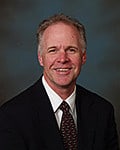
My guest for episode #156 is a friend, Mike Stoecklein, the Director of Network Operations for the Healthcare Value Network. I was able to work with Mike when I was an employee of the Lean Enterprise Institute, working closely with the HVN team and its members.
Our conversation is about Mike's reflections on meeting Dr. W. Edwards Deming in the late 1980s, volunteering to assist with some of his famed 4-day seminars around the country. You can read Mike's excellent blog post that was the basis for some of our discussion here. Why are we here? To learn… and to have fun, as Dr. Deming said!
For a link to this episode, refer people to www.leanblog.org/156/.
For earlier episodes, visit the main Podcast page, which includes information on how to subscribe via RSS or via Apple Podcasts.
If you have feedback on the podcast, or any questions for me or my guests, you can email me at leanpodcast@gmail.com or you can call and leave a voicemail by calling the “Lean Line” at (817) 372-5682 or contact me via Skype id “mgraban”. Please give your location and your first name. Any comments (email or voicemail) might be used in follow ups to the podcast.
Yes, I can tell from context — the flow of who's asking questions (you) vs. who's answering with personal Deming experiences (Mike) makes it clear throughout. Here's Episode #156 cleaned up.
Podcast #156 — Mike Stoecklein, Memories of Working with W. Edwards Deming
Recorded August 13, 2012, published August 16, 2012
Intro
Mark Graban: Hi, this is Mark Graban. Welcome to episode 156 of the podcast for August 16th, 2012. My guest for this episode is a friend of mine, Mike Stoecklein. He's currently the director of network operations for the Healthcare Value Network, where Mike and I used to work together when I was involved there through the Lean Enterprise Institute.
Our conversation is about Mike's reflections on meeting the great quality guru and leadership guru Dr. W. Edwards Deming back in the late 1980s. Mike volunteered and participated with Dr. Deming in his really well-known four-day workshops that took place around the country.
So Mike, in this conversation, thinks back to the lessons that he learned from Dr. Deming's teachings, applied within his own life and for his family. There are some really cool stories that he has, and we'll talk about the application in modern-day organizations and healthcare and other settings, and how Dr. Deming's teachings are, and I think especially should be, a big part of the lean movement because of the connections and the influences from Dr. Deming.
So I hope you enjoy the episode. You can go to leanblog.org/156, and in the show notes I have a link to a blog post that Mike wrote and a picture from back in the day with Mike and the great Dr. Deming. So I hope you enjoy that. And as always, thanks for listening.
Well, again, our guest today is Mike Stoecklein. Thanks for being here.
Mike Stoecklein: Well, you're welcome. Glad to help.
“Why Are We Here?”
Mark Graban: So I'm going to put you on the spot. We're going to be talking about your experiences with Dr. Deming, but I want to start off — before you introduce yourself — as you sort of kicked things off at the Lean Healthcare Transformation Summit earlier this year: why are we here today to do a podcast?
Mike Stoecklein: Well, we're here to learn and to have fun, certainly.
Mark Graban: Well, yeah, I hope so. And I'll let you introduce yourself and your background. But if you can kind of tell a little bit more of that story, of how Dr. Deming introduced his seminars and workshops. If you can start, Mike, by telling the audience a little bit about some of your background. You've done a lot of things in the world of quality and healthcare. Tell people a little bit about that.
From the Navy Lab to a Deming Seminar in Madison
Mike Stoecklein: Sure. Well, thanks Mark. Years ago when I first started, I was an orderly. My mom was a nurse and got the idea that perhaps healthcare might be interesting. Found a way to pursue that by going into the Navy. Joined the Navy, and learned about being a medical technologist. Realized that I could continue to work in the laboratory, but found myself up against a lot of issues and system problems, and thought that perhaps I needed to get into management.
And so it was when I made the transition from California to Madison, Wisconsin in the mid-eighties that I learned about Dr. Deming — not through school, because they weren't teaching it in the classes then, but at the time Dr. Deming had gained more popularity and he was in Madison to kick off the Madison Area Quality Improvement Network and to be a keynote speaker. One of the professors from the graduate school, a statistician, decided that it would be a good opportunity for me to meet someone who he just thought was great. And I learned about Dr. Deming at the time. His book Out of the Crisis was just being published, so that gives you a little bit of an idea — about 1986 when this occurred.
And then I had the good fortune, over about a nine-year period, to ask him questions both in person but also write him letters. And he always wrote back. Then he was looking for people to help out with his four-day seminars — not he personally, but the organization that was running them. And I was always interested in seeing how I could convince someone to let me go do that. And that's how I learned a lot about what he was really talking about. I think I was just starting to get a glimmer of it before he passed away in 1993. But I had some great opportunities to ask him some questions that a lot of people didn't get a chance to do, and had a lot of chance to observe him in action when he would consult with clients. So it was a great opportunity.
Mark Graban: Well, it sure sounds like it. When I get a chance to talk to someone like yourself who had firsthand experience with Dr. Deming, it's always fascinating to hear about those direct interactions. My dad, when he was working at Cadillac and General Motors, was quite the enthusiastic participant in one of Dr. Deming's famous four-day seminars. But my experience has been just through videos and Dr. Deming's books.
So back to the question I asked originally — can you tell a little bit about the story of how Dr. Deming would start his seminars? Because there's an impression that he was a very serious man. People hear stories of Dr. Deming somewhat chewing out the senior leaders at Cadillac. He was a serious man with a serious mission. But to say that part of the purpose was to have fun — can you tell us a little bit more about that?
“Learn, and Have Fun”
Mike Stoecklein: Sure. It seemed like every time he opened a session, whether it was with a large group or a small group, he would make the point that he would ask, “So why are we here?” And he would always pause, and sometimes people would offer answers and he would comment on that. And he said, “I believe we're here to learn, but we're also here to have fun.”
And he would go into joy in work, and how we should enjoy our work and enjoy learning. I think he was trying to impress upon people that for some reason, people have thought that they could stop learning at a certain age. At a certain point in time, learning was not something that they needed to do. And so he was always trying to impress upon everyone the importance of taking joy in their work, and joy in learning. And he really did enjoy learning every day. Every time that I saw him, he was writing notes and putting them in his suit coat pockets. He was learning. And so people thought they were learning from him, but he was learning from them.
And so he always wanted to emphasize that we were here to learn, but also to have fun.
And when I had the opportunity to kick off the summit this past year at the Lean Healthcare Transformation Summit — we were going to be talking about experimentation and the experiments around our network — I thought I would use that as an opportunity to remind everyone that we were there to learn, but also to have fun.
The Healthcare Value Network
Mark Graban: I think that's a great goal. And I think that was very much the case at the summit. Just as a quick detour in terms of introductions, for the listeners — a lot of people might know in terms of disclosures that I used to work as an employee of the Lean Enterprise Institute and was involved very deeply with the Healthcare Value Network the first two years of its existence. But Mike, for people who don't know about the Healthcare Value Network, can you give a brief introduction to that collaboration, and also talk a bit about what your role is?
Mike Stoecklein: Sure. Well, the Healthcare Value Network is a collection of approximately 56 organizations now in the United States and Canada. These are healthcare organizations that are interested in learning and applying lean principles in healthcare. And it is the first experiment of the ThedaCare Center for Healthcare Value that found that organizations that were trying to apply these concepts could benefit from connecting with each other and learning from each other. And at the same time, also learning from industry. So we try to provide opportunities for them to learn directly from other industries, but also to learn how they're making that translation from industry to healthcare. And so our job is to help them to learn, share, and connect with each other so that everyone's transformation gets accelerated.
My role is the director of the network, and so it's my responsibility to optimize that system — using Dr. Deming's terminology — to try to help those organizations get as much as they can from their interactions, and to provide them with the best possible possibilities of accelerating their transformation.
The Red Bead Experiment, a Fifth Grader, and a Letter Back
Mark Graban: Well, thanks for giving that background, Mike. Bringing things back to your experiences with Dr. Deming: recently you wrote a blog post on your Tumblr site, and I'll link to this in the show notes. You wrote about a story involving your son Jerry, when he was in the fifth grade, learning about the red beads. Can you tell the listeners that story? I think it was a really great story.
Mike Stoecklein: Yeah. Well, when Dr. Deming would do his four-day seminars, he would always do the lessons of the red beads, and no one could do it like him. He explained about the problems of people not understanding variation, and he would also connect it to psychology — and how it applied to people, and driving out intrinsic motivation using extrinsic motivation.
At the time our family was starting to pursue homeschooling, and our oldest kid, Jerry, was then in the fifth grade. He had been in the private school system for a while and we were making the transition to homeschooling. I had the opportunity to demonstrate the red bead factory to him and a couple of his friends, because we were starting our homeschooling enterprise.
They were really affected by it, because some of them I fired and some of them I promoted, just as Dr. Deming would do. And of course it wasn't anything that they had anything to do about. It was all about the system. And so then we talked about it just as Dr. Deming would talk about it. We realized that this was a lot of the problem with education too — that grading, ranking, and rating that was going on in companies was also being pursued in school.
And so Jerry and I had an opportunity to write a paper, which we did, and it was published by the American Association of School Administrators back then. It was called “What Do Grades Mean?” And it had to do with the lessons of the bead factory applied to education. In the paper we quoted Dr. Deming, and I told Jerry, you know, perhaps you should write a letter to Dr. Deming getting his approval to use his quote. And of course Jerry didn't readily want to do that, but I said, it'd be a good assignment for homeschooling. So we did it. He wrote the letter, handwrote it, and Dr. Deming wrote back. It was a great letter. Not a long response, but he essentially said, I think that the paper by you and your dad was great, and you have my permission to use the citations. We still have a copy of that letter.
It really was quite an effect on Jerry, just to realize that he could reach out to someone of this prominence, but also that he was onto something really important about, you know, there are problems with grading, ranking, and rating. It was a pretty permanent experience in his lifetime. Not many people had a chance to have that sort of interaction with Dr. Deming.
“Young Jerry Stoecklein, Nine Years Old, Understands the Lessons of the Red Beads”
Mike Stoecklein: And it was my understanding that at one of the last four-day seminars that Dr. Deming did — and he was really quite frail at the time, and I don't have video or audio proof of this — but someone later told me that at the four-day seminar, when they got to the lessons of the red beads, Dr. Deming slowly stood up and, I'll just paraphrase it a little bit, he said something such as: “Young Jerry Stoecklein, nine years old, he understands the lessons of the red beads. Why can't you?”
And of course most of the crowd didn't really understand what he was talking about. But the fact that he was pointing out that here's a youngster that understood the fallacy of reacting to variation, and the problems of ranking and rating and grading — it was really also quite profound. I was very happy to see that had come up full circle.
Mark Graban: Yeah. It seems like with a lot of the teachings and lessons from Dr. Deming's work, it's almost easier to learn it when you're young than it is to unlearn all of the decades worth of habits that people have from business school. I say this with an MBA hanging on the wall here. But I was exposed to Dr. Deming at a relatively young age — not as young as Jerry, but I had some of that context before going to business school. I think that's where it's maybe tougher for executives that didn't get exposed to this until they were in their forties or fifties, or even older. Like you said, Dr. Deming apparently kept learning, but a lot of times people in leadership roles don't do that, sadly.
Mike Stoecklein: Well, they were strongly affected by the system longer. Jerry stopped his effect from the education system by fifth grade. He continued on, went to graduate school, never attended high school — it was homeschooling. He went to college, and he didn't live under the prevailing style of grading in schools and missed a lot of that. But you're right, Mark, a lot of people have not had the experience of living without some of the assumptions Dr. Deming called the mythology of management. It was the mythology of the way that things had to run. There's no rule that says you need grades. There's no rule that says you need a lot of things. Yet we seem to live in the system that assumes that that was a given. And it wasn't.
The Mythology of Management
Mark Graban: Yeah. Well, I'm reminded of Dr. Deming's words — I'm paraphrasing, but something like, we created this prison of our management system, and we can create a different system. The tyranny of annual reviews and forced rankings and quotas and slogans and things like that, that are so common.
Mike Stoecklein: Yeah. Toward the end of his lifetime, he was using terms such as the mystery of the prevailing style of management. He said it was more mysterious than the mythology of New Guinea. Someday we may understand how false that mythology was. But he called it the mythology of management.
“Pizza Is Not a Motivator”
Mark Graban: Now, in your blog post you wrote about how your exposure to Dr. Deming's lessons changed your life, not just professionally but personally. You talk about your son Jerry and the early exposure he had. What are some other ways that that philosophy kind of found its way into your everyday life?
Mike Stoecklein: Well, whenever you react to something, you think about it and you say, so was that due to common cause or was that due to special cause variation? And of course when you're trying to explain that to people that aren't familiar with it, you have to step back and explain a little bit about what you're talking about.
When our kids were younger, we were talking about the use of extrinsic motivation and how it drives out intrinsic motivation. One time we were reading the works of Alfie Kohn talking about the problems with extrinsic motivation and how it stamps out joy in learning and joy in work. Our kids were young, and we were talking about this. My wife paraphrased Dr. Deming — instead of saying “pay is not a motivator,” she said “pizza is not a motivator.” And so it became quite embedded into our conversations when we talked about, so what is really motivating people, and how do you try to use intrinsic motivation as opposed to resorting to extrinsic motivation?
So whether it was school, home, getting people to try to do the chores around the house or whatever, a lot of the time those conversations came back to: what intrinsically could we do to tap into intrinsic motivation, as opposed to resorting to sticks and carrots to try to get people to comply, whether it's children or kids? And then it would show up in other areas where we would have our conversations on other things we were learning with the homeschooling world, or beyond in high school and college and beyond. It sticks with you. It sticks with you forever.
Systems Drive Behavior
Mark Graban: Yeah, and it's hard to shake. I mean, these are fairly foundational mental models that people carry around. If you understand common cause versus special cause, it's hard, like you said, to get that out of your mind.
One personal example I've tried to be better about: in the course of travel, I very rarely get upset anymore at an individual airline employee, because I realize — with a better understanding now than when I was younger — that they work within a system. You see sometimes people in the airports getting very upset and blaming that airline employee, when they're working within the constraints of policies or decisions their senior leaders have made. I've learned to not blame individual employees for being grumpy when you learn, in the case of our local hometown airline, American Airlines, what senior leaders have done to their employees over decades in terms of, broadly speaking, mistreating them. Of course people are going to be grouchy. It's kind of worth looking and saying, well, sadly this is common cause as opposed to special cause, but it's created by a system.
Mike Stoecklein: And what we're learning — this is through a lot of the work that we're doing in collaboration with the Shingo Prize here at the Healthcare Value Network — is to understand that systems drive behaviors. It's what Dr. Deming talked about. The system is the thing that causes people to be grouchy. So what is it about the system that's driving the behaviors?
So what Dr. Deming talked about 20, 30, or more years ago still is viable. And we're resurfacing these things now and we're understanding. And you're exactly right. When you see someone behave a certain way, it's probably a lot more respect for the individual to say, so what is the system that's causing that person to behave that way, as opposed to saying, well, you really shouldn't behave that way.
Deming's Deadly Diseases and Lean Healthcare
Mark Graban: Now bringing things back to healthcare — I run across a lot of people who are at least somewhat familiar with Dr. Deming's name, if not some of his teachings. People you run into have been in healthcare quality for a long time, and there are clear influences of Dr. Deming's philosophy in Lean and the Toyota Production System. Toyota leaders will tell you how influenced they were by Dr. Deming's teaching and work.
What are your thoughts — and you blogged about this a little bit, so I'll ask you — on what Dr. Deming's view might be today on how, quote-unquote, lean healthcare is evolving?
Mike Stoecklein: Well, he always had some interesting observations about healthcare. In Out of the Crisis, he couched it as one of the deadly diseases — that the excessive cost of healthcare is one of the problems that Western management has. And when people would ask him about how his concepts could apply to healthcare, I think he always was hopeful. But I think he realized that there was a strong prevailing style of management that had to do with how healthcare had been organized years ago, when they said, we'll have the administrators do this and we'll have the doctors do this, and ne'er the twain shall meet. That's a pretty strong infrastructure you put in place.
When you're trying to get people to think about, so what is the system, and how do we improve the system — there's a lot of unlearning that has to occur as far as how do you work together, when the system has basically been designed to keep people apart.
And so I'm encouraged by what I see as far as people looking at value streams and understanding how do you work across silos. I think a lot of the work that Jim Womack has pointed out — that we need to pursue horizontal thinking in healthcare — is exactly right on. I think the work that Dr. Ehsan [?] and others trying to describe the problems with what he calls white coat leadership — that whether you were a clinician or an administrator, you were taught that you had to be right, you had to control. I think there's a realization that you have to learn. You have to be a coach. You have to be humble, that you don't know everything and you can't know everything.
So there are a lot of things that are coming around, and we can point directly back to some of the things that Dr. Deming was trying to teach people, whether it was with his System of Profound Knowledge and the four components and how they interact, or his 14 Points, which are a natural outcome of the System of Profound Knowledge.
It's all there for the learning and the application. I'm very encouraged, but I do think people have to remember that there is a philosophy behind what we're doing, and it's more than just putting together a tool or repeating what you saw someone else do in order to get results.
Humility, and the Quota Problem
Mark Graban: And that's one thing I really appreciate about the evolution of the Shingo Prize's model, to better incorporate the idea of principles and behaviors. John Toussaint does a great job of talking about his own personal transformation of his leadership style and approach, and talking about the power of humility. That's one thing — I was just reading, as an aside, there's a fairly new book out called Toyota by Toyota, written by a number of people who used to work or still work at different Toyota sites in the U.S. Humility comes through so strongly in the book, as such a primary characteristic of successful leaders.
It's one of those things that's easy to understand but maybe hard to put in place. You can't have an extrinsic motivation or a quota on someone's humility — that if you're not humble, we're going to ding you in your annual performance review. Those are positive trends, but here's my view, and I'm curious to hear your reaction. Some of the underlying assumptions, such as: well, industry does annual performance reviews, so therefore for our hospital to be more successful, we need to embrace the annual performance review and job rankings. A lot of hospitals already have that in place. That causes problems and dysfunctions, as Dr. Deming and others wrote about.
I spend a lot of time talking with people about kaizen and continuous improvement. Leaders will say, well, yeah, of course we want people improving. But very often people come right back to, well, should we set a quota for the number of kaizen improvements? How do we force that? It's interesting to try to steer the conversation back to what you were describing with intrinsic motivation. How do we tap into that?
Floors Become Ceilings
Mike Stoecklein: Those forces are really strong, and they've been with us for years. I paid a visit to one of our organizations, and they showed me some improvements that they had made in the time that it takes to get operating rooms ready for the next surgery. And they had a control chart that was impressive. It showed a downward movement — that's a good sign. And then it made a downward movement and then it was stable, and it continued to be stable.
So I said, so what's next? And they looked puzzled.
My impression was they had a good story about what “done” looked like, but they didn't have a story to tell about what “better and better” looked like — and this whole notion of trying to get better and better. So I asked, how quickly could things be done between rooms, and what would be the benefit of that? And it just seemed like a foreign concept that they could actually go beyond what they had said their goal was.
Yeah, I think those forces are strong, that say we go so far and then we're done. This notion of, well, we could get better and better, and there's benefit to that, is something that we're really going to have to work on. The forces that got us the system that told us that once we meet our goal we're done — again, we've been at it for years, and a lot of it goes back to school when people said, what's going to be on the test? When they asked that question, they're only interested in, so what's good enough?
Those forces go back years and years and years, and it's going to take some patience and time to undo some of those assumptions about what we need to do. Which I think is what Dr. Deming was all about. He was always trying to get at the fundamental assumptions about why people think the way they do.
Mark Graban: Dr. Deming's influence was very clear in some of the work of Dr. Don Berwick, who hopefully people know about from the Institute for Healthcare Improvement and his time as the administrator of Medicare and Medicaid. Just today — we're recording this on August 13th — I blogged about an article that Dr. Berwick published in the New England Journal of Medicine in 1989. One of the things he talked about was being careful with standards. I'll just read from it. He said, “quality control engineers know that such floors rapidly become ceilings, and that a company that seeks merely to meet standards cannot achieve excellence.”
There's a clear lineage in the thinking there. Your story's a great one in terms of really striving to improve continually or continuously, and not just being satisfied with meeting a benchmark or an internal goal. It's one of those mindsets that hopefully we can keep pushing, and keep trying to move things forward in healthcare.
Go Back to the Originals
Mark Graban: We're about out of time here. I'm curious to hear if you have any final thoughts or reflections, Mike, from thinking back to your time being around and working with and corresponding with Dr. Deming — either a last lesson or a point to leave things with.
Mike Stoecklein: Well, I hope people have a chance to go back to some of the original documents and books and videos that are available, and as they are pursuing what's currently being called lean in healthcare, I hope they can take some time and learn a little bit about some of the principles that are behind some of the tools and the systems they're developing.
I think the stronger people understand some of the theory and the principles, the better able they're going to be to make the kind of improvement that needs to be made. And hopefully it'll be more than just imitating what they saw someone else do, or doing what someone tells them to do.
So I think that's also what Dr. Deming would encourage people, if he was around today, to try to continue to learn, and think about why they do what they do and how they could do things even better.
Mark Graban: It's a great thought. Mike, thank you for sharing your reflections of your time with Dr. Deming, both in your Tumblr post and here on the podcast. It's really great being able to talk to you again, and for the first time here on the podcast.
Mike Stoecklein: You're welcome, Mark. Anything I can do to help.





The point about asking “What’s gonna be on the test?” strikes home… I don’t get a thing out of the courses where that question fuels my study methods.
Generally, those were the classes I didn’t care much about and just wanted to get my A and leave, but still.
[…] Mike Stoecklein’s Memories of Working With Dr Deming, one of Mark Graban’s LeanBlog Podcasts. Then from Mike’s own Gemba Walkabout blog there’s the post that led to the podcast, Reflections on My (Brief) Time with Dr. Deming, followed by I’m Not Hearing Enough About “Understanding Variation” and Circle Reports – Example of Not Understanding Variation . […]
[…] Reflections on My (Brief) Time with Dr. Deming – “The executives thought he was pleased. When they were done with their ‘show’ he thanked them for their time, but he wanted to know what ‘top management’ was doing. He pointed out that they were talking about improvements on the shop floor, which accounted for only about 3 percent of what was important.” When executives start to radical change what they work on the organization is starting to practice what Dr. Deming taught. Mike recorded a podcast with Mark Graban on working with Dr. Deming. […]
[…] Related: Understand Variation – The Forgotten Principle – Standard Work and PDSA – Podcast #156 – Mike Stoecklein, Memories of Working with Deming […]
[…] Dr. Deming’s red bead factory and the problems with grades not understanding variation. I described this in a podcast with Mark […]
[…] Related: We Need to Understand Variation to Manage Effectively – 2013 Annual Deming Conference Recap, Homecoming At Purdue – Application of Deming’s System of Profound Knowledge in Healthcare – LeanBlog Podcast #156: Mike Stoecklein, Memories of Working with Deming […]