Creating a Lean Culture That Lasts: A Conversation with David Mann
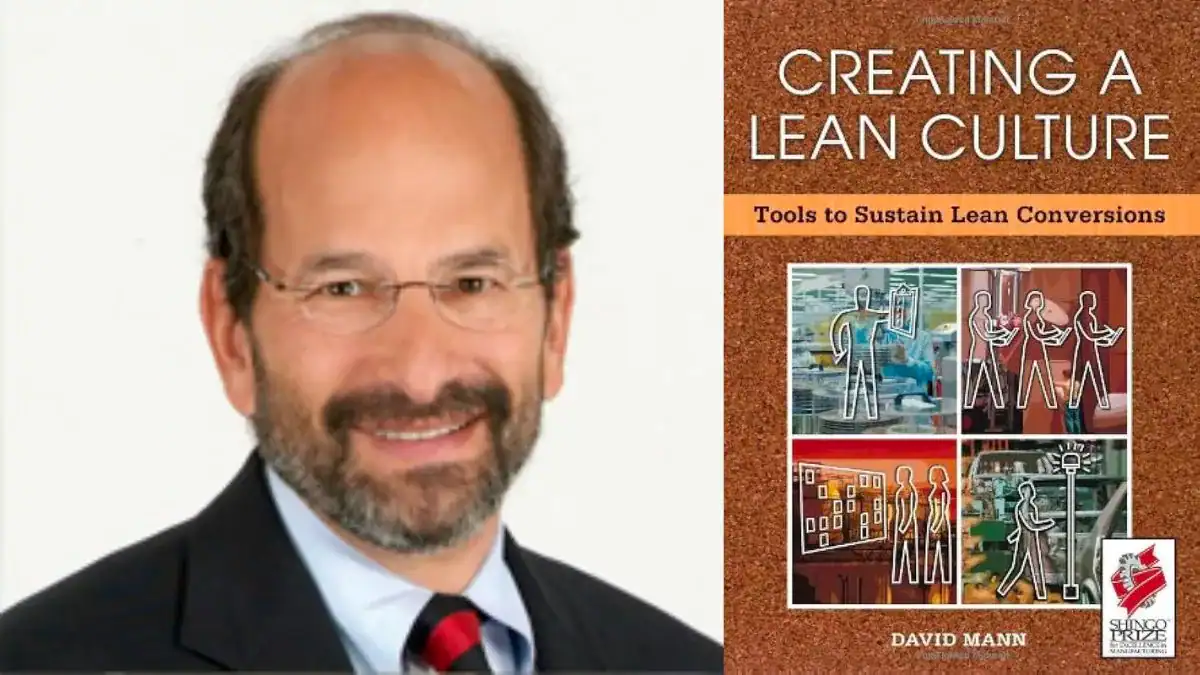
LeanBlog Podcast Episode #9 is a discussion with David Mann, the author of the excellent book Creating A Lean Culture: Tools To Sustain Lean Conversions.
In this episode, we will talk about Steelcase's experience with their lean efforts and the realization that they required a “Lean Management System” for supervisors, managers, and leaders. We'll talk about what that means, why it's a critical feature of their Lean System and how to start making the transition to being a “lean leader.”
Scroll down for an article based on the episode and an automated transcript.
For all episodes, visit the main Podcast page, which includes information on how to subscribe via RSS or via Apple Podcasts.
If you have feedback on the podcast, or any questions for me or my guests, you can email me at leanpodcast@gmail.com. Please give your location and your first name. Any comments might be used in follow-ups to the podcast.
Article About the Episode:
Lean Management Excellence: Sustaining the Lean Journey
Lean management principles have gained widespread recognition in various industries over the past decades as a means of improving efficiency, reducing waste, and enhancing overall performance. These principles, stemming from the Toyota Production System, focus on creating value and flow along with encouraging continuous improvement. However, a critical aspect that ensures the long-term success of Lean implementations is indeed the culture within the organization and the mechanisms that establish Lean behaviors across all levels of the enterprise.
The Importance of Cultivating a Lean Culture
Creating a sustainable Lean culture is fundamental in ensuring that the beneficial changes brought about by Lean practices continue to thrive and evolve. It's not enough to merely introduce new systems and workflows. An organization must embed the ethos of Lean within its people. Business pressures such as increased competition, demanding capital markets, and sophisticated customers – often described as the “three C's” – are driving forces for companies to adapt their operational models into more Lean-focused and agile frameworks.
The Role of Leadership in Lean
Leadership plays a paramount role in the transition to and maintenance of a Lean environment. Influencing and preparing employees – especially those at the supervisory level – for the cultural shift that accompanies Lean transformations is a task that requires careful planning and execution. Transitioning from traditional production models such as batch and queue systems with accompanying outdated pay systems to Lean's more efficient processes is a significant change for any organization. Preparing supervisors to communicate effectively about these changes is crucial.
Leaders must be equipped not just with the understanding of what is changing, but also how to manage and sustain these changes. This includes helping them articulate the case for change eloquently and to respond to their teams' concerns in a way that aligns with the company's new Lean direction. Developing this leadership capability is the backbone of successful Lean transformation.
Sustaining Lean Conversions through Behavioral Changes
It's one thing to change processes; it's quite another to change behaviors. Successful Lean implementations depend heavily upon the behavior of those involved, particularly those who manage the processes on a day-to-day basis. A Lean management system that complements the Lean production system is crucial. Training and sustaining behavioral changes across teams and supervisors is vital for maintaining the continuous improvement of processes.
Continuous Improvement and the Lean Management System
The idea of continuous improvement underpins every aspect of Lean methodology. This philosophy requires not only adjusting systems and production lines but also, and perhaps more importantly, continuously developing the people who make the system work. Often, businesses struggle not with the initial implementation of Lean methods, but with sustaining the momentum once the external consultants have left and the spotlight has shifted. It is here that a robust Lean management system shows its value, providing the support and structure upon which lasting change can be built.
Educating for Lean Management
For sustainable Lean culture, education and development structures need to be in place, encompassing all stakeholders in the organization. This can include formal training, mentoring by those proficient in Lean principles, and regular engagement in Lean discussions. Adjunct faculty roles in universities, participating in regional boards for manufacturing excellence, and other educational engagements contribute to broadening the scope of Lean knowledge dissemination.
Speaking, Sharing, and Advancing Lean Principles
Speaking engagements and contributions to Lean-related publications extend the discussion on Lean management beyond internal corporate boundaries. The sharing of experiences provides invaluable insights into sustaining Lean conversions long-term. Examining the success stories and challenges in Lean journeys through forums such as podcasts, industry magazines, and boards facilitates the ongoing exchange of knowledge.
In conclusion, embedding a Lean culture within an organization is a multifaceted challenge that encompasses more than just the shift in operational procedures. It entails a fundamental change in behaviors and mindsets – a journey that demands leadership buy-in, broad-based education, and the establishment of a supportive Lean management system. Only by addressing these elements can organizations hope to sustain the benefits of their Lean transformations and continue to thrive in competitive and ever-changing markets.
Implementing Visual Tools for Lean Supervision
To overcome the challenges Lean supervisors face, the introduction of visual tools is an invaluable step. These tools, comprising hour-by-hour production tracking charts, operator status boards, and performance indicators, serve a dual purpose. On one hand, they simplify the supervisor's task of identifying the state of production processes at a glance. On the other, they empower operators by providing immediate, visual feedback about their work and its value within the overall process.
The Hour-by-Hour Tracking Approach
Hourly tracking charts have evolved as a standard practice in many Lean organizations. By narrowing the focus from a daily overview to an hour-by-hour perspective, supervisors can intervene promptly when production lags behind schedule. This proactive involvement not only prevents the accumulation of backlogs but also encourages a problem-solving mindset that tackles issues as they arise.
Ensuring Adherence to Standard Work
Emphasizing the importance of standard work for both team leaders and operators is crucial. The repetitive nature of this work ensures that essential tasks are completed effectively and efficiently. Supervisors need to understand their role, not just in enforcing these standards but in supporting their teams in adhering to them. By championing the literal and figurative ‘stop signs' team leaders have, supervisors can prevent interruptions that may compromise the process flow.
Building Hierarchies for Lean Checks and Audits
A hierarchical system of checks and audits is beneficial for ensuring that every level of the organization remains aligned with Lean principles. It is akin to quality checks in lean assembly processes, where the output of one function is the input to another, necessitating constant verification of correct execution at each stage.
From Team Leaders to Executives: A Cascade of Accountability
The Lean philosophy embeds accountability throughout the organization, from team leaders right up to plant managers and executives. Each role has a portion of their time dedicated to this oversight. For team leaders, it's ensuring production operators follow their standard work. For supervisors, it's about guaranteeing team leader adherence, and for value stream managers, it's about oversight of supervisors. Even executives are involved, often following a structured checklist during their time on the production floor.
Making Process Focus a Habit
Through continuous engagement with the Lean system and maintaining the integrity of standard work, supervisory roles begin to transform. What may once have felt like a constriction becomes a liberating force that aligns individual roles with organizational priorities. The focus on the Lean process becomes second nature.
The Shift from Reactive to Proactive Leadership
Training and experience lead supervisors to move from firefighting to predicting and preemptively addressing problems, displaying a proactive leadership style more aligned with Lean principles. This shift is significant not only for the smooth operation of production but also for creating a culture where continuous improvement is the norm rather than the exception.
Embracing Standard Work for Supervisors
The resistance supervisors may feel towards adopting standard work for themselves can be mitigated through education, training, and proof of concept. Standard work helps supervisors stay on task and gives them a more in-depth view of what is going on in their area. As supervisors begin to see the benefits of reduced chaos and increased predictability in their work, they are more likely to embrace the established standards.
Building Trust through Transparency and Support
Building trust with supervisors involves transparency about the intention behind changes and offering robust support as they transition to Lean processes. When supervisors see that improvements lead to a reduction in stress and more manageable workflows, their buy-in grows. This trust further develops as they are given the necessary tools to succeed and the autonomy to contribute positively to the Lean journey.
Continuing education and leadership development are critical factors in ingraining a Lean culture within an organization. Leaders must be equipped with the skill set to not only implement Lean but to sustain it through a deep understanding of its principles and methodologies. Only by focusing on process and supporting each other in this methodology can an organization truly realize the full potential of its Lean management system.
Enhancing Leadership Through a Lean Mindset
The early successes or failures of Lean management often hinge on the attitudes and behaviors of supervisors and managers. Leadership plays a pivotal role in either fostering a culture of continuous improvement or stifling the lean journey before it gains momentum.
Transitioning Supervisors: Shifting from Punitive to Inquisitive
Embracing a lean philosophy requires supervisors to shift their management style from punitive to inquisitive. Punitive leadership focuses on assigning blame when things go wrong. By contrast, inquisitive leadership encourages supervisors to delve into the root causes of problems.
For supervisors to facilitate continuous improvement successfully, they must:
- Replace the instinct to “jump down someone's throat” with a composed approach that seeks to understand the issue by asking “why.”
- Encourage their teams to identify not just the problems, but also their causes, and possible solutions that may prevent recurrence in the future.
A real-world example of such a transition involved a supervisor who returned from a break to find his production area in chaos. After attempting to rectify the situation single-handedly for several days, his manager suggested he stick to his standard work. This advice refocused the supervisor's efforts, and quickly brought stability back to the production line. The supervisor became a firm believer in following standard work protocols as a means to maintain control and instill process discipline.
Creating Robust Systems over Heroic Efforts
The Lean model favors systems and structures over individual heroism. Incident analysis at one manufacturing company revealed that a breakdown in process — such as machines malfunctioning — was triggering unsustainably heroic behaviors among supervisors. One supervisor even drove for miles to procure parts for repairs, an effort which was commended but was ultimately a symptom of a flawed process.
To counteract this, places such as upholstery areas now have:
- Designated zones with backup equipment for ready replacement to maintain production flow instead of makeshift solutions.
- A focus on process reliability and efficient response to common issues rather than ad hoc troubleshooting.
This approach underscores that solving systemic issues is more productive and sustainable than sporadic acts of individual bravery. Manufacturing personnel, who are quite pragmatic by nature, have shown great openness to adopting measures that effectively stabilize and streamline processes once they see them in action.
Determining The Suitability of Supervisors for Lean Leadership
A crucial part of integrating Lean leadership is evaluating supervisors' ability and willingness to embrace new ways of thinking. When the expectations are made clear, it becomes easy to monitor compliance. Supervisor conduct should be assessed to ensure:
- Proper training
- Clear understanding of expectations
- Availability of appropriate tools and materials
- Receipt of actionable feedback on their performance
This evaluation method becomes highly effective in a lean-focused organization, where the management system mirrors the production system in its process-dependence. Typically, within a few weeks, it becomes evident who is willing to adapt to the new culture of Lean and who is not. Supervisors' performance should ideally be measured by their adherence to process, rather than solely by outcomes, as consistent process adherence will naturally lead to desirable results.
Realities of Lean Leadership During Adversity
The reality of implementing Lean during tough economic times can be harsh but telling. The recessions of the early 2000s tested many companies. At companies like Steelcase, leaders noticed that those who remained in managerial positions after significant downsizing tended to be those who truly embraced Lean — not merely by paying lip service but by actively engaging with Lean principles to maintain efficient operations.
Despite being difficult, this natural selection of sorts highlights a critical point: true Lean leaders not only survive but thrive during adversity through their genuine commitment to the principles and practices of Lean management. Their ability to keep Lean systems functioning becomes an invaluable asset to the organization.
The development of a Lean culture is a journey with many facets. One of the pivotal factors lies in the transformation of supervisors from traditional command-and-control figures to leaders who support, guide, and improve processes together with their teams. Leaders embracing a Lean mindset will likely discover that their organizations are more resilient, adaptive, and, ultimately, more successful in the long term.
Fostering Growth Through Learning from Mistakes
One of the most vital yet overlooked aspects of Lean leadership is the ability to learn from mistakes. Traditional business culture often punishes errors, but a Lean mindset values them as opportunities for growth and innovation. Leaders need to cultivate an environment where mistakes are not hidden or shamed, but openly discussed and used as a platform for learning.
To achieve this, leaders should:
- Establish trust within teams, ensuring that employees feel safe to admit errors without fear of retribution.
- Lead by example by owning their mistakes and demonstrating the learning process.
- Provide training and resources focused on problem-solving and critical thinking skills.
By embracing mistakes as part of the learning process, organizations can innovate more effectively. This is because a culture that hides mistakes is also one that stifles creativity and risk-taking, which are essential components of innovation.
The Role of Reflection in Lean Leadership
Reflection is another core principle within Lean thinking which facilitates a deeper understanding of mistakes and successes alike. Regular reflection sessions can empower teams to proactively identify continuous improvement opportunities.
To incorporate reflection into Lean leadership:
- Schedule regular meetings dedicated to process review and open discussion.
- Encourage team members to share their thoughts on what is and isn't working.
- Use structured methodologies, like After Action Reviews or the 5 Whys, to guide reflective practices.
Integrating Audio and Visual Learning Tools
The recent release of audio books like “The Mistakes That Make Us,” underscores the relevance of diverse learning tools in Lean initiatives. In multimodal learning environments, employees have access to knowledge through various formats – audio, visual, and kinesthetic. This multimodal approach can cater to different learning styles and reinforce Lean principles.
To integrate these tools, organizations should:
- Provide access to a library of resources, including books, audiobooks, podcasts, and videos on Lean topics.
- Encourage employees to consume content in whatever medium suits them best.
- Facilitate group discussions on insights and lessons gleaned from these resources.
Embracing Technological Solutions
In the digital age, technology can significantly support Lean leadership in managing processes and facilitating continuous improvement. Software tools can track production metrics, manage workflow, and automate standard work procedures allowing leaders to focus on strategy and employee development.
Effective technology integration might involve:
- Implementing process management software to enhance visibility and control.
- Utilizing data analytics to objectively assess performance and identify trends or anomalies.
- Offering digital platforms for training and communication to streamline knowledge sharing.
The Crucial Element of Adaptability in Lean Leadership
Finally, Lean leadership calls for adaptability–the ability to change course when necessary. This trait is particularly important in times of rapid change or unforeseen challenges. Leaders who are adaptable can navigate disruptions while still maintaining Lean principles and processes.
Adaptive Lean leadership should incorporate:
- Frequent reassessment of goals and strategies to align with current realities.
- A willingness to experiment with new processes or technologies.
- Emphasizing the value of flexibility and change-readiness across the organization.
In conclusion, Lean leadership requires a nuanced combination of strategies, including learning from mistakes, promoting reflection, integrating versatile learning tools, leveraging technology and nurturing adaptability. These competencies enable leaders not only to support their team in the present but also to lay the groundwork for a resilient and innovative culture that can stand the test of time and challenge.

Follow the Lean Blog Interviews podcast
Since 2006, I've been talking with leaders, authors, and practitioners about how Lean thinking works in the real world, in healthcare, manufacturing, and beyond. Follow the show so you don't miss new episodes.
Transcript:
Mark Graban: I'm very excited today, my guest is David Mann. He's the author of an outstanding book. It's called Creating a Lean Culture: Tools to Sustain Lean Conversions, a book that was awarded the Shingo Research and Professional Publication Award in 2006.
David has been with Steelcase in Michigan since 1987. He was involved in the very beginning of their Lean initiatives which he's going to talk about today.
Today, in addition to working with manufacturing within Steelcase, David leads an internal team applying Lean principles to business processes throughout the enterprise. He's a regional board member of the Association for Manufacturing Excellence, serves on the board of their Target magazine.
He's also an examiner for The Shingo Prize, and is, among other things, an adjunct faculty member at Ohio State University in their Fisher College of Business. He's a frequent speaker on Lean management.
[music]
Mark: David, thanks for joining us on the podcast. It's great to have you with us.
David Mann: Thank you, Mark. I appreciate the opportunity.
How David Mann Got Started With Lean at Steelcase
Mark: Before we get into some of the topics in your book, Creating a Lean Culture, if you wouldn't mind talking a little bit about how you got started personally, learning about Lean in your career and how your background as a social scientist plays into the perspective you had in Lean over your career.
David: The first thing to say is I've always been a steam shovel watcher, in that I've been interested in the way things work, and have been interested in operations. I was asked to help with communication for a Lean initiative at Steelcase about ten years ago. I was happy to do that, and as I got into that role, into those tasks, I had to learn something about what I was talking about.
I spent time with the Lean project teams that were working on Value Stream conversions in, at that time, one of our plants in our headquarters, location in Michigan. Grand Rapids, Michigan. We were telling people about Lean, talking about a case for change. An externally based case for change, which is pretty important in persuading people that there was something different that we had to do, that we didn't really have a lot of choice.
Mark: Those were some business pressures that were on Steelcase at the time?
David: Right. We called them, “The three Cs” – competitors, capital markets, and customers. Customers were looking for more value. Competitors were closing the gap, where there were gaps with us. The company had gone public a few years earlier, and our stock price was a reflection of how the capital markets views our performance, left something to be desired.
Almost all the employees were stockholders. There was a gift of stock to everyone when the company did go public. There was pretty widespread understanding of how the street was looking at the financial performance of the company. We used that external case for change.
I'd been involved in organizational change for a long time now, like 30 years, in various roles and various places. I begin to see as we were doing this communication work that there were what you would conventionally call, “Change management problems.” That is, people were saying, “I'm not really sure I want to do this. What's the story with this?”
There was a gap there. It has always been a professional activity of mine and an interest of mine. I started thinking about how would we go about preparing people for change? It has always seemed to me and others, this is not unique insight of mine. It has always seems to me, if you want to influence people in an organization the highest leverage way to do that is to influence their immediate supervisors.
In this case, we were talking about a very substantial change for people on the shop floor, specifically because the change to Lean was going to involve changing the pay system for production operators. The company had 75 or 80 year history of paying a piece rate, which is a recipe for overproduction. Didn't really make much sense to continue with that.
That was a very big deal for people, as you might imagine. We needed to develop a way to help supervisors lead their people through this change from the conventional, state of the art, mid 50s batch and queue system. With the pay system to match it – that piece rate system – into Lean and into a different compensation system.
We developed a pretty slick way of preparing supervisors. To, first of all, identify the questions that people would likely have of them, and prepare them to answer those questions in their own words.
That was all fine. I would go out on the floor and see how things were going with the supervisors and see how things were going with these initial projects.
What we found was that we'd done a pretty effective job of helping supervisors explain the case for change and explain what this change to Lean was likely to mean for people, and how it was going to come down.
When we'd go out and look to see how they were doing, we found the change management stuff was fine, as I just said. As soon as the project team left, the Lean projects were falling apart completely.
We'd had very good advice. We'd worked with Lean consultants…all ex-Toyota, or Toyota trained consultants from the TWI Network. We had technically perfectly fine Lean designs and had gone about implementing them in a reasonable kind of way, but they were falling apart, as I mentioned, when the project teams left.
What we found is that we prepared supervisors to lead people through the change to Lean, but we really hadn't understood what it was that they needed to do when we got there.
This was with a corporate operations Lean team of just three or four people and a Lean Technical Leader in each of the plants. We'd sort of puzzle, “What are we seeing? Why aren't leaders doing what they need to do?”
“What are our consultants telling us?” Which was largely “Focus on the process. Focus on the process,” but they were unable to tell us what that meant, [laughs] which was interesting.
I likened it to the Toyota guys were sort of like fish, and we were asking them, “So, tell me what it's like being able to breathe underwater?” It was something that they had grown up with and they were unable to help us.
Not because they knew the answers and were withholding it, like some sort of Socratic sensei. They didn't know how to help us…know what to tell us.
Discovering the Need for a Lean Management System
Mark: That kind of reminds me of the old story of…this is going back a ways, baseball wise. Ted Williams – obviously a great hitter – translated into being a horrible manager and a horrible hitting coach, because he couldn't explain to somebody that didn't have that natural gift that he had.
David: Right, they couldn't tell us the recipe. Same kind of thing.
We spent, probably three or four years. We spent most of our time out on the floor with plant managers or value stream managers, supervisors, team leaders…just trying to understand what was going on.
Watching what they were doing, trying to make the translation from what we had learned from the usual sources. What we'd learned from reading, what we'd learned from our time with our sensei. Trying to apply that to what we were seeing in front of us.
Over that period of time, through really an extended period of trial and error, we began to understand that we needed really a different behavioral recipe, if you will. We needed to be able to help supervisors, value stream managers, plant managers, team leaders, all of them, understand, so what are the things that you need to do if you want to sustain these Lean conversions that we had continued to put in, really, one after the other. During this period, we probably did 30 to 40 value stream conversions across a number of plants.
We came to this sort of trial and error set of conclusions, that we needed something that we later came to call a Lean management system that needed to complement the Lean production system. If we didn't do that, we had changed the arrangement of the floor, we had changed the material flow, how we treated inventory, how we thought about inventory. We changed the information flow in terms of going from multiple scheduled points in an MRP based mode of scheduling production to as few scheduled points as we could. In most cases one, or depending on the process, a couple, at the pacemaker.
We had supervisors who were still running after parts and felt uncomfortable if they didn't have several days worth of material in their area, and operators who wanted to know what they were going to be doing for the week as opposed to what they were going to be doing for the next half hour.
In retrospect, we sort of worked our way into it. We needed to give the people in leadership positions a better idea of what it was that they needed to do in order to manage in this new Lean environment. We needed to give them the visual tools that would make it easy for anyone to see what the status of production was. Later, as we understood it more, what the status of the non-production operations were.
Then we needed a way to close the loop on this focus, which was really focusing much more on process and much less on results. We needed a way to close the loop on what the standard work for leaders was, showing up as the leaders used the visual controls. What are you seeing, how does expected meet up with actual? When actual falls short, then work to understand why, and develop a process to follow up on that in a way that can actually bring change, first stability and then improvement.
We ended up with a system that really closes the loop on process focus, which we had come to understand after being repeatedly told by our sensei, focus on the process, focus on the process. We finally came to understand what that meant, and that basically if you take care of your process, your process will take care of you. You shouldn't really wait until the end of the day to understand how your process is working.
Why Leaders Need Standard Work
Mark: In the book, it seems no accident that chapter three, right away, is this idea of standard work for leaders is being an important part of that management system. Being very reactive and fighting fires and being kind of a traditional supervisor, to transitioning into the Lean model of supervision.
We hear a lot about being a coach and being a different type of leader, but I've also seen resistance to the idea of standard work. Standard work is something for everyone else to do. I'm an engineer myself, so sometimes I'll pick on other engineers for being too focused on the engineering aspects of Lean. It sounds like you've been pushing the transition from engineering to the people side. How do you work with that resistance that supervisors might have to documenting what their daily activities are, to moving in that approach of actually embracing standard work for themselves?
David: It's a lot like other aspects of Lean in that it involves something of a leap of faith at some point. Like, OK, I'm willing to try this, but we had spent enough time with these folks on the, with the supervisors particularly, and with the others in leadership positions, on the floor, trying to sort of puzzle this out with them. We said, what if you try this, what if you try writing down.
We put these visual controls in place and the first visuals that we used were pretty typical production tracking charts, hour-by-hour charts is what we started with. The interval has gotten smaller over time.
Why don't you start out with the hour-by-hour chart and make sure that you're there at the hour-by-hour chart at least four times a day and when you're there, put your initials on it. See what's going on and talk to the team leader and if the hour-by-hour chart isn't filled out, then you know that the team leader is missing something. So you want to understand what's happening. Why is that? What can I do as the supervisor to help the team leader to follow their standard work which involves, among other things, filling out the production tracking chart.
We said give it a try. This was interesting, these were all long standing supervisors for the most part, and they were really the sensei I worked around. I mean these guys could pull rabbits out of hats, but that was in an environment where we had extra everything. Extra machines, extra material, extra time, extra people, extra space, and the Lean changes had really eliminated most of those extra things. It had made their lives more difficult.
What we suggested to them is, if you sort of take care of this system that you've put in place, it will make your work easier, and you also won't forget the kinds of things that you need to do to keep the system working.
These Lean systems, I've always found them to be much higher maintenance in terms of needing more attention than a batch and queue system where you've got several hours or maybe several days or who knows, more than that of inventory between operations.
Over time, it made sense to the supervisors that their team leaders would have standardized work, because the team leaders, about 80 percent of their time is accounted for by what they're supposed to do in their standard work. There is some beginning of shift, some end of shift activities but a lot of it is repetitive.
You maintain a focus on standardized work in every workstation, every day. You maintain production at takt time. You record the actual progress on production tracking charts.
It's fairly repetitive and it made sense to the supervisors that they help make the expectations for what their team leaders were supposed to do explicit. It also gave their team leaders like a school crossing guard stop sign to hold up when someone, whether it was a supervisor, or someone on their team asked them to do something that would take them out of the area and take them away from their standard work.
The standardized work for team leaders helped bring much more stability to the Lean processes, because there was someone in there focusing on the process all the time.
With that, we were able to say this is working for the team leaders but if you don't act as the second level of guarantee for the integrity of the team leaders following their standard work…
A Hierarchy of Checks and Audits
Mark: You talk about that hierarchy. I thought that was one of the interesting things in the book – the hierarchy of checks and audits at different levels within the organization.
David: It's very much like a Lean assembly process. There's redundant quality checks built in. I'm going to pass the work piece to you and the first part of your standard work is to verify that I did the critical things in my standard work.
The most important thing in a standardized Lean production process is the people that are building the product following the Lean process design which is reflected in their standard work.
You go up this system of checks and reinforcements where most of what the team leader does is verifying adherence of the production operators to their standard work. Most of what the supervisor does, accounting for maybe 50 percent of the supervisor's time, is to monitor and guarantee the integrity of the fidelity of observance of the team leaders to their standard work.
The value stream manager, probably 25 percent of their time is spent following up on the supervisor's standard work. Plant managers or manufacturing executives, they don't have standard work in the same kind of way in terms of the same kind of thing everyday. They've got a checklist of what they look for when they're on the floor.
Moving Supervisors From Heroics to Problem Solving
Mark: You made a point earlier and I think it's worth emphasizing or you can elaborate on. You talk about a manager coming and seeing something hadn't happened. Let's say the hourly numbers weren't on the chart.
You made the comment that they ask why didn't that happen or what could they do to help as opposed to I think back to experiences I had with supervisors in pre-Lean environments where when something went wrong you yelled at somebody.
It was more of my role as supervisor is to punish you when something didn't happen as opposed to asking why. Do you have some examples of maybe having to transition supervisors into that new way of asking why first instead of just jumping down someone's throat?
David: Something close to that. One supervisor in particular had taken a few days off around one of the holiday periods of the year, I don't remember which one. He came back and his area was completely out of control.
His area built various kinds of free standing desk units. It was a progressive build flow assembly line, except that there were partially built units all over the place on the floor. People were running, in some cases literally. They were here and there trying to find parts. They were scavenging from one unit to be able to build another. The whole thing was really a mess.
He worked for a very sharp value stream manager who sort of let him jump back into the fray and start expediting stuff, and running around, trying to do engineering's job, production control's job, maintenance's job. He let him do that for a couple of days before he said, “Why don't you try following your standard work?”
His standard work, of course, kept him in the area, kept him focused on what was happening in his area, and kept him using his two way cell phone radio calling the support groups that were supposed to be working, not for him in a direct reporting relationship, but were supposed to be supporting manufacturing.
Letting him know what was going on, what the problems were. He was there to direct his people not to be scavenging but to build what was buildable in the sequence that it came down.
Within a matter of a couple of days, instead of this sort of expediting and trying to get more and more and more of everything, and clogging the place, he had gotten it back to its previous level of stability.
He'd understood what the problems were. He communicated what he needed, that is to find the cause of the problem and resolve those causes. This was several years ago. He has been a believer since then.
By contrast, in an upholstery area – sewing, fabric, upholstery covers together – one of the supervisors who was second shift supervisor, afternoon and night shift supervisor, found that enough of the sewing machines had broken down that he was going to be in serious trouble.
He got in his truck and he drove to Detroit which is like two and a half, three hour drive. He was basically gone all night, but he went and got the sewing machine parts by George. That was the sort of thing that was applauded in those…
Mark: So he was being a hero.
David: Exactly, heroic efforts. Well, if you go to that area now, there are marked squares on the floor where there are back up sewing machines. I'm not an expert on sewing machines, but they have a sort of known level of reliability. And now when one goes down, instead of trying to take it apart and put it back together yourself, they wheel it out, they wheel a new one in. They send the one that needs repair out to a competent location to repair it and they keep running.
They've understood what the nature of the process is, where there are predictable problems. They put countermeasures in place to respond to the problems. They're not yelling at people. They're not making them stay four hours extra to get production out. They're able to maintain a stable process.
Manufacturing people like many other people are in my experience quite pragmatic. If you can demonstrate to them something that works, they'll do it.
Mark: They're willing to take that leap of faith and give it a try.
David: Yeah.
Supervisors Who Cannot or Will Not Make the Transition
Mark: Maybe one last topic before we wrap up here. Talked about managers, supervisors making transitions in the book there but in the chapter on standard work for leaders I think you mentioned 10 to 20 percent of supervisors just can't or choose not to make that transition into that new way of thinking.
What kind of time frame would you typically use for evaluating, or how much patience have you or your company had in evaluating supervisors before you decide you know what, this person needs to be moved on maybe?
David: That's a good question. One of the things that happen when you make expectations explicit is that you also make it really easy to see when the expectations are being met or not being met.
Leader standard work would be an example of explicit expectations. Just like operator work is an example of explicit expectations.
As with any other situation where actual is falling short of expected, you want to ask yourself five questions. Has this person been trained? Do they know what's expected of them? Do they have the proper tools? Do they have the proper material? Are they getting feedback on their performance?
You can do that in a physical situation. You can also do that when you've got someone in the supervisory position. You can very quickly see this is working, or this isn't working. If it isn't working, and I take the appropriate corrective action based on this quick five part assessment, is change happening or not?
Mark: It sounds like what you're describing comes back to responsibility of higher up management to make sure they're not setting vague expectations and saying you need to be Lean without explaining what that means in detail of how they're supposed to operate. And then coming back after three months and saying, well, you're not cutting it.
That sounds like that would be the complete opposite or really unfair way of treating people the opposite of what you're describing.
David: Yeah. Absolutely. Lean is about smaller quantities more frequently. I'll look at a days worth of leader behavior. I've got an accountability process that allows me to make assignments based on what's been going on in the previous day. Assignments are typically going to go to supervisors.
Are they able to get their assignment done? Are they able to get this sort of bite-sized improvement task completed? Either they are or they aren't.
The value stream manager would typically take a quick look at the supervisor's standardized work, the document that's been filled out at the end of the day, see if in fact the supervisor is in fact following his standard work, and take a look at the quality of entries on the production tracking charts.
Take a look at the quality of entries in terms of understanding the process – an entry being like a problem statement, in a problem solving discipline.
How well do people understand what they're doing? Are they taking the appropriate action? Do they understand their process?
Those things become clear much faster in this highly process-dependent environment that you create when you create a Lean management system that mirrors the production system.
Having said that, it becomes pretty clear in a matter of just a few weeks whether you've got leaders who are at least willing to give it a try or either don't have a clue, sort of those who won't do it, and those who can't do it. They become clear pretty quickly.
Mark: That kind of reminds me of a point you made earlier maybe in closing here. Instead of measuring the results where before supervisors would be measured on who made schedule, who didn't have any major quality problems – completely results based evaluation.
Taking it back more to evaluating, how are they performing in terms of the process. By tracking and measuring, their adherence to process, that's what's going to lead to the good results, over the long term, I suppose.
David: Exactly. To answer the last part of your question, dealing with people performance is the most difficult thing that managers do, for the most part. What happened at Steelcase is that the industry went into a recession of historic proportions. It lasted for three years. The size of the company shrank by 45 percent.
Mark: This was after the dot-com bubble burst? Early 2000s, is that right?
David: It was the dot-com bubble. It was 9/11, and it was the decline of profitability in the Fortune 500, Fortune 1000, which is the base for our business.
There were lots and lots of departures. When you looked around, the people that you saw still in managerial positions – still in leadership positions – tended to be the ones who had embraced Lean, not just giving it lip service, but were actually doing what they needed to do to keep the Lean production systems operating.
It wasn't pretty, but that's how it worked.
Mark: David, thanks again for sharing your experiences and thoughts with us, here on the podcast. Again, the book is Creating a Lean Culture: Tools to Sustain Lean Conversions. I'll make sure that there are links to the book and more of the topics that you've talked to on the website.
David: Very good, thanks Mark. Thanks again for the opportunity.
Mark: OK, David. Thank you very much.






[…] to my podcast with David Mann, from […]
I’m sorry to share that David passed away on 12/26/2023… you can read his obituary here:
https://obits.mlive.com/us/obituaries/grandrapids/name/david-mann-obituary?id=53961061
My deepest condolences and sympathies to his family, friends, colleagues, and mentees. I liked David, the man, and his work very much.