
Psychological Safety at Work: Why You Get Your Say, Not Always Your Way
TL;DR: Psychological safety doesn't mean everyone gets their way–it means everyone gets a voice. When leaders listen, explain decisions, and show respect even in disagreement, trust grows and continuous improvement becomes possible.
There's a phrase I've been thinking about a lot lately:
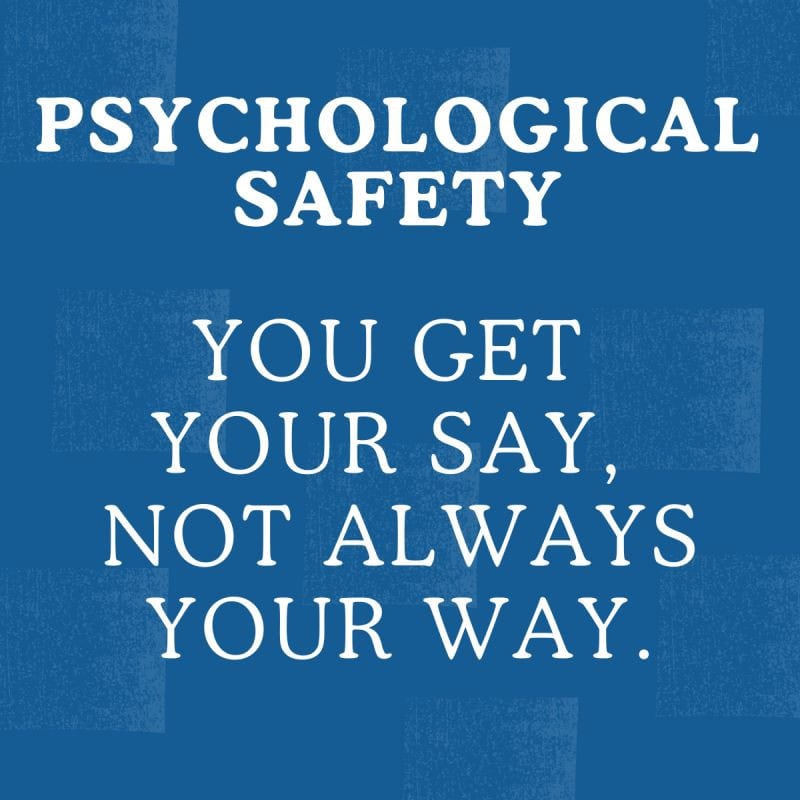
“You get your say, not always your way.”
It's a short sentence, but it says a lot. It's about voice, it's about respect, and it's about the kind of culture we're building–especially when we aim for continuous improvement.
In The Mistakes That Make Us, I wrote about the characteristics of learning organizations. One of the most important is encouraging people to speak up–not just about mistakes, but also about ideas, concerns, and potential risks.
But here's the nuance:
Psychological safety doesn't mean consensus. It doesn't mean you'll get your way every time.
It means your voice will be heard. It means leaders will listen thoughtfully. And ideally, it means your input will influence the outcome–even when it doesn't determine it.
That's a critical distinction for any organization, whether you're in healthcare, manufacturing, software, or a startup. Psychological safety is about inviting participation and then honoring it. It's not a guarantee of agreement–it's a promise that people will be treated with dignity and their contributions will be taken seriously.
When people feel like their input is ignored–or worse, punished–they stop contributing. Sometimes it's out of fear. Other times, it's because they believe it's futile.
Leaders have a key role here. It's not enough to say “thanks for the idea.” Respectful leadership goes a step further:
“Here's how we considered your input, and here's why we're taking a different direction.”
That kind of transparency turns what could be a disappointing moment into a teachable one. And that builds trust over time.
In continuous improvement cultures–those grounded in kaizen–we need to make space for disagreement. For honest dialogue. For hearing multiple perspectives and then making informed, thoughtful decisions. That's how we get better. That's how we build stronger systems.
And yes, that's how we move forward together.
So I'll leave you with a question:
Have you ever felt truly heard–even when your idea wasn't chosen?
What difference did that make for your motivation or your trust in leadership?
My Recent Shingo Institute Webinar
Want to hear more on this subject? Here's my recent 30-minute webinar for the Shingo Institute:
Psychological Safety Is About Voice, Not Veto Power
Psychological safety isn't about avoiding disappointment or guaranteeing agreement. It's about creating conditions where people are willing to speak up before problems grow–and where they trust that leaders will listen, explain, and act with integrity.
When people know they'll get their say–even if they don't always get their way–they're far more likely to raise concerns, share ideas, and engage in improvement. That's how organizations learn. That's how systems get better. And that's how trust is built over time.
For leaders, the real test of psychological safety isn't what happens when you agree with your team. It's how you respond when you don't.
Do people walk away from those moments feeling dismissed–or respected?
Because in the long run, improvement doesn't depend on unanimity. It depends on whether people believe their voice truly matters.
Psychological safety at work is what allows organizations to surface problems early, learn from disagreement, and improve without fear or futility.