Why Did New Coke Fail? Lessons for Leaders and Learning
Why did New Coke fail? Coca-Cola's taste tests supported a new formula, but they did not establish that customers would accept losing the original. The company changed its flagship drink on April 23, 1985, then brought the original formula back as Coca-Cola classic on July 11, 79 days later.
According to Coca-Cola's own history, nearly 200,000 consumers participated in taste tests that favored the new formula. The company acknowledges that those tests did not capture the attachment customers felt to the existing product.
I first wrote this post for the 40th anniversary in April 2025, prompted by NPR's retrospective. The useful leadership question is what the evidence supported, what it left unanswered, and how leaders responded when the result disappointed them.
Here's a news report from the time:
Yes, I'm old enough to remember the launch, and I was a soda drinker then. Growing up in Michigan, I called it “pop.” I switched to saying “soda” during college. That change generated considerably less controversy.
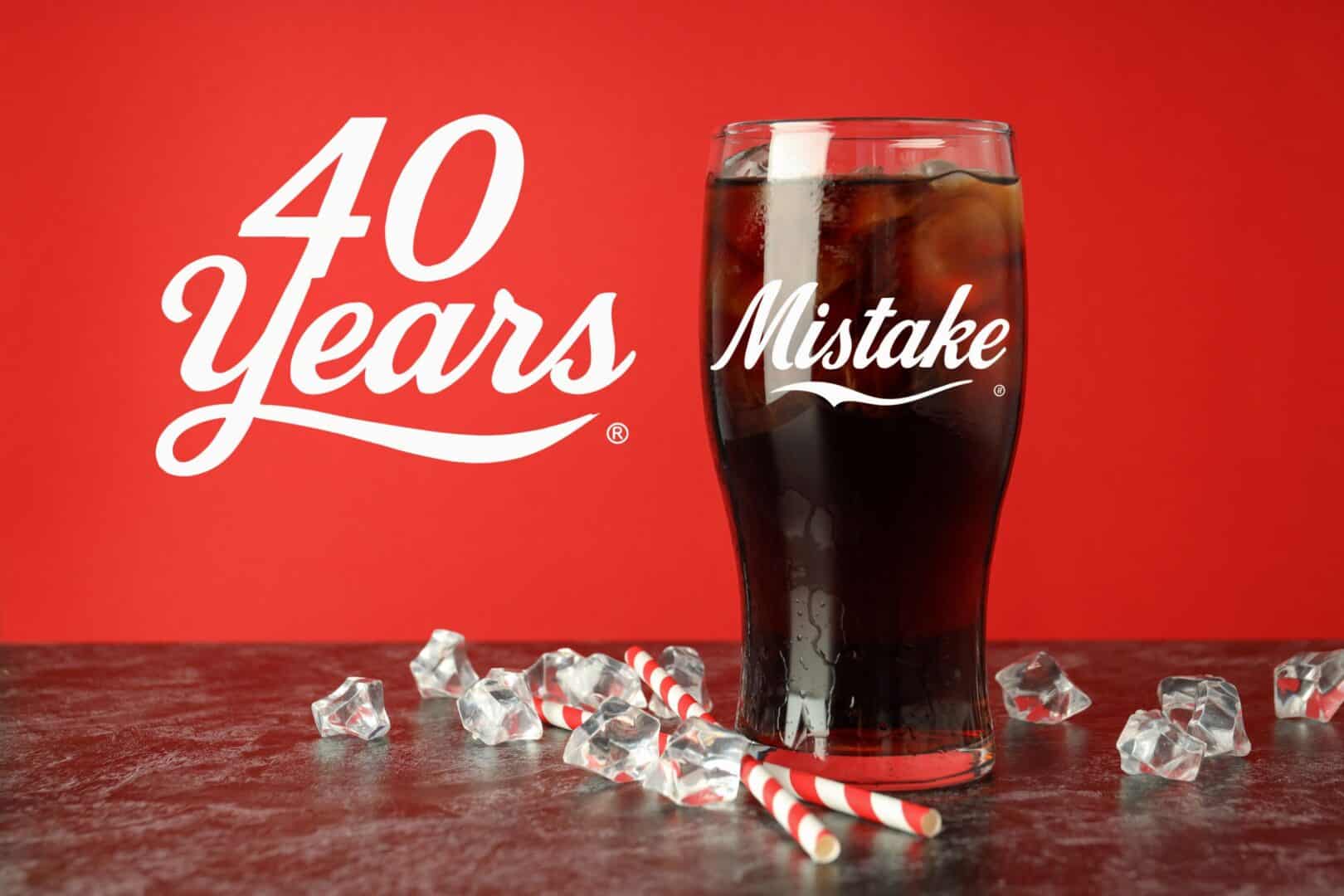
What's a Mistake?
In my book, The Mistakes That Make Us: Cultivating a Culture of Learning and Innovation, I use a dictionary definition of the word:
Mistakes are actions or judgments that turn out to be misguided or wrong.
Comparing an expected outcome with an actual outcome gives us a reason to investigate. A disappointing result does not automatically prove that the decision was unreasonable with the information available at the time. We still need to examine the assumptions and the decision process.
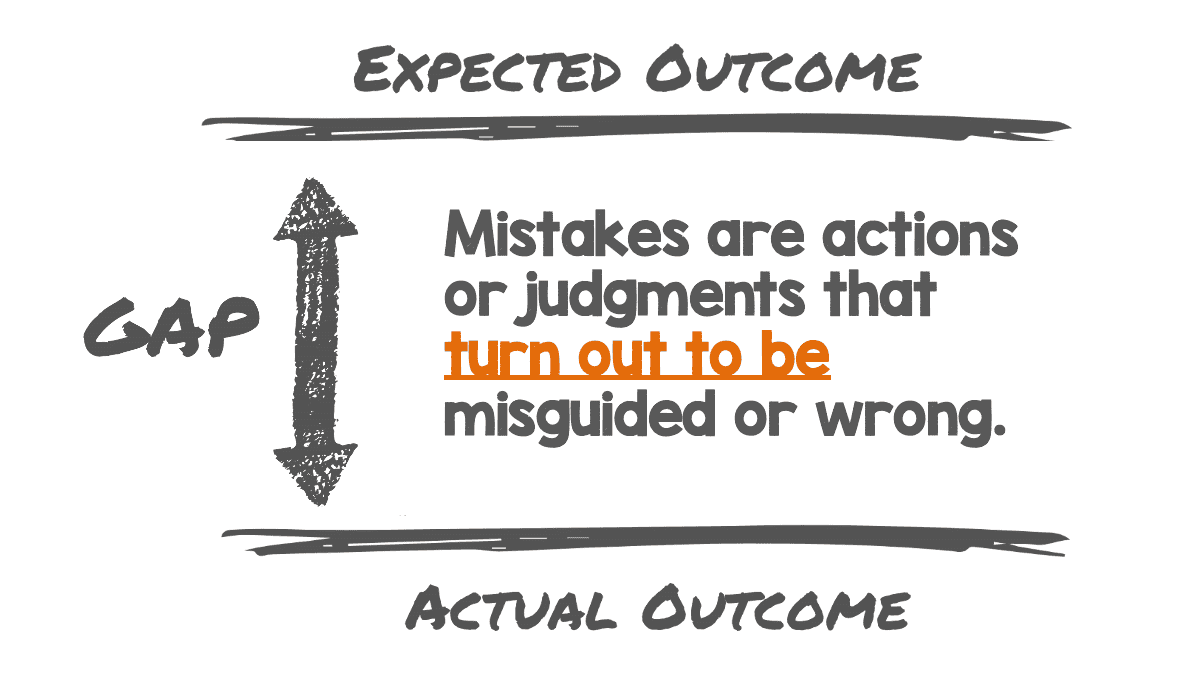
In this case, the customer backlash showed that replacing the original formula had consequences the taste-test results did not predict. That is worth understanding before dismissing the decision makers as foolish.
Hear Mark read this post — subscribe to Lean Blog Audio
What the market-share data can and cannot tell us
Coca-Cola's retrospective describes competitive pressure before the launch. That gives us context for the decision, but it does not establish that changing the formula was the right response.
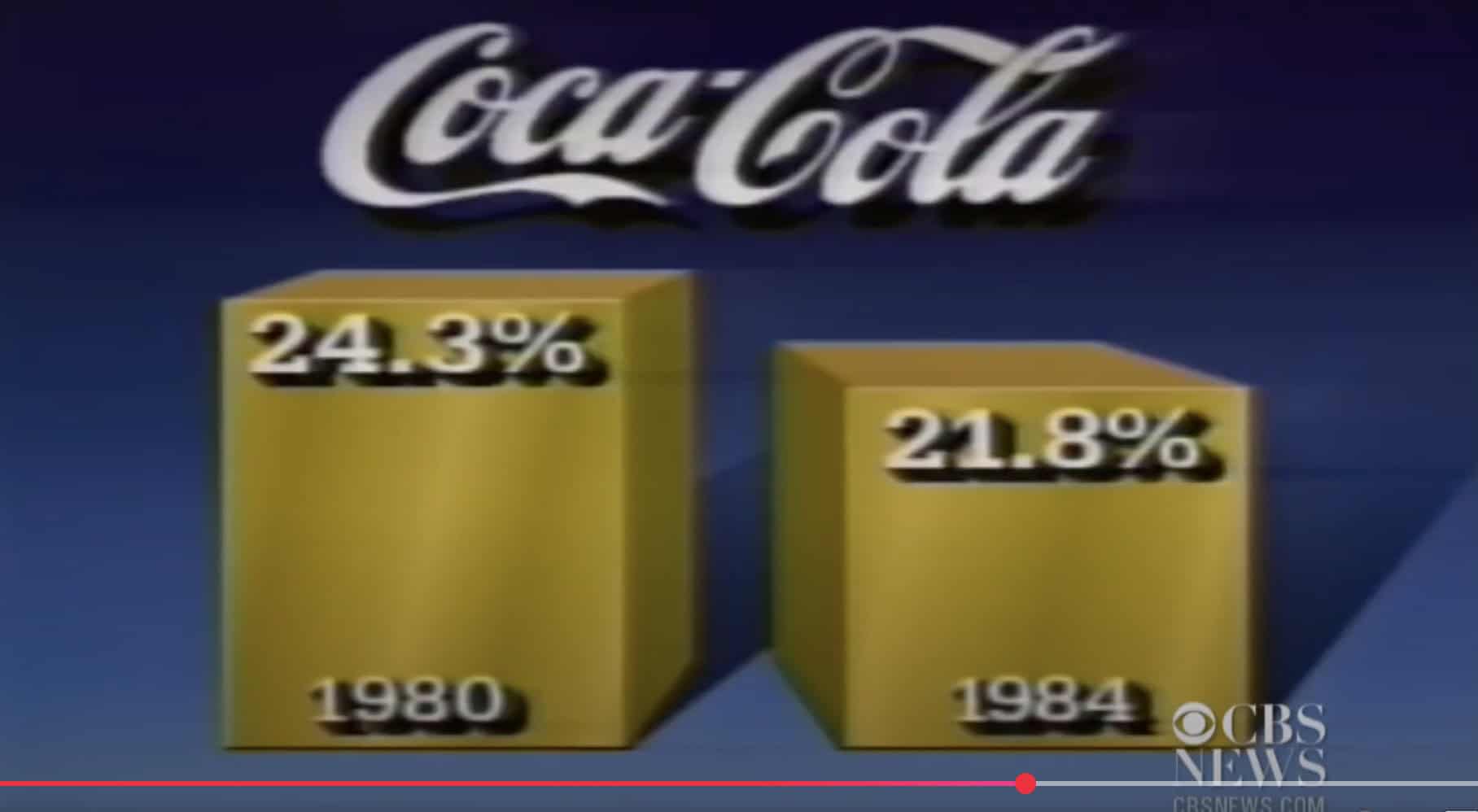
The CBS Evening News report illustrated falling market share with a two-point comparison. Two values show a difference, but they do not show the pattern over time. I discuss that limitation in Measures of Success. We would need more of the data available before the decision to assess the pattern properly.
A later market-share visualization covers data beginning in 1995. It illustrates the value of looking at multiple observations, but it starts ten years after New Coke. It cannot tell us whether the 1985 decision was a reaction to routine variation. I would not use that later series to draw a conclusion about the earlier decision.
For a practical explanation of evaluating change over time, see my guide to process behavior charts. A chart can help us ask better questions; it does not answer every question about customer behavior.
Why did New Coke fail despite favorable taste tests?
Taste preference was part of the competition between Coke and Pepsi. But liking a sample and accepting the replacement of a familiar product are different decisions. My interpretation is that the research needed to address both.
I also remember the “Take the Pepsi Challenge” TV commercials (and this one with “Welcome Back Kotter” star Gabe Kaplan):
The New Coke advertising below emphasizes taste-test results. Those results were relevant, but taste alone did not explain customers' loyalty or their response to losing an option.
I still think it's weird how these companies so boldly mention their primary rival in the “cola wars,” as did this Pepsi ad that pokes fun at Coke for changing their formula… and these old men represent the “new generation”?
Test the decision you actually plan to make
Before replacing something customers already use, I would want to understand what they value about it and what they would miss. A test of a new option should not automatically become evidence for removing the old one.
Offering both formulas would have been a different decision from replacing the original. We cannot know how that alternative would have performed. It is still a useful question for leaders: are we testing the proposed change, or only one feature of it?
This connects to common problem-solving mistakes, including settling on a countermeasure before examining the problem. Better evidence includes information that challenges our preferred answer.
Changing course is part of learning
Coca-Cola eventually restored the original formula and sold it alongside the new version. The reversal matters. Leaders need a way to act on feedback after launch, especially when the feedback conflicts with the case they made for the change.
For a team planning a change, agree in advance on what you expect, what you will monitor, and what would cause you to pause or reconsider. Make it possible for people to report disappointing results without having to defend themselves first. That is where accountability without blame becomes practical.
The next time a test produces encouraging results, ask what decision those results actually support. Then identify what you still need to learn before making a change that will be difficult for customers to reverse.
Read a free preview of The Mistakes That Make Us
My book explores how people and organizations respond to mistakes and use them to learn and improve. Read a free preview to see how it approaches leadership and accountability before deciding whether it is right for you.