You Can’t Cut Your Way to Success in Healthcare, with Andre DeMerchant
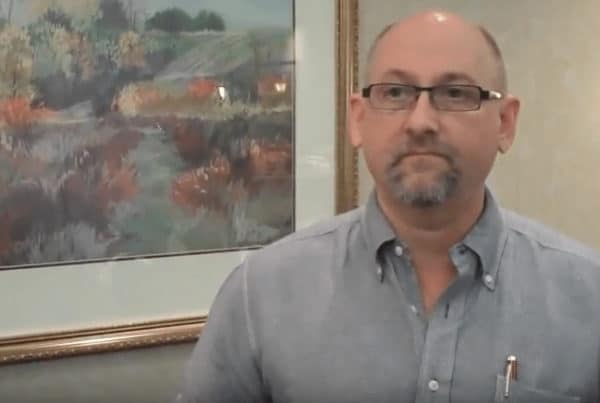
My guest for episode 307 is Andre DeMerchant, who spent 16 years at Toyota in Cambridge, Ontario before becoming a consultant and coach. The conversation was recorded in 2018, and it keeps circling back to one idea he learned in manufacturing and now watches play out in hospitals: you cannot cut your way to success.
Andre and I first worked together at an American hospital, back when we were both affiliated with Pascal Dennis and Lean Pathways. He learned the Toyota Production System the way few people get to — inside a greenfield plant, working alongside Japanese senseis to install the equipment and stand up the systems from scratch. He started as a team member and worked his way up to manager of stamping.
We spend the first stretch on a claim that still gets under my skin: that Lean is only about efficiency, and that you need Six Sigma to handle quality. Andre's view is that the word “Lean” undersells what Toyota actually built. It's a management system, not a toolbox.
From there we move into healthcare, where the pattern will sound familiar to anyone who has worked in a hospital. Change has been coming for years. A lot of organizations weren't ready for it. And when money gets tight, the first move is often to cut staff, sometimes including the very improvement teams that could help. Andre tells a story about a 235-bed hospital where the three-person Lean team showed up one Monday to find layoff notices waiting.
His framing on cost-cutting is the line I keep coming back to. The best a round of cuts can do is buy time to go and do the right thing. The harder, slower work is building an organization flexible enough to handle whatever comes next, before the crisis arrives.
We also get into flexing, the practice of sending staff home early when census is low, and why Andre sees it as a missed chance to put expertise to work. And I appreciated his insistence that executives making painful cuts usually aren't bad people. They're working inside a bad process, the same way a frontline employee who makes a mistake usually is.
Near the end, Andre answers his own question about why he keeps doing this work on the hard days. It lands better in his voice than in any summary I could write.
What would change in your organization if a layoff were treated the way a good team treats a defect — as a signal that a process upstream needs attention?

For a link to this episode, refer people to www.leanblog.org/307.
Topics and Info for this Episode:
- Andre's path: 16 years at Toyota in Cambridge, from team member to stamping manager, then three decades of consulting across industries and continents
- Learning TPS in a greenfield plant alongside Japanese senseis, with the equipment not yet installed
- Why he uses “Lean” and “Toyota Production System” interchangeably, and where the two terms drift apart
- Does TPS only work in Japan? The custom-suit metaphor for tailoring the system to different cultures
- The misunderstanding that Lean handles efficiency while Six Sigma handles quality
- Why “we're already lean, we don't have enough people” misreads what Lean means
- The two problems staring healthcare down: being unprepared for change, and the financial hardship that follows
- “Fiscal judgment day” and why waiting shrinks your options
- The CEO who wouldn't act until he could see exactly what change was coming
- What Toyota did during the 1990s sales sag: doubled down on improvement work
- Respect for People and Toyota's social conscience after the 2011 earthquake and tsunami
- Why GM laid people off while Toyota kept theirs working, with similar cash on hand
- Flexing in hospitals, and the choice to send people home versus engaging them in improvement
- The GM jobs bank and the waste of unused human talent
- Why cost-cutting organizations often cut their improvement teams first
- Treating an executive's layoff decision as a bad process, not a bad person
- The two certainties: you can't cut your way to success, and you can't solve today's problems with yesterday's thinking
- How US and Canadian healthcare compare, and how the payer model changes the incentive to improve
- “Patients are not cars,” and what healthcare's emotional investment offers improvement work
For earlier episodes of my podcast, visit the main Podcast page, which includes information on how to subscribe via RSS, through Android apps, or via Apple Podcasts. You can also subscribe and listen via Stitcher. Please leave us a review and rating!
Thanks for listening!
Transcript
Hi, this is Mark Graban. Welcome to episode 307 of the podcast. It's April 30, 2018. My guest today is Andre DeMerchant, president of DeMerchant Healthcare Solutions Inc., based in Kitchener, Ontario, Canada. Andre and I first crossed paths working together at an American healthcare client, through our then-affiliation with Pascal Dennis and Lean Pathways.
In today's episode, we start with Andre's history working for Toyota in Canada and what he learned there, especially about how flow works. We talk about what Lean and the Toyota Production System mean to him, and how TPS transcends culture, language, and industry. Then we shift to healthcare and some of the common challenges organizations face, including financial hardship and why so many hospitals are poorly prepared for change. A central theme is cost-cutting, and why you can't cut your way to success.
You can find links and more information at leanblog.org/307.
From Toyota to Consulting
Mark Graban: Andre, thank you for joining us. Before we get into healthcare and improvement and organizational change, we like to ask guests to introduce themselves and their background, and maybe weave in where you first got introduced to Lean.
Andre DeMerchant: My background in Lean is actually from Toyota, which you'd probably consider one of the A-rank practitioners of Lean. When I joined Toyota a number of years ago, it wasn't called Lean back then. It was the Toyota Production System. I didn't know it was called Lean until I had left Toyota and started working on my own, and then I realized Lean and the Toyota Production System are the same thing once you get out into the real world.
I spent 16 years at Toyota. It was an interesting evolution, because it was a greenfield site that had just been constructed. I was among the first batch of employees hired. When we got into the facility, it was basically a shell. It had walls and a roof, but a lot of the equipment wasn't installed. So those of us hired at that time worked side by side with the Japanese senseis, setting up the systems, installing the equipment, really understanding how flow works from the ground up. I was hired as a team member, not as management. I worked my way through the ranks and ultimately became manager of stamping. Over the course of that career I spent a lot of time in Japan, with many visits for new model projects and additional Toyota Production System training.
It was an exceptional experience, because I got to see the TPS philosophy, the thinking, and the tools applied at different levels of the organization and at different stages of growth. We started as a greenfield site making 50,000 cars a year and grew to making 1,200 cars per shift. That changes the dynamic of how TPS works. And it was interesting how we were all taught the Toyota Production System, because Toyota brought in people who weren't from an automotive background. I came to Toyota from a meatpacking company, where I was a lead hand. No car-building experience, no exposure to TPS. I don't think I had a full appreciation at the time of what I was learning.
I left Toyota to become operations manager and TPS transformation coach for a small engineering company outside Detroit, where we were quite successful. It was tiny. I went from a 4,500-person Toyota plant to a 100-person engineering company.
Mark Graban: Hmm.
Andre DeMerchant: It was quite a difference, and it was interesting to take what I'd learned and apply it to a different kind of business, plus the intimacy you get with a small organization. At the end of that, once we accomplished what we needed to, I started my own consulting company. Over the last three decades I've been applying TPS thinking and tools to all kinds of industries: general manufacturing, furniture making, agriculture, service, aerospace, and on several continents. I spent quite a bit of time in Europe and some time in Central America. TPS actually works in many countries. It transcends many cultures. It's just a matter of translating it so it makes sense to the people you're talking to.
Mark Graban: Going back, a couple of follow-ups. The plant you're talking about was Cambridge, Ontario, correct?
Andre DeMerchant: That's correct. The Toyota Motor Manufacturing plant in Cambridge, Ontario. When I first started, we were just making the Corolla. Then it was the Corolla and the Matrix, the station wagon Toyota no longer makes. Then they introduced the Lexus to that plant. That was the first time the Lexus was built outside of Japan, so we were pretty proud of that.
Mark Graban: And that plant is still open and producing today?
Andre DeMerchant: Oh yeah, it's thriving. It has a sister plant now about 45 minutes down the road in Woodstock, Ontario that makes the RAV4. A lot of what we learned there, and a lot of the good people who grew up in the organization, went on to help establish that new plant.
Mark Graban: If I have the timeline right, I've talked to people on the podcast about NUMMI, which was Toyota's first toe in the water, working with General Motors in California. That's now the Tesla factory in Fremont. At least it shares the walls. I don't know if it shares the mindset, but that's a different discussion. Then Toyota opened their own plant in Georgetown, Kentucky, and Cambridge followed not too long after. Do I have that right?
Andre DeMerchant: That's correct. Georgetown was first. We were a couple of years after that. Then Indiana and Texas, and I can't remember if there was an engineering facility in there as well. Toyota expanded fairly rapidly through the '90s.
Does the Toyota Production System Work Outside Japan?
Mark Graban: You made the point that Lean and TPS transcend industries and cultures. You still occasionally hear people say, “Oh, well, this would be easy if we were Japanese.” From my handful of trips to Japan, that seems not to be true. Toyota and companies like them have worked hard to create a culture that isn't exactly the same as Japanese business culture, with American and other influences. Could you elaborate on why people are skeptical about how TPS and Lean translate?
Andre DeMerchant: People are skeptical when you first start talking to them about what Lean or TPS can do for their business. A lot of it is the association with Japanese culture. They think it only works in a very structured environment like Japan. I think that comes partly from the fact that as we teach TPS, it comes with a lot of embedded Japanese words. People look at that and say, “This is something specifically for Japan,” when it's not.
When you think about Toyota, they've got 51 different manufacturing facilities in 28 countries around the world. As a member of Toyota I got to travel to quite a few of them. While the cultures are different, the application of the Toyota Production System was very consistent. It was tailored for the culture. You have to consider the Toyota Production System like buying a really good suit. Everybody you're looking at is wearing a suit, but it's custom fit to them. TPS is the same way. Philosophically, what is the system trying to teach us? It's exactly the same, but you can tailor it to match different cultures. There's a lot of misinformation out there, or at least there used to be, about TPS working exclusively in Japanese or very structured cultures. The fact that we have very successful Toyota plants in North America by itself indicates that's not true.
Mark Graban: There's plenty of evidence at this point that Toyota has figured out how to be successful in other countries. They've been successful in Texas, with the San Antonio plant that's been open just over 10 years, which has been great for that area. They're becoming more of a global company. Maybe we can talk about translation across industries and get into healthcare. But first, a couple of other things.
Are Lean and TPS the Same Thing?
Mark Graban: You said you left Toyota and learned that TPS and Lean were the same thing. Some people take issue with that. They say Lean is an interpretation of TPS, and there are people who talk about TPS and Lean being different. Part of the challenge I see is that a lot of things get said in the name of Lean that don't seem to hold very close to TPS. Over time there's been a kind of variation or drift. TPS and Lean should be the same thing in principle. How do you respond to that?
Andre DeMerchant: Coming from me, when I say Lean or TPS, they mean the same thing.
Mark Graban: Mm-hmm.
Andre DeMerchant: I don't know if that's because of my background. I learned at an A-rank practitioner, which is Toyota.
Mark Graban: Right.
Andre DeMerchant: I don't know if that's influencing the way I look at it. I think you can very easily get tied up in semantics, and you can get tied up looking at exclusivity. What I mean is, TPS or Lean tends to breed a large batch of consultants and coaches. The way you differentiate yourself is to call what you're doing something a little different from the original. Think of it even from an element of Lean like TPM, total productive maintenance. The way we were taught TPM at Toyota, there are five pillars. But you can go online and find coaches who teach seven pillars, nine pillars, six pillars. At the end of the day it's all the same TPM. It's just marketed a little differently. So in my mind, Lean and TPS are the same thing. That's not universally true. There are people who believe those things are different. I also think the more people practice it who haven't had experience at an A-rank practitioner, the more they can dilute some of the meaning of what it's intended to be. There's some risk to that.
Common Misunderstandings About Lean
Mark Graban: There's variation that's inconsequential, and then there's the one thing that gets my dander up. I've heard people stand on a stage and say, “Lean is all about efficiency, and you better use Six Sigma for quality, because otherwise Lean would have you making bad stuff faster.” Wow. That is not my experience. When I was at General Motors learning from a NUMMI-trained plant manager, he said quality and efficiency go hand in hand. The two pillars of TPS on the Toyota website are flow and built-in quality. There are some wild misunderstandings out there.
Andre DeMerchant: I think that's absolutely true. If we got to vote and pick one way to describe it, I'd be more in favor of TPS, and I'll tell you why. The term Lean understates what the Toyota Production System can deliver. TPS is a system. When you think of Lean, you're often thinking about a toolbox full of tools. TPS is about a management system. It's the different components that fit together to drive a better business, including the mental models, the thinking. That's very important to make it all work. You don't get the same kind of mental leverage on Lean as you do with TPS. To say TPS really means a management system, that's a key component people often don't think about when they hear the term Lean by itself.
Mark Graban: I remember somebody at a hospital years ago who said, “Oh yeah, we're already lean, we don't have enough people as it is.” In their mind, “running lean” meant not having enough, where the intent of Lean was about effectiveness and doing more with less. But even that concept doesn't capture the nature of a philosophy and a management system.
Andre DeMerchant: For sure not. The way we were taught Lean at Toyota, it's about having what's needed when it's needed in the quantity that's needed. That's not just parts to build the car. That's resources, time, everything. You have to understand your business in a really intimate way to make that work for resources as well as parts. It's not about running short-handed on anything, because that doesn't do a service to anybody. It doesn't help quality, and it certainly doesn't help patient experience.
The Problems Facing Healthcare
Mark Graban: There's a tradition in healthcare, maybe an unhelpful tradition, of cost-cutting. There's a focus on slashing, cutting hours, cutting people, shrinking resources and capacity, instead of process improvement, waste reduction, improving flow. It struck me how you mentioned learning TPS, you were taught how flow works. In that context, what are your thoughts on some of the major issues healthcare organizations are up against today?
Andre DeMerchant: With the clients I get to visit, there are a couple of things staring them down right now. The first is that there is pending change for which they have no countermeasure. It's a little stunning, because change has been coming to healthcare for about 15 years, maybe longer, whether we wanted to accept it or not. The number of patients, the level of acuity, the increasing age groups, the ALC, while quality expectations increase and reimbursement for services continues to decline. These changes have been coming for a long time, and a lot of organizations are poorly prepared for them. Once upon a time you could rely on higher census, inpatient and outpatient, to be profitable. Now that's no longer a guarantee, because reimbursement is different. So the first part is that a lot of organizations are unprepared for the change they're facing. They either didn't see it coming, or they saw it and thought they could work around it.
What that leads to is the second big issue, financial hardship. Not preparing for the future ultimately leads to some kind of fiscal judgment day. That day is fixed in time for each organization, and it isn't the same for each one. It depends on the type of healthcare business they're in. But the common thread is that the closer you get to that fiscal judgment day, the fewer options you have to counter the problem. What you're left with then is only dramatic action.
Mark Graban: Mm.
Andre DeMerchant: Something you could have addressed with a small change a couple of years ago now becomes a moment of truth where you have to do something very big and deliberate. You almost have to use a blunt instrument to be successful, because it waited too long for a good countermeasure. That almost always leaves organizations in a position of staff cuts as an inevitable last resort.
I talked to a CEO of a healthcare organization a few months ago. He contacted me as a potential client. In the end he didn't commit, and I was kind of stunned by the reason. He basically said he didn't want to take any action until he saw exactly what change was coming to healthcare.
Mark Graban: Wow. So that crystal ball is arriving from Amazon with two-day shipping?
Andre DeMerchant: It's wishful thinking. By the time you actually see what the change is, it's too late. The goal has to be the same as it was in manufacturing some time ago: create a really flexible organization that can meet whatever challenge comes, not wait until you see the challenge and then counter that one thing. That's completely unhelpful. We had a great dialogue back and forth. He's a very smart man, I don't mean to imply he wasn't clever. I just couldn't make him understand that waiting until he knew what the problem was would be way too late to select from a number of options to counter it.
Holding Off Until the Uncertainty Clears
Mark Graban: I've heard similar things at increasing frequency in the last two years. Healthcare organizations in the US saying, “There's too much uncertainty right now, so we're going to hold off, we're conserving cash until things become less uncertain.” And I think, well, we have congressional elections coming up in 2018. It's hard to talk healthcare in the US or Canada without talking about politics and government. After the presidential election in 2016, uncertainty about the Affordable Care Act and possible repeal created uncertainty. But even though that stalled, the congressional elections, the next presidential election in 2020, that political uncertainty never goes away. There are many other dimensions of uncertainty. The people making these decisions are smart, dedicated people, but it leaves me scratching my head about how a wait-and-see approach is a compelling strategy. If you start getting better at improvement, that increases your capability of dealing with whatever the future throws at you.
Andre DeMerchant: That's exactly right. If I think about Toyota, even the plant I was at in Cambridge, around the mid-to-late '90s the car market had a big sag. People just weren't buying new cars, didn't matter whose. The volume dropped. What happened at the facility is the leadership doubled down on improvement work. They said, “I've got people now who have some free time,” free in quotation marks. As long as they are saving the organization the equivalent of their salary every day they come in and do improvement work, that's a bonus for us. That's a benefit we can cash in when the market picks up, which inevitably it will. So when you talk to people in healthcare and they can't see the benefit of doing improvement work, even in the face of uncertainty, when you probably should be doing it, it leaves me with a lot of anxiety. You want to help. This is an important industry. When you can't get through to people, or can't frame it in a way that helps them understand the urgency and how a change in mindset can help, it's very frustrating.
Respect for People and a Social Conscience
Mark Graban: I've blogged about this. Go back to the financial crisis. The Toyota plant in San Antonio, like others, paid employees to go through training and development and to participate in Kaizen. They even paid people to go do Habitat for Humanity. Even though that isn't directly saving the company money, somebody from the San Antonio plant said it develops teamwork and leadership skills, to even pay people to do things unrelated to building trucks. That philosophy of developing people, point one of the Toyota Way from Jeff Liker, is taking the long-term perspective.
Andre DeMerchant: Absolutely.
Mark Graban: After the earthquake and tsunami that hit Japan in 2011, there were stories of a paint supplier in Japan being catastrophically knocked offline. They supplied paint to Toyota and General Motors, among others. During that time Toyota paid people to do all of those things. General Motors, and there were headlines about this, was laying people off. Both companies had about the same amount of money in the bank.
Andre DeMerchant: Sure.
Mark Graban: So it's not that GM couldn't afford it. It's a difference in philosophy and mindset, and the different responses to the same scenario were really striking.
Andre DeMerchant: That's absolutely true. When you think about the Toyota Production System, one of the foundational pillars is Respect for People. When faced with hardship, sending people out to do things for Habitat for Humanity, developing leadership skills, that's all great. But embedded inside the Toyota Production System is a very big social conscience. It's not just about building the trucks or the cars. It's about what that means to society at large. If I do something negative at my facility, how does it impact my community? Toyota is very community-based and community-focused, so they take a big view of the world when things downturn, instead of trying to circle the wagons and say, “I'm going to lay a bunch of people off, we're going to save this money.” They're more about, “If we do something like that, what does it mean to the community? How does it impact individual households? What is the community able to do, even from a tax standpoint?” It's a completely different mindset, foundational to a different kind of business practice.
Flexing, or the Tyranny of the Spreadsheet
Mark Graban: Hospitals are often faced with this exact choice on a daily basis. It's common enough practice, what's called flexing, essentially a short-term layoff. We have four hours left in the shift, patient census is low, and some calculation of a ratio says thou shalt send people home. I've heard hospitals say, “We're forced to send people home.” I'm pretty sure that's not a matter of law. It's a choice. It's a tyranny of a spreadsheet that says send people home early, when they clearly have a choice of paying those nurses to participate in improvement work that would be directly meaningful around patient safety, quality, and cost. Think about what that does to staff morale when you're not shorting someone's paycheck for a few hours. What are your thoughts on that?
Andre DeMerchant: I'm in agreement with you. A lot of hospitals do flexing. The ones I'm involved with do it. To me, I try to look at it as an interim step. This is their temporary solution to manage some costs. But culturally, these organizations are not in the same mental space that a Toyota would be, where they would say, “Instead of having these people leave, I'm going to engage them for four hours.” I'm going to take that four hours and make improvements, because every time I make an improvement in my business, every time I take waste out and run that improved process, I'm cashing a check for that. I'm reaping the benefit over a very long term. At Toyota, during the slack periods, as long as you're making improvements equivalent to or better than about three times your annual salary, we'd call that good. And it was easy to find three times your salary worth of legitimate stuff to do, not massaged-numbers stuff to do. The healthcare industry hasn't reached that level of maturity yet.
Mark Graban: That's a good point. It's mindset and capability, of who would be helping those nurses, coaching them. When I worked at General Motors in 1995, before we got the new, NUMMI-trained plant manager, GM and the other Big Three automakers had something with the UAW called the jobs bank. The intent was that if you tried to replace jobs with robots, it couldn't lead to job loss or downtime. The potential was there to use these team members' experience and interest in doing other types of work, but the organization pretty much just let them sit in the cafeteria and drink coffee, which is such a waste of human talent. A lot of people there were burned out, and I understand why. But there were some people whose talents and motivations we were able to tap into for improvement work, especially once we got the new plant manager who encouraged respecting workers and no longer blaming them for all the problems in the plant. I appreciate your counter to the idea. The roundabout point I'm making is that we don't want to pay nurses to sit in the break room instead of going home. Organizations need to build the capability to put their talents and time to use.
Andre DeMerchant: That's absolutely true. If I've got four hours, or two, or even one hour of somebody's time, I have years of that person's expertise at my fingertips. Why wouldn't I want to use that to make a difference in the business? If you go back to human behavior, people don't work just to make money. We make money so we can make a living for our families, and that's totally legitimate. But people go to work to make a difference. People want to leave a legacy of improvement behind them. So instead of flexing, we have an opportunity to engage people to leave that legacy. Yet in some cases we're not able to, because the organizations haven't reached the level of Lean maturity where they can see that as a good idea.
Cutting the Improvement Team First
Andre DeMerchant: The other reason it often doesn't work is this. If they're already in cost-cutting mode, flexing is one of the things that helps them. But in cost-cutting mode, what do you suppose is one of the first groups to get cut? Of course it's the continuous improvement group, or the organizational excellence group, because they're often seen as extra and redundant. So you've maybe spent years growing expertise in an OE group, only to cut them when you need them most, which seems so counterintuitive.
I was working with a small hospital out west in the US, part of a bigger chain. About 235 beds. It had a three-person Lean team doing demonstrably good work with flow and quality. The hospital ran into financial difficulty, and just like that, the entire Lean team was gone.
Mark Graban: Yeah.
Andre DeMerchant: They showed up on a Monday morning and all got their layoff notices. It was stunning, because the very people the organization needed to help wade through the financial disturbance were the people they were unloading. I couldn't believe it.
Mark Graban: There's a lot of that happening these days. On one level, an organization, whether GM or a hospital, would struggle to use people's talents during slack time. On a different level, healthcare organizations and executives struggle to use their internal Lean departments. There's probably a complex fishbone diagram we could sketch out of why that is. Do executives not believe in Lean? Are they not getting results? If not, why weren't they getting results? It seems like there's impatience or a cost-cutting view. You mentioned organizations viewing staff cuts as a last resort, and a lot of times it seems like it's the first resort. Even though the article about the layoffs might say, “We had no alternative,” or “We were forced to lay people off,” that's often the first thing these organizations go to.
Andre DeMerchant: That's certainly what it feels like. I was reading an article a couple of weeks ago. It's older now, from December of last year. It said the healthcare sector announced 38,145 job cuts in 2017, 124% more than the year before. That's a stunning number. When you read some of the headlines, it's like, “We were left with no alternative.” Part of the reason they're left with no alternative is that they delayed so long in taking meaningful action that cuts are the only thing left at the last minute.
Executives Are Part of the System
Andre DeMerchant: It's very easy to sit back at that juncture and demonize the senior leadership team. You could look at them and say, “They're out of touch, they don't know what they're doing, they're not running their business.” But I've been dealing with executive teams for a long time. There are exceptions, but for the most part they're caring, concerned, dedicated individuals who want to do the right thing. Yet when you read headlines like this, you think, this isn't the right thing, so how did they get there?
To me, an executive who is faced with cuts and has to make them is no different from a person lower down in the organization making mistakes. It's a bad process. The reason the executives aren't prepared to deal with this more effectively is that the processes they're using, to see the future, make the organization more flexible, develop meaningful strategies, are bankrupt. They don't have good processes, so they don't have a good product from those bankrupt processes, the same as you'd see at the front line. Rather than demonize the executives, we need to look at them and say, how do we help them come up with better processes so they never get caught in this position again? I've dealt with executives who have even put their own health at risk being so churned by having to make these decisions. You can't help but feel bad for them. It truly is the result of a bad process that put them in that position.
Mark Graban: They're part of a system. I do my best to be understanding, and you're giving me a good reminder of the need for that, of respect for executives. One thing I try to remind myself of in healthcare is you can't blame people for things they haven't been taught. Whether that's doctors not knowing about processes, or executives not knowing about modern alternatives to cost-cutting. I appreciate that reminder to step back, understand the person, ask why, and look at how the system contributed to where they are.
Sometimes an executive has played a very active role in their organization and its culture and strategy for a long time. Even if somebody were to become magically enlightened from hearing another healthcare executive or a good coach like yourself, knowing what to do doesn't mean it's easy to practice new habits, especially with cultural elements. A lot of people have been trying to shift healthcare away from blaming individuals for systemic problems. That's a hard habit to break.
Andre DeMerchant: Certainly it is. It's a lot easier to blame the person than to take apart a process and try to fix it. It's just that much simpler. But there are a couple of certainties in this world, and I say they're certainties because I lived them in manufacturing, and now we're living them again in healthcare.
You Can't Cut Your Way to Success
Andre DeMerchant: The first certainty is you cannot cut your way to success. There is no organization anywhere in the world, ever, that has cut its way to success. The best you can hope for, if you're stuck doing cuts, is that you've bought yourself some time to go do the right thing.
You Can't Solve Today's Problems With Yesterday's Thinking
Andre DeMerchant: The second certainty is you will not solve today's problems using yesterday's thinking. You have to look at your business management model and ask, is there something I should be doing differently, and if so, what might that be? Put yourself out there. Go educate yourself. Go talk to organizations that seem to be more successful, and find out what they're doing. Doing more of what you've been doing and hoping for a better outcome just because you cut this time, that's magical thinking at its worst.
Mark Graban: That's well said.
How Different Are the US and Canada?
Mark Graban: I appreciate your thoughtful responses. One other thing I'm curious about. You live in Canada, you've done work in many countries. Looking at the US, where I know you've worked, and what's happening in Ontario and other provinces, how much do you see these same challenges in both countries? Is it more similar than different?
Andre DeMerchant: That's a great question, because living on both sides of the border, you hear different versions of the same story. Both countries are more similar than different with the challenges facing them. They have the same compassionate, dedicated individuals trying to do the right thing for the patient. They suffer the same quality issues: patient falls, pressure ulcers, surgical site infections. They have the same operational issues, highly variable and complicated processes, challenges with patient volumes and acuity, some reimbursement changes. The only thing really different is who's paying the bills, and I'll tell you why that's important.
In the US, whether you're a hospital, a clinic, or a PCP, it's fundamentally an independent business, and you're reimbursed by insurance companies. So you have to look at it like a business. In Canada, certainly in Ontario, healthcare is government-run, and that presents its own challenges. South of the border, if I'm running healthcare as a business, I'm going to look at all aspects of it. I'll try to be efficient. I have to deliver high quality, because if the patient doesn't like my service they can go down the road to another clinic or hospital, within the confines of their insurance policy. In Canada, healthcare is healthcare is healthcare. You can go from hospital to hospital, but the service is basically the same.
When healthcare is run by a government, the problem is that funding decisions are politically motivated, not necessarily made on the basis of metrics analysis. A perfect example: in Ontario, our healthcare has been underfunded for years. But 2018 is an election year, and magically, over the last three months, we are seeing funding announcement after funding announcement for healthcare. The ruling party would have you believe these were all in the works along, and it's just coincidence they're showing up in an election year. Even the most gullible of us wouldn't believe that.
The second piece is this. An American healthcare institution that embarks upon improvement work gets to reap the benefit of it. You follow some Toyota Production System coaching, you take waste out of your system, you become more efficient, your quality improves, your patient experience and flow improve. Whatever comes out of that monetarily, and there will be some, you get to keep and reinvest. In Ontario it's not the same. If you have a hospital and you do a lot of efficiency improvement, and you come in $10 million under budget this year, you have to give that $10 million back to the government so they can give it to somebody who didn't do any improvement work. So where is the incentive? There's zero incentive in Ontario to do improvement work, because you don't get to keep it anyway.
In spite of that, there is a very tiny handful of brave CEOs who say, “It's more than just about the money. It's about patient care. It's about flow. It's about meeting the demands of the community,” and they're still doing some Lean. But the big incentive, the ability to save money and reinvest it in new equipment and facilities, is missing up here, where you do have that opportunity south of the border.
Mark Graban: It sounds like, without that budget incentive, or with that misincentive, there's really no choice but to see improvement as the right thing to do. Making things better for patients, creating a better workplace, the other motivations people in healthcare hopefully have.
Andre DeMerchant: Oh, for sure. There is a handful of key CEOs in Ontario who are soldiering on. The healthcare organizations I've been engaged with in the US did not embark upon a Toyota Production System transformation for the money. They embarked upon it to improve patient flow, improve quality, better serve the community, and find new ways of delivering healthcare. If you're doing those things, the cost will come out of it. There's a reason that whenever you go to a Toyota facility, they always talk about things in terms of safety, quality, productivity, and cost. The thinking is, if you do a good job at the first three, the cost takes care of itself. You're going to make money. So although the markets are different, the incentive for organizations to take on this work, in my experience on both sides of the border, has been the same. They want to do the right thing for the patient.
Patients Are Not Cars
Mark Graban: That's powerful. Maybe as a final thought. When people say, “Patients are not cars, and the hospital is not a factory,” those are factually correct statements. But as you said, TPS and Lean have been proven to transcend culture, language, and industry. When people say a hospital is not a factory, people in hospitals have this incredible sense of caring and professional dedication. In some manufacturing settings people have that too, but I think it's that much stronger in healthcare, which is a great strength that effective improvement work should tap into. We're not debating whether Lean is easier in healthcare than manufacturing. That's a silly debate. But one thing in our advantage is the level of caring and commitment you find in healthcare.
Andre DeMerchant: That's absolutely true. It's a very emotionally invested industry. I'm a car person, so I love cars. But you get into healthcare and it's a completely different emotional attachment. All of us get frustrated. Even coaches get frustrated. When you've had a particularly bad day or bad week, you ask yourself, “Why am I trying to help?” Whenever I feel like that, I take a walk through the emergency department of whatever facility I happen to be in. I walk through that facility and I see the old and the weak. I see the young people who've been struck down by sudden onset of illness or some kind of accident, their lives perhaps changed forever. And then I realize how important this work we're trying to do in healthcare actually is. Someday that could be somebody in our family. Someday that could be us. There's no more noble calling, in my imagination anyway, than supporting grand change in the way we deliver healthcare.
Mark Graban: That's a very powerful thought, and there's no topping that. Thank you for that reflection and that reminder. If people want to reach out, how do you suggest they find you?
Andre DeMerchant: You can reach me through LinkedIn, or by email at andre.demerchant@leanway.org. I'd be happy to answer any questions or dialogue further about any of the items from our podcast today.
Mark Graban: Thank you for joining us. It's great to talk to you. I enjoyed the conversation, and I'm glad we could record it and share it with others. Our guest has been Andre DeMerchant. Thank you so much, and I hope you have a great day.
Andre DeMerchant: Thanks, Mark. The pleasure has been all mine.