Why Psychological Safety Should Lead to Candor — Not “Being Vulnerable” at Work
Vulnerability, Candor, and Psychological Safety at Work
Does it really feel good to be “vulnerable” at work?
A lot of leaders talk about vulnerability as if it's automatically healthy or desirable. But for many employees, being vulnerable doesn't feel empowering at all — it feels risky. Speaking up, admitting uncertainty, disagreeing with a manager, or pointing out a mistake can feel less like growth and more like exposure to embarrassment, career damage, or blame.
That discomfort matters. Because when organizations tell people to “be vulnerable” without reducing the risk around speaking up, they unintentionally miss the point of psychological safety. What people actually want — and what organizations truly need — isn't vulnerability for its own sake. It's candor: the ability to speak honestly when it matters, because it's safe and effective to do so.
This tension between vulnerability and safety is exactly why Timothy R. Clark's work on psychological safety is so useful.
For a broader look at this topic, see the complete guide: Psychological Safety in Lean Organizations.
Timothy R. Clark on Psychological Safety and Rewarded Vulnerability
I've learned so much from Tim and his firm LeaderFactor. He's author of the excellent book, The 4 Stages of Psychological Safety. I can't recommend his work enough–including his free podcasts, webinars, and more. I was fortunate to go through a formal certification course with him on Psychological Safety.
He was a guest on my podcast, “My Favorite Mistake.” He was kind enough to write a blurb about my book, The Mistakes That Make Us: Cultivating a Culture of Learning and Innovation.
Clark defines “Psychological Safety” using language that's similar to Harvard Prof. Amy Edmondson's definition. To synthesize them, Psychological Safety means a person:
Feels or believes it is safe to speak “without fear of being embarrassed, marginalized, or punished in some way” in a given situation.
The part in quotes is from Clark's definition. Edmondson says it's a belief that “one will not be punished or humiliated” for speaking up about things like “ideas, questions, concerns, or mistakes.”
Clark uses a pithier definition of Psychological Safety:
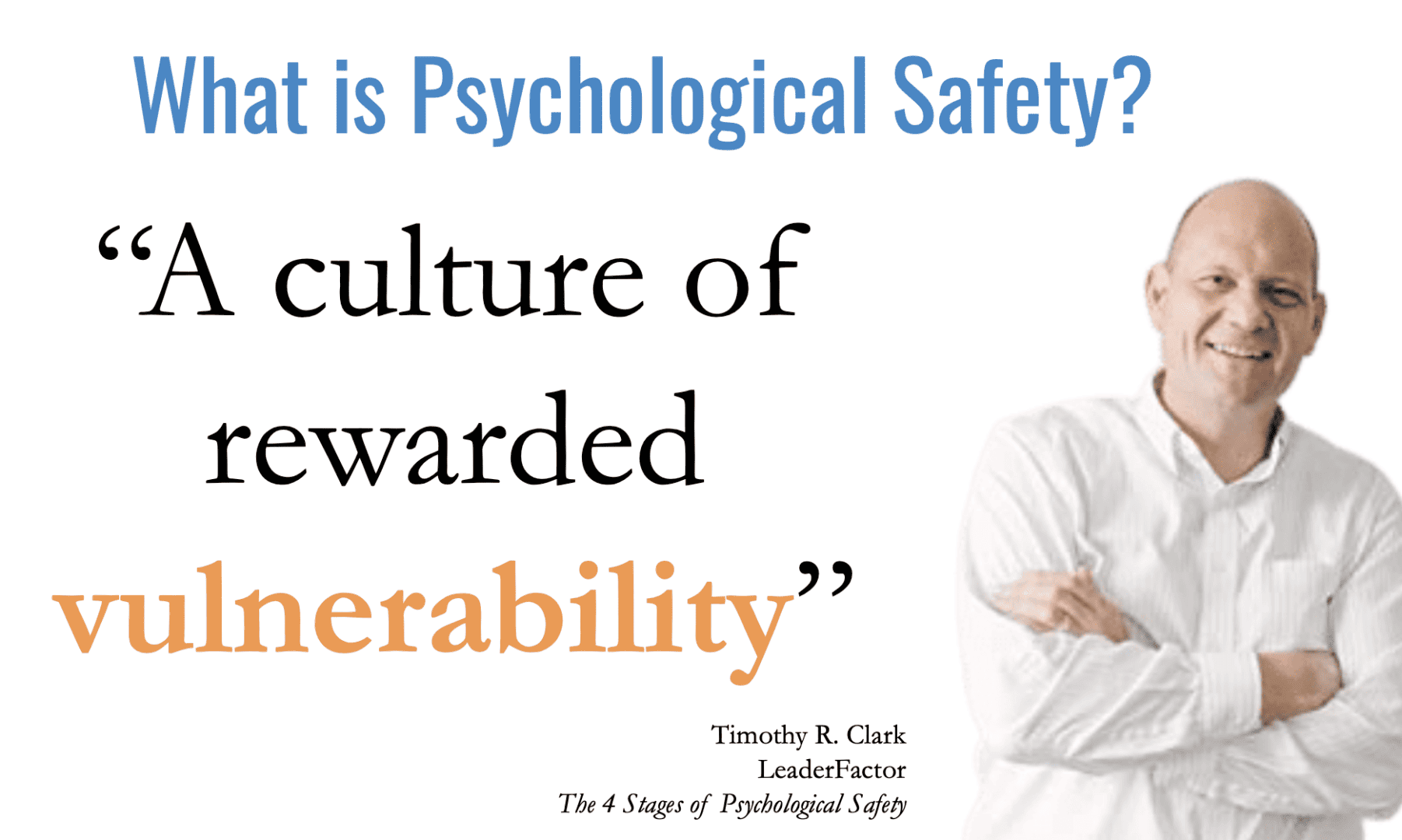
Why “Vulnerability” Is the Wrong Word for Many Workplaces
One challenge with that definition is the meaning of–and the implications of–the word “vulnerable” or “vulnerability.”
As I've taught and coached others on the “4 Stages of Psychological Safety” frameworks that I was trained and educated in, I could tell that the word “vulnerable” was causing a bit of a barrier for people–they said as much.
As I've heard and discussed with people, vulnerability sounds bad. People quite often don't want to be vulnerable. They think being vulnerable means being weak or that they're bad.
Quite the opposite–but the perception is reality.
The definition of vulnerable that Clark uses is helpful:
“Exposure to the risk of harm or loss.”
A “vulnerable act,” such as disagreeing with your manager, could expose you to the risk of harm or loss. And that's a problem. The problem there is the manager, not the employee.
Hear Mark read this post — subscribe to Lean Blog Audio
But we label the employee as “vulnerable” or say they are “being vulnerable.”
It's the environment–the workplace culture–that is causing the vulnerability. We'd be better off labeling this as “a vulnerable environment” or “a dangerous setting” instead of labeling the person as vulnerable.
Here's the problem: When we encourage people to “be vulnerable,” we are asking them (in some settings) to expose themselves to the risk of professional harm or loss.
Leadership's Real Responsibility: Reducing Risk, Not Asking for Bravery
When we're asking people to expose themselves to risk or danger, we're asking them to be brave or courageous.
It's even better, though, when leaders can act in ways that reduce the risk or danger in a situation.
Is it dangerous to point out problems or to admit mistakes? Instead of telling people to be vulnerable, leaders can react in kind, helpful, and constructive ways. Leaders can “reward the vulnerability” or they reduce the risk which means there's less vulnerability.
People will speak up about such things when they feel like it's safe and effective to do so. When there's a low enough level of fear, and when people feel like it's not futile to speak up, they are willing to be more candid.
And that's what we want: Candor.
From Vulnerability to Candor: What Healthy Cultures Actually Need
As Clark writes and talks about, what we're aiming for is candor.
What is candor? It's different than “honesty.” Honesty is about telling the truth. Candor is choosing to speak up with the truth instead of protecting oneself (in a dangerous setting) by holding it back.
Candor is:
“Being frank, open, and sincere in speech.”
When more people feel safe being candid, we can work toward better solutions and higher levels of performance. When people share their concerns and ideas, instead of holding them back, we'll be better off for it–but if, and only if, leaders are able to not just tolerate but REWARD the candor.
Lower levels of risk and danger (less vulnerability) –> More candor –> Better outcomes
People I work with are more positive about being candid.
Do you want to be vulnerable? No. Of course not; people don't want to work in a culture of fear.
Do you want to be candid? YES! If it's safe and effective to do so.
Conclusion: Stop Asking for Vulnerability — Start Building Safety
So to summarize… instead of encouraging employees to be vulnerable (exposing themselves to risk), leaders need to act in ways that reduce the risk or danger.
Instead of encouraging people to be vulnerable, we can encourage them to be candid — which they will do if leaders have cultivated a sense of psychological safety –a belief that people will be rewarded for their candor rather than punished for it.