

Meeting Donald J. Wheeler: Why “Understanding Variation” Still Shapes Better Decisions
Today's Post in <50 words: I recently got to meet Prof. Donald J. Wheeler when he gave a keynote talk at the Society for Health Systems Conference. Check out his book Understanding Variation and learn more about him in this post.
Why Donald J. Wheeler's Thinking on Variation Still Matters
Over the years, I have been pretty fortunate to meet some authors I have learned a lot from and really admire.
I first met, or I should say “saw,” Jim Womack when he gave a talk to a class at MIT in 1998 or so, but I didn't get to talk one-on-one. I did some podcasts with him starting in 2006, but I hadn't really met him in person. I finally got to talk with him in 2007 when I attended the Lean Healthcare summit that was hosted by Dan Jones and the Lean Enterprise Academy in the UK (that was my first chance to talk to Dan, also).
Jim said something, as is his dry style, to the effect of, “It's good to see you are a real person” after emailing and talking via podcast.
It was at this same event that I first met Dr. John Toussaint. I had a foot-in-mouth moment when I asked something about his hospital system in Minnesota (oops, it's Wisconsin, of course).
In 2012, I had a chance to meet and talk with another “living legend,” Masaaki Imai:
One reason I was excited to attend last week's Society for Health Systems conference was the chance to hear Donald J. Wheeler deliver a keynote address.
He is the author of a great book called Understanding Variation: The Key to Managing Chaos.
I've called this my “favorite book ever” and have written about that:
I have to thank my dad, Bob Graban, for helping introduce me to Dr. Wheeler's work. My dad was an engineer at General Motors for 40 years and took a course that Dr. Wheeler taught (or saw a short talk). This was probably in the late 1980s, when I was still a kid at home.
He had a copy of Understanding Variation, and it later (during college?) caught my interest (much as I had learned about Dr. Deming and Out of the Crisis thanks to an opportunity my dad had at GM to talk about his famed four-day seminar).
I wasn't the only SHS member who was excited about his talk:
Isaac Mitchell, who shared the tweet above, was also excited about the day. Being from Tennessee, Isaac had met with Dr. Wheeler before at the University of Tennessee, I believe.
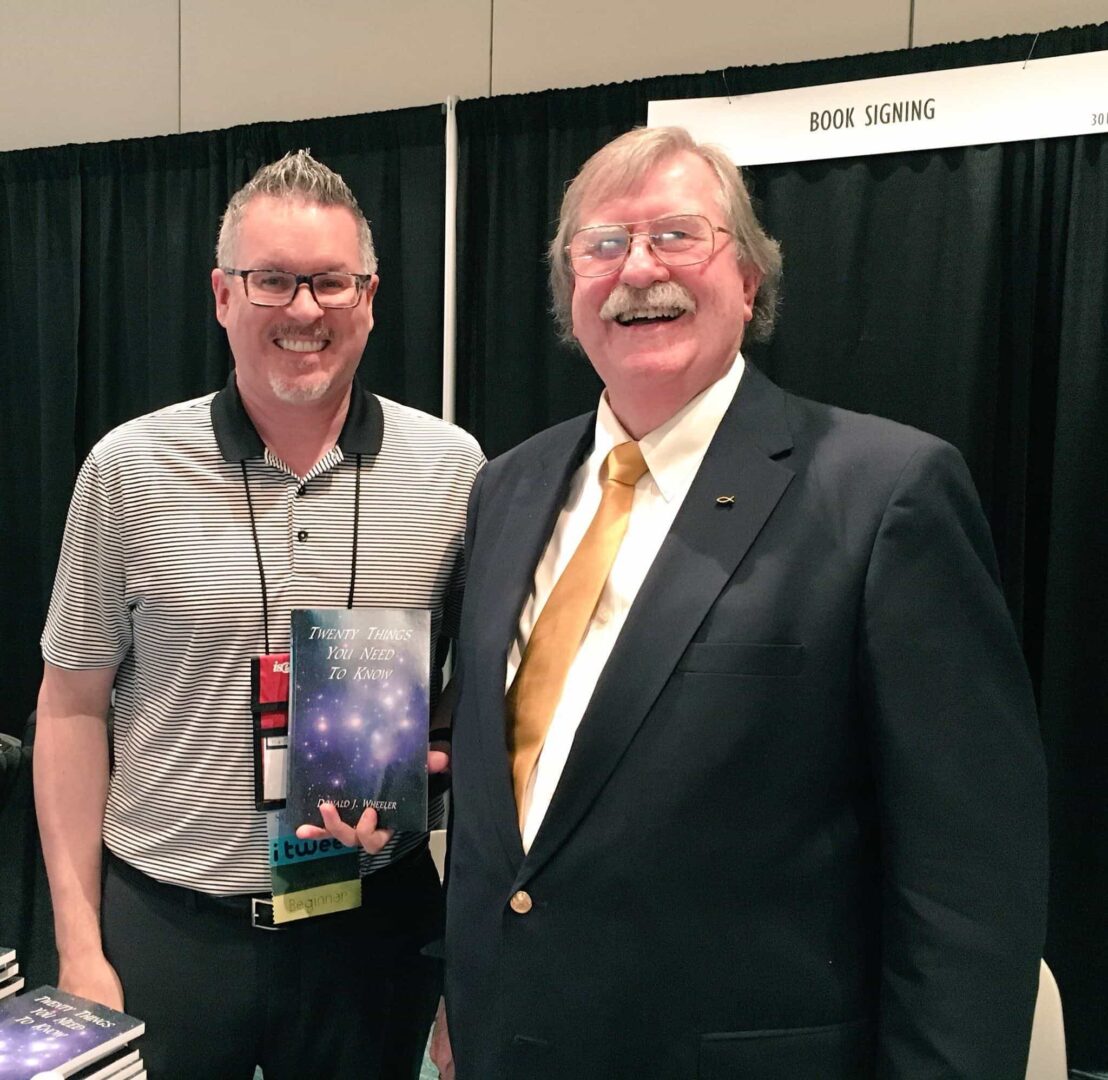
Before the talk, Dr. Wheeler was in the exhibit area, where he was giving away and signing copies of the book that's an addendum to Understanding Variation, a book called Twenty Things You Need to Know.
When he had some downtime, I was able to chat with him one-on-one for a while. I was excited and respect him a lot, so I didn't want to come across like too much of a “fan boy” and I didn't want to say something dumb… and I was trying to make sure he really had time and I wasn't bothering him or distracting him from getting ready for his speech (he was very welcoming and kind… I was just being nervous).
I learned that he first met Dr. Deming in 1972, and Dr. Deming had taught some guest lectures at Tennessee.
We talked about the healthcare system, examples where people overreact to common cause variation, and the Oscars.
I was able to get this picture with him:
I really enjoyed his talk… here are some tweets and other notes I had taken about his key points (there was a lot of wisdom packed into that hour, along with some humor… and you can get a lot of that out of Understanding Variation.
To elaborate on that… it's been proven that Lean methods can have a very positive impact in healthcare. That doesn't mean Lean is easy or that it's guaranteed to work.
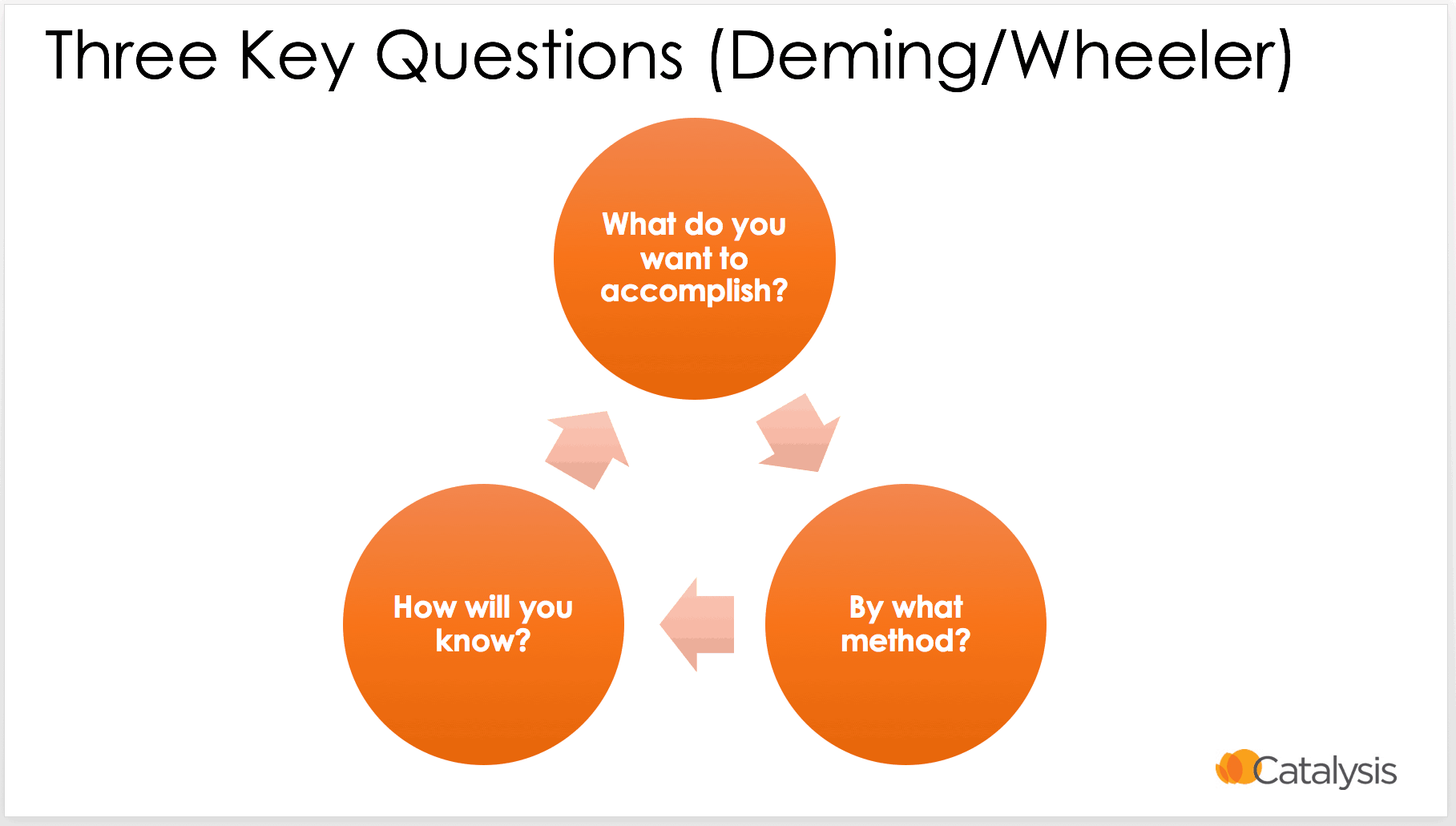
He had an illustration in his slides, but I created my own for my workshops and other purposes:
There are more notes I could share… maybe I'll write another post. I do encourage you, as always, to buy his book and read it: Understanding Variation: The Key to Managing Chaos.
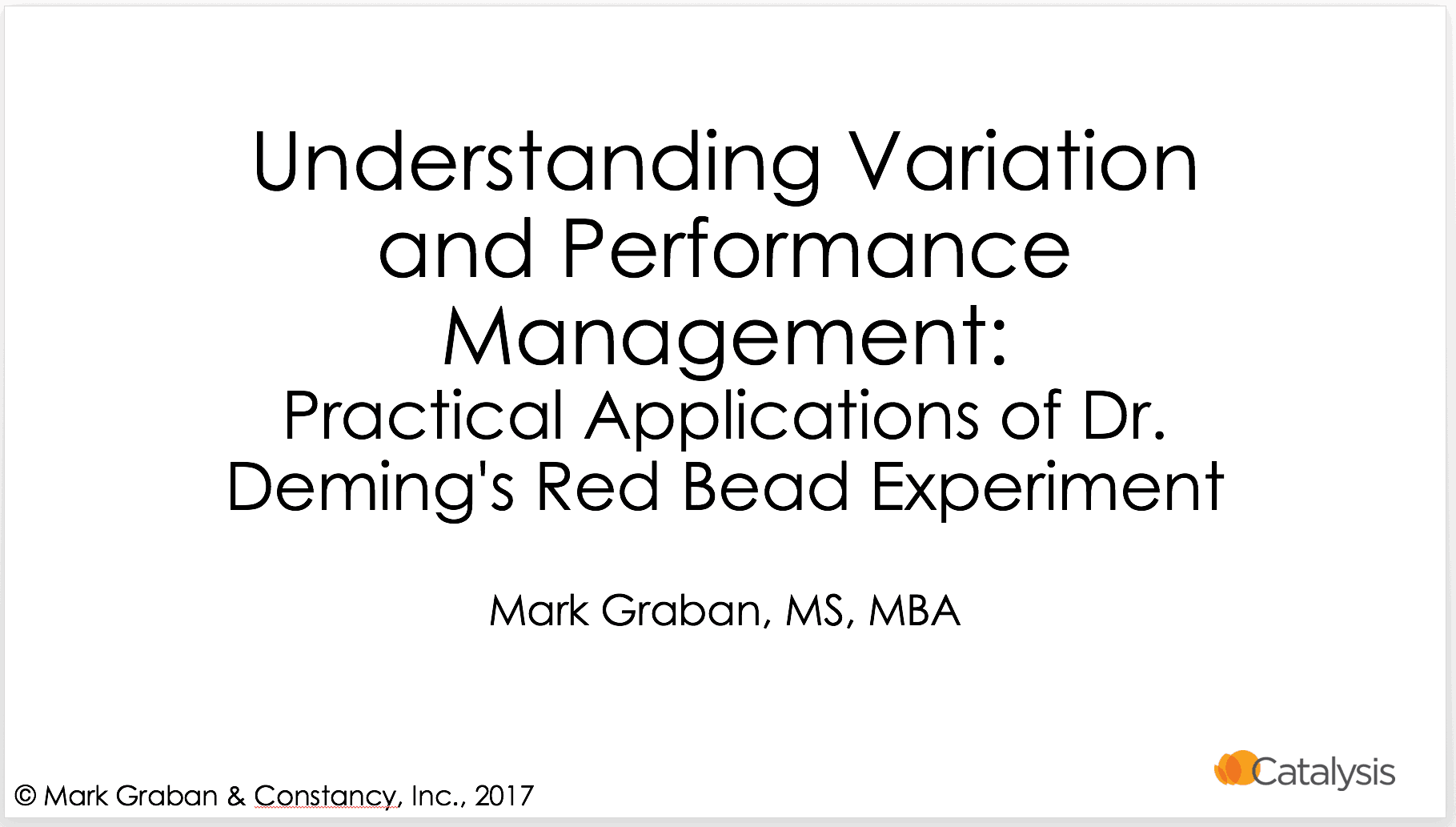
Today, I'm teaching a workshop in Brussels that's based heavily on Dr. Wheeler's work, Deming's Red Bead game, etc.:
I'm doing this workshop, or a continuously improved version of it in Seattle this May and at the Lean Healthcare Transformation Summit in Palm Springs this June.
Please join me!
Here is a post I wrote earlier this year on the topic:
And this previous post about the Red Bead Game:
What are your thoughts on Dr. Wheeler and his work, if you're familiar with him and his books?
Why Donald J. Wheeler's Work Still Matters
Meeting Donald J. Wheeler reinforced something that too many organizations still struggle to grasp: most management problems are not caused by people or isolated events, but by systems and predictable variation. When leaders react to noise instead of signals, they create confusion, fear, and wasted effort–often while believing they're being decisive.
Wheeler's work, especially Understanding Variation, remains essential reading for anyone practicing Lean, leading improvement, or making decisions with data. His ideas help leaders avoid overreaction, distinguish real change from random fluctuation, and create conditions where learning is possible instead of punished.
That thinking had a direct influence on my own work. After meeting Don, I wrote Measures of Success, and I was honored that he agreed to write the foreword. The book builds on many of the same themes: reacting less, leading better, and using data in ways that support learning instead of fear.
Across healthcare, manufacturing, and knowledge work, the lesson is the same. Better charts lead to better conversations, and better conversations lead to better systems. Tools alone don't create improvement; understanding variation changes how leaders think, behave, and respond–especially when results aren't what they hoped for.
That's why Wheeler's thinking continues to shape my teaching, coaching, and writing about Lean, psychological safety, and better decision-making. If organizations want fewer fire drills and more real improvement, this is where the thinking has to start.





Dr. Wheeler’s work has helped me a great amount. One of the main things I learnt is we can extract nearly all we need from a good picture of the data. In Understanding Variation on p. 121 of my edition you find:
– Questions about signals lead to improvements
– Questions about noise merely create chaos
Not bad advice!
Good article, Mark. Love the comment, “Putting out fires is not improvement.” We agree on many fronts… in fact, one of our past newsletters focused upon similar ideas, and was entitled “Discontinuous Improvement.”