
tl;dr: Firing someone after a mistake doesn't prevent recurrence. The next person will make the same error unless you improve the process with mistake-proofing, clear standards, and better system design.
This post shares a story I heard at the Michigan Lean Consortium annual conference earlier this week. They've been kind enough to share ideas and host a book club discussion of my new book, The Mistakes That Make Us: Cultivating a Culture of Learning and Innovation.
There was a Q&A session with me on Tuesday, and on Wednesday, I moderated a panel discussion about learning from mistakes. I had a great tim,e and I appreciated the stories and insights from the panelists.
During a book signing session at the conference, an attendee, Cori, told me a story that's too good to not pass along. I'll do my best to stay true to the story's details.
I think Cori's friend worked at a commercial meat-processing facility. The company had a large meat grinder capable of handling up to 50 pounds of meat.
Hear Mark read this post — subscribe to Lean Blog Audio
A Simple Story About a Predictable Repeat Mistake
A worker added 50 pounds of meat and then dumped in spices. He grabbed a large spoon and started mixing it all together before walking over to a wall button that would start the grinder.
While the spoon was in the meat, there was some distraction. The worker was pulled away.
Coming back, forgetting that the spoon was still in the grinder, he hit the button to start it up.
The spoon “got thrown through the side of the grinder,” damaging it if not destroying it.
What did the company do?

Why Firing the Person Doesn't Fix the Process
Cori said he told his friend:
“Firing the worker won't really help. This problem will happen again.”
I'd agree with that assessment.
What happened next?
The company hired a new worker. Trained them. Put them on the job.
I think he said it was a matter of weeks later…

As predicted by Cori.
With a different person, the same mistake was made, with the same result. Spoon left in the grinder… turned on… ruined.
The Better Countermeasure: Mistake-Proof the System
Cori said he recommended adding some sort of “interlock” to the spoon holder on the wall so that the button to start the machine would only work if the spoon was in that spot.
Now that sounds like “mistake proofing.”
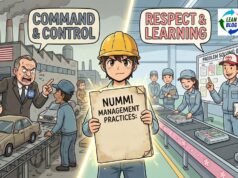
Instead of telling people to be careful and then blaming them when they make a mistake, it's better and more effective to focus on improving processes and systems — if our goal is preventing mistakes.
Make it difficult, if not impossible, to do the wrong thing. That could involve technology, like an interlock, or a procedural fix, such as training employees to never leave the spoon unattended in the grinder. The interlock, while more expensive, would be more effective.
But that might very well be cheaper than ruining an expensive meat grinder every so often.
Oh, and imagine the benefits of not putting employees through the proverbial meat grinder anymore.
What Leaders Should Do Monday Morning
- Contain: make the equipment safe and prevent immediate recurrence.
- Learn: map the failure mode (what allowed the spoon to be left in?).
- Prevent: add an interlock or physical constraint (preferred).
- Standardize: update training/standard work and verify it in practice.
Firing someone after a mistake is an expensive way to avoid learning. If the same error can happen twice, it will happen again unless the process changes. The leadership question isn't “Who messed up?” but “What in our system made this outcome likely, and how do we redesign it so the next person can succeed?” Mistake-proofing, clearer standard work, and better feedback loops prevent repeat failures far more reliably than punishment.
If you’re working to build a culture where people feel safe to speak up, solve problems, and improve every day, I’d be glad to help. Let’s talk about how to strengthen Psychological Safety and Continuous Improvement in your organization.