
Preventing Surgical Errors: Effective Strategies Over Warning Signs in Operating Rooms
This is a Chat GPT / Dall-E generated image:
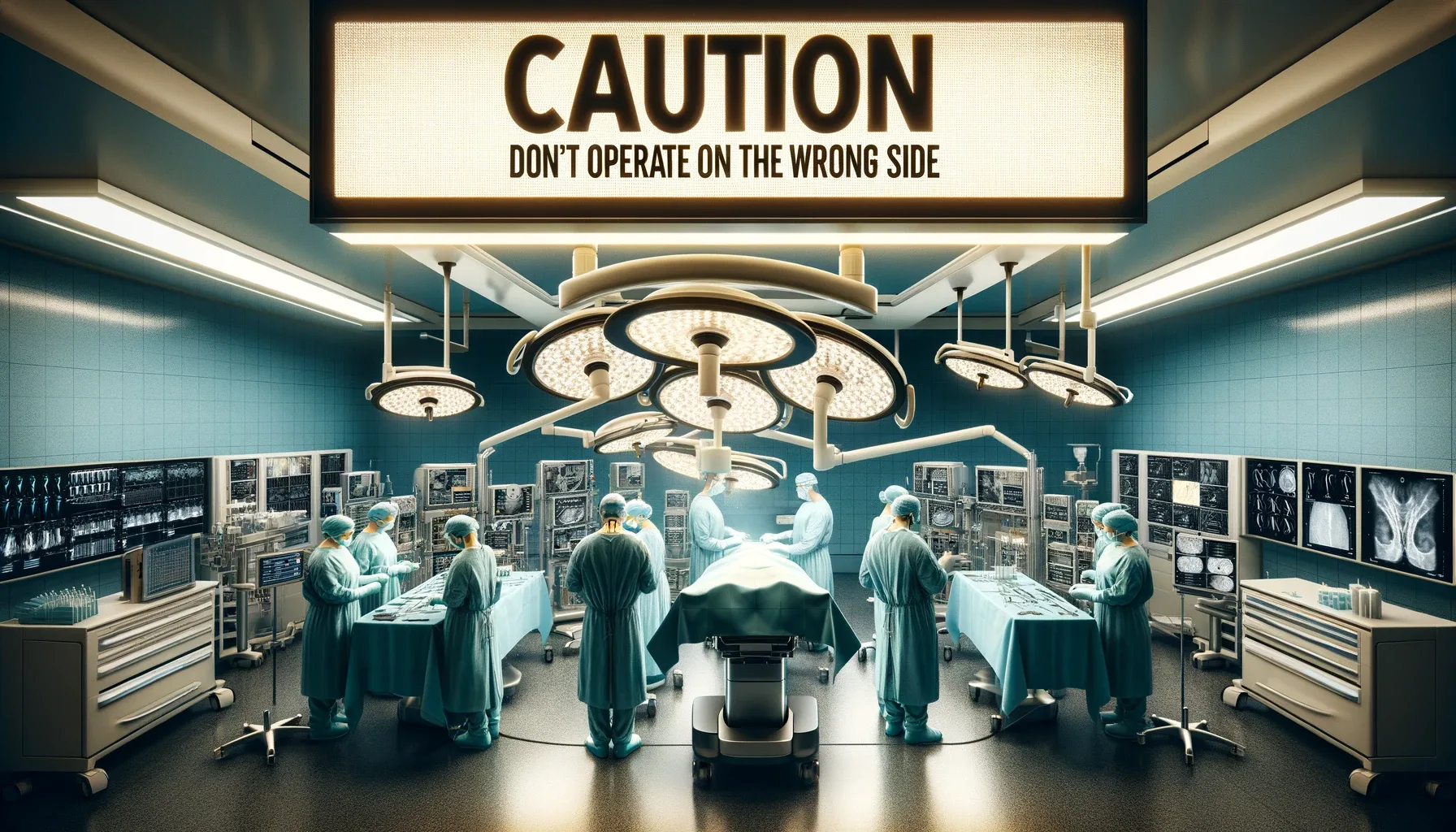
It's silly, right? I've never seen a sign like this in an operating room. And I'm not advocating for them. It's not the right approach for quality and patient safety.
If warning signs actually prevented mistakes, and given that a vast majority of mistakes are caused by human factors (like fatigue) and systemic factors (like being behind schedule because instruments were delivered late to the O.R.)…
1) A sign like this would be posted in every operating room
and
2) Wrong-site, wrong-side, and wrong-patient surgeries would never occur
But, of course, it's not that simple.
What works?
Mistake-proofing works.
That includes methods like the “Universal Protocol,” including pre-op timeouts and checks. Checklists help.
And a culture of high Psychological Safety where anybody can speak up with a concern without fear of negative consequences.
But those methods and cultures are, sadly, far from “universal.” And surgical errors and mixups are far too common.
More broadly, why do organizations rely on warning signs, including messages that say things like “caution,” “please remember,” and “don't forget”??
Please join the conversation about this topic on Linkedin.
Also, please check out my new mistake-proofing course that's available through Karen Martin's TKMG Academy.





Makes me think of The Checklist Manifesto & Atul Gawande.
Yes, that’s a great book and very helpful.