


Katie Anderson, a Lean Thinker Living in Japan

Today’s guest is Katie Anderson, and we’re talking about her experiences living in Tokyo for 18 months and what she’s learning about Lean culture, Japanese culture, and how those aren’t always one and the same.
I first met Katie through the Healthcare Value Network and our participation in that collaborative. She’s an experienced Lean healthcare practitioner, coach, consultant, having worked for Stanford Children’s Hospital and the Palo Alto Medical Foundation before starting her own consulting practice.
Katie has been generously sharing her experiences in Japan and her reflections on her blog, which I highly recommend. Also, see a list of posts that she referenced in our discussion. You can also find her on Twitter and LinkedIn.
Streaming Player (Run Time 41:12)
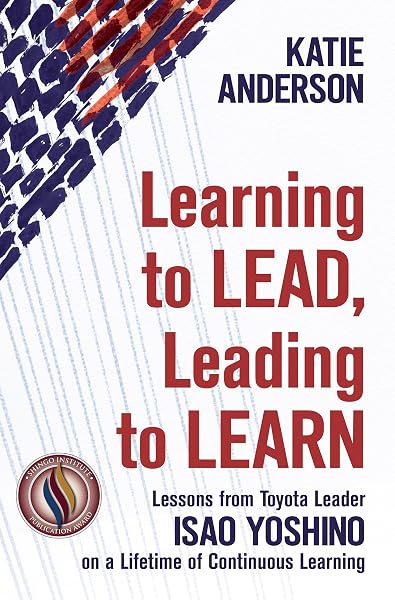
Learning to Lead, Leading to Learn
by Katie Anderson
Katie’s later book on the leadership lessons she learned from Isao Yoshino, a longtime Toyota leader she met during her time in Japan.

For a link to this episode, refer people to www.leanblog.org/233.
For earlier episodes of my podcast, visit the main Podcast page, which includes information on how to subscribe via RSS, through Android apps, or via Apple Podcasts. You can also subscribe and listen via Stitcher.
Here is her meishi, which she discussed in the episode:

In this episode, we discussed topics including:
- What are some of my initial observations about Lean as practiced in Japan? Or Japanese culture in general?
- Have you been able to visit healthcare organizations? What do you see in terms of lean?
- What have you seen or learned about Kaizen?
- One thing you’ve blogged about is the concept of intention… tell us more about that.
- What has surprised you most about living in Japan?
- People often debate whether it’s necessary to visit Japan to learn more about Lean or to understand Lean better. What would be your general advice to people?
More with Katie Anderson
- Japan Study Trips: A Voyage of Leadership Discovery with Katie Anderson (2024)
- Katie Anderson Discusses Larry Culp’s AME Keynote And Their Fireside Chat (2022)
- Episode #425: Katie Anderson on Breaking the Telling Habit (2021)
- Katie Anderson: “Learning to Lead, Leading to Learn’ Audiobook Launch & 1st Anniversary (2021)
- Katie Anderson on “Learning to Lead, Leading to Learn” (2020)
- Podcast #326 – Katie Anderson on Lean Collaboration Within Healthcare and Beyond (2018)

Follow the Lean Blog Interviews podcast
Since 2006, I’ve been talking with leaders, authors, and practitioners about how Lean thinking works in the real world, in healthcare, manufacturing, and beyond. Follow the show so you don’t miss new episodes.
Episode Transcript
Jump to a section:
- Introductions
- Katie’s Background in Lean Healthcare
- Lean Is Not Inherently Japanese
- “If You Always Ask for Success, People Will Lie”
- Standard Work, Discipline, and Innovation
- Harmony (Wa) and Speaking Up
- Lean in Japanese Hospitals
- Learning From Isao Yoshino and Toyota
- The Spirit of Kaizen
- Intention as a Personal True North
- Meishi and Business Card Etiquette
- Daily Life in Tokyo
- Should You Go on a Japan Study Trip?
- Where to Find Katie
Introductions
Mark Graban: Hi, this is Mark Graban. Welcome to episode 233 of the podcast for October 14th, 2015. Today’s guest is Katie Anderson, and we’re talking about her experiences living in Tokyo for 18 months and what she’s learning about Lean culture, Japanese culture, and how those aren’t always one and the same. I first met Katie a few years back through the Healthcare Value Network and our participation in that collaborative. She is an experienced Lean healthcare practitioner, coach, and consultant, having worked for Stanford Children’s Hospital and the Palo Alto Medical Foundation before starting her own consulting practice. So Katie has been generously sharing her experiences in Japan and her reflections on her blog, and I highly recommend that. You can find it at www.kbjanderson.com, and you can also find her on Twitter and LinkedIn. And if you wanna find links to all of that, you can go to leanblog.org/233. One other thing I wanna mention is, you know, on the topic of visiting Japan, and we’ll talk about this later in the episode, I am again working with Kaizen Institute to arrange a Lean healthcare study trip to Japan.
Mark Graban: It’s gonna be held December 7th to 11th 2015. If you’d like to learn more and maybe be able to register for that trip, you can go to www.japanleantrip.com. Katie, hello, and I guess I should say konnichiwa. Thank you for being a guest on the podcast today.
Katie Anderson: Thanks, Mark. Konnichiwa to you as well.
Katie’s Background in Lean Healthcare
Mark Graban: So, I’m really excited to talk to you about what you’re seeing and experiencing in Japan. Before we get into that and what you’re seeing, can you maybe just start off by telling the listeners about your background in healthcare, how you got involved with Lean, things like that?
Katie Anderson: Well, I’ve always been in healthcare for my entire career. I started off more on the policy side, but got really into healthcare operations a little over a decade ago. And about 10 years ago, I got introduced to Lean thinking, and I became really passionate about the concepts of how you develop people and improve processes at the same time. I was working at Stanford Children’s Hospital and helped bring Lean thinking to the organization there. And was there for almost six years before moving to the Palo Alto Medical Foundation, where I headed up the Lean promotion office under James Hereford. And that was really exciting. And then I started my own consulting practice so that I could work with a broader variety of healthcare clients. And then I had this opportunity to move to Japan, which I was super excited for, to be able to learn about Lean from the roots and see and contribute to the broader body of knowledge and start writing about what I’m learning.
Mark Graban: Yeah, and I’ve really enjoyed your blog posts, and I’m glad you’ve been sharing that journey with at least with the folks who’ve been reading. I’m sure from the podcast here, you’ll pick up some new readers. Encourage people to go back and catch up on your earlier posts. So you’re in Japan partway through a… Is it a one-year stint? Is that correct?
Katie Anderson: It’s about 18 months.
Mark Graban: 18 months.
Katie Anderson: It could be a little longer. We moved here in January for my husband’s job, and so, what, we’re in October now. So we will be here at least through the end of the school year, and then we’ll see after that. So I’m pursuing many contacts and trying to get out to Gemba to learn and see as much as I can while I do have this opportunity.
Mark Graban: Yeah, and you’re in Tokyo for this stay?
Lean Is Not Inherently Japanese
Mark Graban: So you’re not only learning you know the differences with life in Japan, but like you mentioned, getting to go to the Gemba and see what people are doing and to learn from people. I… What are, what were some of your initial observations about Lean as practiced in Japan? Was there anything that was surprising to you, or what were some of the things that jumped out at you?
Katie Anderson: Yeah. So one of the biggest surprises to me, and I knew this conceptually, but it really struck me once coming out here, that Lean is not inherently Japanese. I think in the US and other Western cultures, we, you know, we hear of all the Japanese roots from, of Lean and the Toyota Production System, and perhaps assume that it maybe was easier here in Japan. But as I hear other colleagues talk about the challenges that they have in their just typical Japanese companies or by going out and seeing with my own eyes of the either companies practicing Lean or not, that it is not inherently Japanese in, or easy for the Japanese culture.
Mark Graban: So can you elaborate on that? I mean, what are the, what are some of the elements of typical Japanese culture or Japanese business culture that maybe run counter to what we would recognize as TPS or Lean thinking?
Katie Anderson: Certainly. The, you know, to me, one of the foundational and fundamental concepts that of the Toyota Production System or Lean that I think is one of the most important is the concept of developing people, and how do we get people to be problem-solvers? How do we as leaders help support the people who work with and for us to solve the problems in their areas? In contrast, typical Japanese business culture is really about the leader being the, in command and control, that giving the answer and telling people what to do. And in many, many companies in Japan, people really expect their, the answers to come from above rather than themselves working on solving problems within their, even their own scope of responsibility. I went out to talk to the director of the Toyota Production System Promotion Office, sort of my similar role when I was at some healthcare organizations, about how they develop people at Toyota.
“If You Always Ask for Success, People Will Lie”
Katie Anderson: And one of the questions I asked him was, you know, this concept of what did he think was different between Toyota culture and typical Japanese business culture. And that’s actually a really hard question for many Japanese to answer because most of them spend their whole lives, their whole careers in one organization. But he’d actually worked in another company before coming to Toyota, and he said that at Toyota, they’re developed on they’re focused on developing people, and at typical Japanese businesses are really focused on people just giving the right answer. And you know, I thought that was really, really powerful. He had this good comment of, “If you always ask for success, then people will lie.” And I think you see that was… I, so I thought it was really profound. It, and it really speaks to some of the challenges some other companies like Toshiba are having right now with, like, scandals of people really lying because they were focused on the outcome rather than the process.
Mark Graban: And people were lying. It was about misstating financial results. Is that right?
Katie Anderson: Yes. So they wanted to, they had a certain target, and that became more important than actually how they were reaching the target. That’s a pretty big deal. So there’s some other– So I think to me, that was the biggest aha around the difference of Lean and Toyota Production System rather than how Japanese businesses are conducted. But I think there are also some elements that are from Japanese culture that are supportive, such as the kata routines, and people are so used to in everyday life, there are, there is a process in a way and a rhythm that things happen. And so being able to follow standard work or to have processes that are laid out and defined may come more naturally to them than, say, in American culture, where people are, you know, they wanna do their own thing.
Standard Work, Discipline, and Innovation
Mark Graban: Yeah, and I guess that would, the, kind of maybe point to the idea of following standardized work as being a strength because there’s a routine. There’s a practice, a discipline. Or maybe it comes from respect or fear of like you said, in a top… Even in a top-down kind of environment, people might follow the routine because they’re afraid they’ll get in trouble as opposed to maybe more of a Lean environment where they’re following the standard because they understand why it’s helpful or because it, you know, it’s because it’s beneficial to them. I guess that’s you might see discipline in a Lean or a non-Lean culture, right?
Katie Anderson: Yes. I think that’s a really interesting observation, Mark, and it goes to one of the things that’s challenging Japanese companies right now, is that this lack of innovation. Because people are so focused on just following the rules and this is the way things have always been done, that the country as a whole is really suffering from lack of innovation. And a woman who does some work in the US on Japanese cultural differences in businesses wrote an interesting blog about how calling it the Silicon Valley way, and actually using Lean as, Lean thinking as the Silicon Valley way, and now it needs to come back to Japan. I think that’s so true. It’s been… We’ve almost taken some of these concepts and run with it in a different way with all the agile concepts and applying Lean thinking to product development. So how does, how does Japan now use their strengths but also continue to be innovative? There’s a… Sorry, I didn’t…
Katie Anderson: There’s a company that I went to that it in many ways was not a Lean thinking company, but they but in the true fundamentals about how you develop people and support problem-solving, they were. And their… They had this motto that the only rules is no rules. Because they wanted to get people outside of the thinking of that they had to follow the rules and not think outside the box. So that was their way to try and spark innovation, which of course they had rules and routines, but they really wanted to get outside that Japanese cultural norm of, “I just follow what’s in front of me,” the kata, the kata, the routine and not seeking to innovate.
Mark Graban: Yeah. And, you know, it’s interesting to see in you know, the area where you used to live in San Francisco, in the Bay Area, in Silicon Valley, the Lean startup movement takes familiar Lean principles and applies it to being innovative, but being innovative, not… Thinking back to something you said earlier, it’s not about just being innovative and saying, “Ah, I have the answer. Let’s take it to market.” It’s more about this process of learning and discovering and iterating and being wrong, and then getting a little bit more right as you go. I think that’s an interesting contrast between, or it reminds me of how you describe kind of traditional company versus a Lean organization.
Katie Anderson: Right. It all gets back to how becoming more effective learning organizations and having everyone working on that.
Mark Graban: Yeah, because, you know, Toyota, I mean, I think has done, you know, some very innovative things along the way. So I think, you know, for anyone to say, well, a company that has good processes and standardized work somehow can’t be innovative you know, I think you know, that’s, that’s something that we might learn to not be correct either.
Katie Anderson: I agree. And Toyota is very different than a lot of typical companies because they have put in place and been practicing these Lean thinking concepts for so many years, and really focused on that how do we learn. Even if they make mistakes, how do we learn?
Harmony (Wa) and Speaking Up
Mark Graban: I think one of the things I… And I learned just a little bit about this idea when I was in Japan. You’ve been there much longer than my short visits. They talked about the idea of harmony and how important that is in Japanese culture. And somebody like yourself or like me, you know, by just being there, we’re disturbing the harmony of a very homogeneous Japanese culture. But I’m curious what you’ve run across either at organizations you’ve visited or just in life in general in Japan, this idea of harmony and how you know, speaking up to point out a problem or have an idea about Kaizen disturbs harmony and is uncomfortable to many. Have you encountered that idea?
Katie Anderson: So the concept of harmony, or wa, really is pervasive here in Japan. And in many ways, it makes living here very easy because everything runs very smoothly and it’s predictable on how people will behave. I haven’t personally experienced… I know by being a foreigner, I definitely we just naturally disrupt the wa by going into organizations, and especially when we you know, as Americans, might ask for, or, you know, Westerners expect that, you know, maybe we could ask for tomatoes on the side two flavors of ice cream in our to-go cup which I actually wrote about because that is not allowed. Right. But You know, I’ve… The concept of wa being disrupted, I do think… You made a really good point on one of my blog posts about how the andon cord was in many ways a countermeasure to this concept of speaking up, and I really, I thought that was a, you know, probable reason why they moved it to being a cord that was pulled rather than having to say something.
Katie Anderson: But to really use that trigger to speak up, that it’s okay to point out something that isn’t going well. But then I hear, you know, my husband and other people here talk about how a challenge being a foreigner working in a company that’s predominantly Japanese people, that getting people to speak up in meetings having people say really what’s on their mind is very challenging. It’s not natural because of this real desire to keep the harmony and the peace.
Lean in Japanese Hospitals
Mark Graban: So I want to change directions a little bit here. I mean, we’ve… I think it… You’ve helped establish a little bit that we can’t view Japanese organizations as being all identical or all Lean. Well, I’m curious in the visits that you’ve made if you can tell us well, let’s start by talking about healthcare organizations and what you’ve seen or what you’re not seeing, what your impressions have been.
Katie Anderson: So I’ve only had a chance to go into one hospital so far. I am in the process of trying to get to some other site visits. Interestingly, it’s been very hard to go in to get a Gemba visit to hospitals. People seem to be very sort of closed off to visitors. So I’m working some connections there. But even in, from talking to people who work in healthcare and going to visit this one hospital that is actually probably the most advanced in terms of Lean thinking in the country, it’s very it’s more focused on the tools or doing Kaizen events rather than the real cultural transformation at this point. So it’s… I really don’t see a lot of Lean thinking applied to healthcare or in other service industries here. Talking to a variety of people, including former Toyota executives, it really seems to be focused in the manufacturing areas, and people think in the service or healthcare industries, oh, that it’s we can’t really apply these principles.
Katie Anderson: We’re different. So that doesn’t, that doesn’t change regardless if you’re in Japan or another country, that every industry thinks they’re different.
Mark Graban: Yeah. And like you said earlier, it’s everyone thinks, “Oh, this would be easy if we were a hospital in Japan.”.
Katie Anderson: So I’m excited though, this hospital that is the most advanced in, I think, doing Lean thinking, they have a partnership with Virginia Mason up in Seattle, and are hosting a conference in a few weeks about Lean thinking in healthcare, and I’ll be attending, so stay tuned. I’ll be writing about what I’m learning.
Mark Graban: Oh, great. That’s great. Have you been able to visit I know you’ve been to Toyota and spent time with some Toyota people. Have there been other manufacturing companies that you’ve been able to go visit? Has that been any easier?
Katie Anderson: So I’ve been able to go on some study trips visited three other organizations who have been using Lean thinking. One was the organization that I talked about that professes to have no rules. And I thought they, that was the site visit that I enjoyed the most, ’cause I think they have some quirky ways of applying Lean thinking, but having some great outcomes. I mean, they are the leader in their industry here. And I visited two others, and I’m in process right now of hopefully getting on some more study trips over the next few months.
Learning From Isao Yoshino and Toyota
Mark Graban: Yeah. So I look forward to hearing about that on the blog. And can you talk a little bit about some of the exposure that you’ve had? You mentioned earlier some of the exposure you’ve had to some Toyota people if you have any stories or kind of lessons or insights from them.
Katie Anderson: I’ve been spending… Thanks. I’ve been spending some time with Isao Yoshino, who was one of John Shook’s first managers when he was working out in Japan in Toyota City. And he’s just been a great resource and insights and knowledge about Toyota and Lean thinking. We spent a few days together, and I have plans to go visit him again before the end of the year. You know, for… He really sums up in our talks, like, the true, what I see as, like, the core of Lean about really focused on how do you develop people, and that is just fundamentally the most important thing that we’re here to do. It’s really all about the principles and how do we ask questions and how do we show up as leaders in service to helping other people develop. And through that we’re gonna be able to solve the business problems in front of us and create value for our customers. So yeah, Yoshino’s been my guide on some visits to…
Katie Anderson: In Nagoya, we’ve gone out, we’ve been driving all around Nagoya and visited both Toyota as well as some of Toyota’s museums, which has been really, really interesting.
Mark Graban: Yeah. The… Yeah, the main Toyota Technology Museum in Nagoya is a really cool place to go.
Katie Anderson: It is cool, and you get to see all… It’s basically this whole former factory that has all of the history of loom making, because Toyota, the Toyota family started off as loom factory. And see the innovation that the that was developed and how it had really advanced the loom technology, and then how that led to moving into the automobile industry. And it was just very cool to go see the demonstrations.
Mark Graban: Yeah. And to see where some of the origins around error-proofing and jidoka enter into what, you know, now we would call TPS. I mean, those origins predate the Toyota company building cars, which is probably surprising to a lot of people.
Katie Anderson: Yes. Although, you know, one of the things, too, I saw a video. Actually it was down in the Kyushu Toyota factory, but it was talking about the transition from making, doing the looms to going into the automobile industry, and then trying to bring some of those principles into the company. And that the video said even the workers were still resisting the change. They didn’t like the change. And I just was… I laughed because I thought, “Well, this is just so true to any of us.” Change is hard. Yeah. And how things were done before is not how it’s done now. But, you know as leaders, we just have to work through that change and see where Toyota is now, so. It’s It wasn’t even easy back then.
Mark Graban: Yeah, I mean, that’s part of universal condition. Or I’m just chuckling ’cause I’m imagining there must have been somebody at the Toyota car factory who said, “Well, this doesn’t apply to us. We don’t make weaving looms.” It was probably the first instance of someone saying, “Hey, we’re different. Toyota principles don’t apply to us.”
Katie Anderson: That’s right.
The Spirit of Kaizen
Mark Graban: The fundamentals of human nature, right? Yeah. So what have you learned… You know, one of my favorite topics, I mean, it’s such a core part of Lean and TPS, is the idea of Kaizen. You know, we touched on it earlier as you know, something I think, you know builds upon standardized work and may or may not be present in all Japanese organizations. What are there any lessons you’ve learned or anything interesting you’ve seen around the idea of the spirit of Kaizen?
Katie Anderson: So in all the organizations that I’ve seen so far that really have been applying Lean principles, the, in addition to developing people, the other core element is that they are very focused on daily Kaizen, creating a culture of continuous improvement where people, the frontline workers are involved and supported in doing improvements as part of their daily work, and have really found out a way that this is, like, they don’t have Lean programs per se although some of them do have more, like, Lean departments that help support this in the organization, but it’s, they’ve really figured out daily Kaizen. And I’ve been studying Japanese as well and learning some kanji, and I learned that Kaizen comes from the two kanji characters meaning change and good. And then change means self-whip. Self, it comes from self and whip, and I thought that was so true that, you know, this concept of change, we have to, like, whip ourselves to change and change for the good.
Katie Anderson: So daily Kaizen can be applied to an organization, but it also really could be applied to ourselves and how are we, how are we all contributing to that change for the good.
Mark Graban: Yeah. And, you know, I’ve heard that idea of self-whip or it’s almost this idea of somehow self-flagellation, and I still, I tell you, I don’t understand the context of that. It’s not, it’s not meant to be I’m, I’m curious. It’s, it almost sounds like, oh you’re hard on yourself because you’re not doing things well, but that doesn’t, that doesn’t seem like that it would be quite that. I’m curious where the imagery or the symbolism of the whip kind of comes from.
Katie Anderson: So this would’ve happened, like, you know, hundreds of years ago when the Japanese were actually creating a writing language and had borrowed from the Chinese. So I don’t know of the origins, but I sort of don’t take… You can see it two ways. One is, like, you’re whipping yourself, the self-flagellation. But I see it as, like, you yourself, you have to, like, make yourself do the change. You have to have intention. You need to be focused. And maybe not, like, whipping yourself in pain, but kind of giving yourself motivation to change for the good.
Mark Graban: And yeah, so I’m thinking of a jockey whipping a horse. I know some people don’t like that.
Katie Anderson: Yeah. No, I know, I agree. Maybe whip in the air. Just get the energy going. But yeah, I’m sure it but I’m sure the origins actually were self-whip for change, you know, if you think hundreds of years ago when these, the written language was being developed. It was that is very intriguing. I’ll need to I’ll dig in a little bit more.
Mark Graban: Okay. Okay. No, I mean, that’s fascinating. And you know, when you said, you know, some organizations at least are getting really good at figuring out daily Kaizen, daily improvement. You know, one thing that I’ve seen over there not just in the hospitals, I think I’ve been to four different hospitals and different organizations, that a lot of organizations do have a formal TQM program. And they still call it that, and they say, “Oh, we’ve been doing TQM for 20 years.” and some of them are layering some Lean tools on top of that tradition and foundation of TQM. But I, one thing I thought was interesting is that for a lot of organizations, Kaizen was sort of like a really dragged out Kaizen event that took six months. And you know, it wasn’t dedicated full time, but it was more like a committee and a team that got together and met and did very you know, rigorous you know, it’s like, you know, doing an A3 over time, but that was really their main improvement mode. You know, everyone does two six-month projects a year, and
Mark Graban: Some of them were realizing that, oh, well, yeah, we could also improve the little stuff that doesn’t require a six-month-long project. So I thought it was interesting to see that you know if you’re looking to generalize and say, “Oh, I bet all Japanese companies do the word Kaizen” because they know the word Kaizen and it has meaning, but it doesn’t mean they all really do what we would, you and I, are calling daily continuous improvement, right?
Katie Anderson: I would, I would agree with that. I think I’ve seen some organizations, particularly, you know, talking to people in healthcare, that Kaizen, the term, is applied more to these longer term projects. But the organization, the more manufacturing organizations that I’ve visited, the way they’ve applied Kaizen is more focused on the daily continuous improvement. They do use the word Kaizen as well to describe longer term projects but they add another word to differentiate the concept of Kaizen.
Mark Graban: What do you… What is that word? Do you know?
Katie Anderson: I don’t actually know.
Mark Graban: Ah, okay. But it’s a similar but slightly different… I mean, I guess it’s the way we might modify the word Kaizen to call it a Kaizen event. It’s kind of like Kaizen, but it’s different, right?
Katie Anderson: Yes. They call the… This one organization, they called them, like, three-month Kaizens or… I can’t remember what it was in Japanese, but it… They used Kaizen as part of the phrase to describe what they were doing, but they differentiated that it wasn’t the daily Kaizen that they also talked about.
Intention as a Personal True North
Mark Graban: Ah, okay. So I wanna come back. You used the word intention, and that’s something that you’ve blogged about and I thought was interesting. Tell us more about that concept and what that word represents.
Katie Anderson: So intention has really become to me, a, an anchor point for when I’m coaching people in healthcare or other or other types of organizations, about how they’re creating their own personal change, and how do we have intention about what we’re gonna do and create greater awareness of what are the, what are the new habits I wanna create? If I wanna be a Lean leader, what does that mean? Well, first I need to find that and create some intention of how to move there. I decided to use the kanji, the Japanese characters, for the word intention on my business cards, on my meishi. I didn’t have a logo, and I find the word so powerful and important for what we’re doing about creating change personally or organizationally. And I learned that the word intention or the kanji characters in Japanese come from, the first kanji is, means heart or personal mission, and the second element means direction. And I liked actually how, you know, I’d chosen the word before I knew this, but I do like it’s your personal mission and the direction in which you’re going.
Katie Anderson: So you need to set your intention for where you wanna go, who you wanna be, and then how do you practice and create new habits to get there?
Mark Graban: Is it similar to a personal true north in a way?
Katie Anderson: Yes. I, you know, that’s a good, a good way to describe it. What is your intention, your, the direction you wanna go that’s focused on your, you know, your personal mission? And you could say the true north is the organizational mission and the direction. It’s a good, good alignment.
Meishi and Business Card Etiquette
Mark Graban: Yeah, so this is something I don’t really know much about, when you talk about the meishi and the cards, can you explain the importance of that within business culture? Why or was it important or necessary to choose a character for your cards?
Katie Anderson: So meishi, the business cards, are incredibly important here. I have actually gone through more business cards in the 10 months than I have collectively probably my entire career. You use your business cards as a calling card, and there is a ritual, a kata, to how you present your business card to other people. And you know, I’ve had some gaffes where I presented mine lower or higher than the wrong you know, the wrong level. So, you know, there’s a lot of, there’s a lot of rule, a lot of rules that go around with the presentation of the meishi. But one of the elements of exchanging meishis is that people want to make the polite thing to do is you receive the meishi and then you make a comment about the meishi. And so as opposed to just having my name and, you know, my address and my company’s name on the card, I thought I would have a talking point, and it gives me a chance to, especially with the Japanese, to sort of say, “Oh, why did I choose intention?” Or they often say, “Oh, that’s interesting. What’s that about?”
Katie Anderson: So it gives me a talking point. And then for people who don’t speak Japanese, I think it just looks cool. So like it’s a design.
Mark Graban: Yeah. And maybe can you send me a picture of what that looks like? I can include it maybe in the blog post for this podcast episode. Sure. So yeah, my faux pas was saying meiji, like the shrine. That was my slip of the tongue. Yep. Meishi. Meishi.
Katie Anderson: I have my Japanese lesson after this, and let me tell you, it’s very easy to make mistakes. At least it’s not a tonal language, like Chinese.
Daily Life in Tokyo
Mark Graban: So let’s transition and talk a little bit, I’m curious just you know, before we wrap up here, some of your more general impressions of… I’m sure living, being in Japan and not living in a, you know, not being in a hotel for a week, you probably see a different side of Japan, not just the tourist sites like the Meiji Shrine. But I’m just curious what you’re experiencing actually living there.
Katie Anderson: So one of the things that was sort of an unexpected delight was that everyone here commutes on electric bicycles. And it’s… One, it’s a super safe and clean country and city. I mean, Tokyo is, it’s so clean, and it’s so easy to get around, and you feel very safe. So in many ways, although it’s an in-your-face, bright lights, big towers, big city, in some ways you feel like you’re not in a big city. You’re in a small town that takes care of itself. And then everyone’s riding around on these electric bikes, and many of them, which mine does, because I have two small children, has a kid seat in the front and a kid seat in the back, and people cruise around the city in these, on these bikes called mamachari. And I think it’s just unexpected delight. I’m a big cyclist, and I miss riding my road bike, which is hard to do in a big city. But I get to ride around on my bike. Yeah. The other, the other fabulous thing about being here is just the food is amazing. Yes. Not just Japanese food, but all cuisines, and from all ranges of price ranges.
Katie Anderson: You know, they have all the, so many Michelin star restaurants, but just your local ramen shop or izakaya has amazing food and at a at a reasonable rate. And so that’s just a, that’s a great reason to come visit Japan.
Mark Graban: Yeah, and it’s not it’s not all seafood and sushi. I think that’s a a misunderstanding people have. No there’s such a variety of food and different types of Japanese…
Katie Anderson: Restaurants. Yes, a lot of grilled meats and grilled vegetables you know, the soups. Yes, the, it’s a much broader variety of Japanese food than I had realized before, and then even other cuisines. And this is true even going outside. Outside of Tokyo, you’re probably gonna have more… Or outside of the big cities, more just Japanese food, but it, the variety is amazing.
Should You Go on a Japan Study Trip?
Mark Graban: Yeah. So, you know, kind of reflecting on, and then when you, when you moved there, that was really, that was your first opportunity to go to Japan as opposed to having done any previous visits. Is that right?
Katie Anderson: I did go when I was in high school. My aunt and uncle lived here. But yes, as an adult this is my it was my first visit.
Mark Graban: Yeah, ’cause I was wondering because, you know, a lot of organizations you know, I think right offhand, Virginia Mason Medical Center, Seattle Children’s Hospital send their leaders and staff and physicians on, you know, formal study trips to Japan. I was, I was curious if you had done that. But, you know thinking there’s often a lot of really interesting debate around the idea of Japan trips Japan study tours because as we’ve, you know, talked about here, and I’ve tried to blog about, you know, my own impressions. I loved going to Japan. I learned a lot, but it wasn’t exactly the things I expected to learn or take away from it. You know, I think, you know, there are some people who are probably pretty diehard of like, “Well, no, you don’t have to go to Japan. Why don’t you just go to Kentucky?” Or, “Why don’t you go to Seattle and learn from a Lean organization there?”
Mark Graban: And there’s some who are really diehard who saying, “Oh, you must go. You can’t understand it if you go.” Have you formed an opinion that’s somewhere in that spectrum?
Katie Anderson: Well, it’s on the spectrum. I’d say I’m in the middle. I think there’s a tremendous value of coming out here and seeing the range of organizations from, you know, Toyota, who’ve been practicing for decades, to other companies who are much farther ahead than many companies would be in the United States because they, too, have been practicing Lean principles for a long time. And also, as I’ve talked about before, really seeing that contrast to what we might think is just the way things are done in Japan versus, wow, companies who are Japanese Lean thinking companies versus typical, traditional Japanese business practices. And I think that’s can provide a good contrast. Do you have to come to be able to be a Lean thinker and to do, you know, to learn? I don’t– Absolutely not. I think there are a lot of organizations in the US, and I hadn’t gone before I’d been, you know, this opportunity to move to Japan. There’s some great companies you can learn from in the US. But it is a really good chance to get away and see a you know, step out of your own organization for a period of time and really see some companies who have been deeply practicing Lean in a different environment
Katie Anderson: How about yourself? What’s your, what are your, what are your thoughts?
Mark Graban: Well, I’m squarely in the middle because, for the longest time, I had been learning Lean and involved with Lean for 17 years before I first went to Japan in 2012. I never felt horribly defensive about having not gone. You know, if people ask, “Oh, have you been to Japan?” I’m like, “Well, no, but I’d love to someday.” You know, it was always my answer. But, you know, I’ve been fortunate to learn from… You know, even go back to my days at GM 20 years ago. A plant manager who was one of the first GM people to get sent to the NUMMI plant back in your neck of the woods in Fremont, California, to learn from the Toyota people. And so I felt like, yeah, I mean, I was learning secondhand, but I was learning from people who had learned pretty directly you know, from the Toyota influence in the US. But I’ll tell you know, since I’ve gone and been involved with you know, Kaizen Institute, trying to, you know, help organize other tours I’m very appreciative for the opportunities to go.
Mark Graban: I think Japan is a fascinating place to visit both professionally and personally. And, you know, I’ve always sort of told people, “I don’t think you have to go, but if you wanna go then, you know, I would say go, and if you have good guides who can help you navigate.”. I would’ve felt really lost, I think, just showing up without guides, between the language and culture you know, being able to get the door places. Yeah. So but, you know, I still, I don’t tell people, “Oh, you have to go.” I think it’s more of if you want to and you have the time, and you can afford to go, or if, you know, your organization would sponsor you, I think it’s great. I, you know, I concur with your assessment, at least the hospitals I saw. They’re not world-beating Lean organizations, but a lot of them do have very committed CEO leaders who are directly involved in quality improvement. And that you know, there are great lessons to learn from them, even if they don’t frame it in formal terms of Lean and TPS. So I think that’s my final takeaway from it.
Mark Graban: And the food is amazing.
Katie Anderson: Yes. Right. Outside of the Lean tours. Well, I think your point, too, of having a good guide is really critical. If you’re gonna go, it’s… Many of these organizations, you can’t just go and show up. I mean, Toyota and some other organizations do have public tours, but to really get in to learn more requires some inside connections, which these different tour groups do have, and it’s gonna… Would advance your learning that much further.
Mark Graban: I think boy, we should, we should probably go ahead and wrap up here. But, you know, maybe we can do another podcast down the road as you have more adventures and you know, kind of you deepen the understanding that you’re getting over there. So maybe that’s something we can do…
Katie Anderson: It’s… Yeah, that’d be great. I have I definitely have some good, good learning opportunities in the works right now, and I’d love to share them with you and your audience.
Mark Graban: Yeah. And…
Katie Anderson: And I and I love getting the questions and feedback that I’ve been you know, for on social media or through my blog. People’s questions help guide what I’m asking and looking for, so I really like the dialogue that has been, that I’ve started to create, and that you’ve helped contribute to too, Mark. Sure. Thank you.
Where to Find Katie
Mark Graban: Sure. And that’s a perfect segue to asking how people can find you online and your blog and social media if you wanna share those addresses for people.
Katie Anderson: Great. Thank you. Yeah, so my blog is at kbjanderson, K-B-J-A-N-D-E-R-S-O-N…com. My Twitter handle is also @kbjanderson. You know, I’m on LinkedIn and also. But you find all my other contact information on my website.
Mark Graban: Well, great. And well, you know, I really appreciate you sharing what you’re what you’re seeing and learning. Seems like a really great opportunity you have with you and your family to be over there. So again, our guest has been Katie Anderson talking about her time living and learning in Japan. Katie, thank you so much for being a guest today.
Katie Anderson: Thank you so much, Mark. It’s been a pleasure of mine.







[…] I recorded a podcast with my friend and colleague Mark Graban. Mark is the author of Lean Hospitals, the founder of the […]
On this day in history in 1933 Toyoda Automatic Loom Works heard from what is now Toyota Motor Corporation the first documented TPS denial, “This will never work here! We’re special. We’re different. We’re a complex automotive manufacturing company not a simple loom business.”
Great line! Thanks for sharing Mark. Katie, I look forward to hearing more about your experience in Japan.
Thanks, Isaac. I should flesh that out into a blog post! :-)
Thanks for listening.
Isaac – thanks for the comments and for listening to the podcast! That comment that people at Toyoda resisted Ohno’s new approach because “they were reluctant to give up their old processes” is one of the top quotes I’ve heard in Japan. Change is hard! :) I’m writing about my experiences in Japan on my blog: http://www.kbjanderson.com. I welcome your comments!
[…] my own. Mark and I also talked about our mutual observations about Lean generally in Japan in a podcast that I recorded with him back in […]
[…] Anderson, who I interviewed in my Podcast series, recently wrote an article for Planet Lean with her reflections from actually getting to live in […]
[…] to this podcast that I did with Mark Graban for his Lean Blog Podcast where we touched on the concept of […]
[…] Podcast #233 – Katie Anderson, A Lean Thinker Living in Japan […]
[…] Podcast #233 – Katie Anderson, A Lean Thinker Living in Japan […]