A Kata Geek in the Communities: Deondra Wardelle
Video of the Episode:
Scroll down for video, how to subscribe, and more
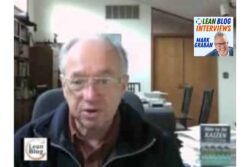
My guest for Episode #405 is Deondra Wardelle, CEO of her own company and one of the hosts of next week's virtual KataCon7 event. She is, among other things, a Visionary, Coach, Strategist, Speaker, Consultant, Kata Geek, Leader of the #RootCauseRacism Movement. Her mission is developing a world of problem-solvers.
You can register for 10% off of KataCon7 by using code LF10 (thanks to Lean Frontiers for that code). Deondra is also doing a Strategic Vision Board Workshop on Saturday and you can register with a 20% discount by using code LEANBLOG.
In today's episode, Deondra shares how and why she became a “Kata Geek” and how that built upon her continuous improvement foundations from her time in manufacturing. We'll talk about the similarities with Lean across industries (“it's always going back to the people”) and what “Respect for People” means to her. Deondra shares stories about how Kata helped her become a better manager — less of a micromanager. We also discuss communities including Lean Communicators and Women in Lean.
All of that — and more — in this episode… released early because of the timing with these two events — KataCon7 and Deondra's workshop.
You can view the recording of the free webinar that she presented on March 24th through KaiNexus: “Kata in the Community.”
The podcast is sponsored by Stiles Associates, now in their 30th year of business. They are the go-to Lean recruiting firm serving the manufacturing, private equity and healthcare industries. Learn more.
This podcast is part of the #LeanCommunicators network.
You can listen to the audio or watch the video, below. I hope you enjoy it like I did.

Deondra's Webinar:
Q&A From the Webinar:
Thanks for listening or watching!
This podcast is part of the Lean Communicators network… check it out!

What greater way to demonstrate respect for people than creating opportunities where a person can be the best that they possibly can be?
Deondra Wardelle
Follow the Lean Blog Interviews podcast
Since 2006, I've been talking with leaders, authors, and practitioners about how Lean thinking works in the real world, in healthcare, manufacturing, and beyond. Follow the show so you don't miss new episodes.
Episode Transcript
Jump to a section:
- Introducing Deondra Wardelle
- KataCon 7 and Kata in the Community
- How Deondra Discovered Lean
- It Always Comes Back to the People
- What Respect for People Means
- Becoming a Kata Geek
- How Kata Changed Deondra as a Manager
- When People Just Want to Be Told What to Do
- Moving Beyond the Starter Kata
- Visionary Lean Thinking and Strategic Vision Boards
- Vision, Strategy, and No Crystal Ball
- High Five Friday and the Lean Communicators
- Women in Lean
Announcer: Welcome to the Lean Blog Podcast. Visit our website at www.leanblog.org. Now, here's your host, Mark Graban.
Introducing Deondra Wardelle
Mark Graban: Hi, it's Mark Graban here. Welcome to Episode 405 of the podcast. It is March 12th, 2021. Normally, I would have released this episode next Wednesday, but I wanted to accelerate it a bit because of two opportunities coming up right away. Our guest is Deondra Wardelle. You're going to learn more about her when we get started. You can find links to everything we talk about, and learn more about Deondra and her work, at leanblog.org/405.
I have two discount codes to offer you. First is KataCon 7, brought to us by our friends at Lean Frontiers. It's taking place next week, March 15th to 19th, and Deondra is going to be one of the two hosts for the virtual event. You can register using code LF10 to get 10% off at leanfrontiers.com/katacon7. Then Deondra is doing a workshop on visioning on Saturday the 13th, and she'll be doing more of these in the future, as she'll talk about a little in the episode. The link to register is in the show notes, and you can use code LEANBLOG to get 20% off her workshop, which is only $75 to begin with. So here is our episode with Deondra Wardelle, talking about what she and others describe as being a “kata geek.” I hope you'll check out KataCon 7. Thanks for listening.
Mark Graban: We're joined today by Deondra Wardelle. She describes herself on her LinkedIn page as a visionary, a coach, a strategist, a speaker, a consultant, a kata geek, the leader of the #RootCauseRacism movement, and passionate about developing a world of problem solvers. I read that knowing all of those things are true, from having gotten to know Deondra over the past year. Deondra, thank you for joining us. How are you?
Deondra Wardelle: I am well. Thank you for the invitation. It's great to be here.
Mark Graban: I'm glad we're going to have this conversation. You call yourself a kata geek. We'll geek out together. How's that?
Deondra Wardelle: Oh, that sounds like so much fun.
Mark Graban: A little more about Deondra: she is president and CEO of her own firm, which she started last year. You can learn more at her website, deondrawardelle.com. If you listen to the Lean Whiskey podcast series that I normally do with Jamie Flinchbaugh, Deondra was a guest with both of us late last year, in Episode 23. So this isn't the first podcast we've done together.
Deondra Wardelle: No, it's not. And that was so much fun, and a perfect way to kick off the holidays.
Mark Graban: We won't talk about whiskey today, but just for background, Indianapolis is home for Deondra. The office you see there is located with our friends at Lean Frontiers. But you're from a prime bourbon place, if you want to tell the audience.
Deondra Wardelle: Absolutely. Home for me is Louisville, Kentucky. Although I was born in Compton, California, I grew up in Louisville, which is known, of course, for the Kentucky Derby and great bourbon.
Mark Graban: I learned something today. I knew you were from Louisville, but I didn't know you were born in California. That's not too far from where I'm sitting right now.
Deondra Wardelle: California is my birthplace. I lived there until I was a toddler.
KataCon 7 and Kata in the Community
Mark Graban: A couple of other things coming up before we get into the conversation. Deondra has a role next week as one of the hosts of the annual KataCon event, KataCon 7, March 15th to 19th. You can still register. They're describing it, and I'm going to ask you to tell us more, as a “pajama pants conference,” right?
Deondra Wardelle: Absolutely. What I appreciate about it being called a pajama pants conference is that this will be our first time gathering virtually, and we want people to still have that connection, the opportunity to network, have fun, and of course learn, but in a really relaxed environment. The folks at Lean Frontiers are true marketing geniuses for coming up with the pajama pants theme. And what's really cool is that I have my Kata Geek button, which has a flannel design in the background, so I've got to find some pajama pants to match my button for next week.
Mark Graban: That is clever of them. If people want to learn more and register, it's leanfrontiers.com/katacon7. Do I have it right that a lot of it is on demand?
Deondra Wardelle: It will actually be live, hosted via Zoom. In typical KataCon fashion, recordings of the presentations will be available afterward, and people can download the presentations in advance. All of that is available through the Lean Frontiers website.
Mark Graban (7m): So if people are concerned about schedule and timing, which is my concern, too, you can still get a lot out of it if you can't attend live. One other thing I want to mention is a webinar Deondra is presenting on March 24th, part of the KaiNexus Continuous Improvement Webinar Series. You can register at kainexus.com/webinars. In a nutshell, what is the webinar going to be about, Deondra?
Deondra Wardelle: In a nutshell, it's “Kata in the Community.” There's a play on words there. It will cover the basics of Toyota Kata for anyone who may be new or who has recently started learning about Toyota Kata, including the four steps of the Improvement Kata. I'll also share some things I've learned as a member of the kata community. One of the things we practice and remind people is that you should have a coach and be a coach, and I've been fortunate to be coached by some of the best in the kata community. So I want to share some of those golden nuggets, from my experiences and from KataCon 7. The last part of the webinar is about how kata plays well in the community, including my own experiences and those of colleagues who have taken kata to the streets.
Mark Graban: I look forward to that, and I encourage people to register at kainexus.com/webinars. One other thing to touch on briefly from the introductions: Deondra and I have had a chance to collaborate over the past year on a project she's dubbed Root Cause Racism. That's not our main topic today, but I encourage you to check out her website at www.rootcauseracism.com.
Deondra Wardelle: A lot of good stuff to check out.
How Deondra Discovered Lean
Mark Graban: If there's one question I ask everybody on this podcast, it's this: How did you first get introduced to Lean? What was the timing and context where you were working when you learned about Lean or continuous improvement? This predates “kata” being a popular term, right?
Deondra Wardelle: Right. I was first introduced to Lean and continuous improvement officially more than 20 years ago… so, like when I was a toddler. I was working at what was then called Jabil Global Services, an electronics repair company. The site director at the time was a huge proponent of 5S, and he started us on our Lean journey by introducing everyone throughout the warehouse and office environment to 5S. Whenever there were special projects, and that's what this was labeled at the time, I was tapped on the shoulder to assist. I learned so much working with Scott Stevens. We're still connected on LinkedIn. I learned so much from that experience, and I was bitten by the Lean bug.
As time progressed, I was introduced to Lean Six Sigma formally through the training and certification programs offered at Jabil. I really got more involved when I became the site's training manager. A primary goal for me and for the site director at the time, Mitch Lewis, was for every employee to be introduced to Lean. Although there was an online training module, we decided that to make it impactful and promote engagement, we'd transform those modules into classroom training, and we rolled it out to the entire site. We weren't only teaching the methodologies; we were showing people how to apply them in their workplace. And the rest is history.
It Always Comes Back to the People
Mark Graban: You've worked in manufacturing and in other settings. What have you learned along the way about the similarities, where you say, “Lean is Lean, kata is kata,” and the differences, as you've navigated different organizations?
Deondra Wardelle: I've worked in a number of organizations and industries: banking, retail, manufacturing, and nonprofit work. The one thing that remains consistent is that it always goes back to the people. It's about tapping into the creativity that's within everyone, regardless of their title or responsibilities. It's getting people more engaged in the work, showing how what they do every day connects to the objectives and goals of the organization and how they're a key part of that, and making sure people have a voice and the means to recommend ways to improve a process and sustain those improvements. I've worked in organizations that were heavy Lean, heavy Six Sigma, both, or new on their journey and calling it something different. But it always comes back to the people: developing people to improve processes to satisfy customers.
Mark Graban: That's well said, and it's a good reply when somebody hits you with, “Well, we don't make cars here.” That was true at Jabil. It's true at Boeing. It's true in healthcare. It's not about building cars.
Deondra Wardelle (14m): No. Even Toyota talks about how it's not about building cars. It's engaging team members to think and be creative and develop those skills. And because people say “we're not building cars” or “this isn't manufacturing,” I've set it as my goal and mission to help show people that Lean is everywhere. Continuous improvement is everywhere. I've been fortunate to lead others in applying Lean in volunteer organizations, nonprofits, and heavy service companies that don't deliver a product, and it still works. Why does it work? Because no matter where you are, there's some process you're following, whether it's documented or based on tribal knowledge. There are always people, and in the end you're trying to deliver a product or service to a customer or the community you serve. It all connects.
Mark Graban: When you say Lean is everywhere, Lean can be anywhere, but unfortunately there are too many organizations that aren't focused on people development. They don't tap into the creativity of everybody in the workplace, regardless of role, education level, or other distinguishing factors. That's part of the opportunity, to close some of the gap between the current state and the ideal we're shooting for, right?
Deondra Wardelle: Mark, I'm so glad you clarified that point. When I start talking about Lean with a fellow Lean geek, and I'm calling you one since we're geeking out today, sometimes I'll look at things through rose-colored glasses. I think about the features I do on High Five Friday. One of the goals is to spotlight not only people in the Lean community who know the terms, but people who don't consider themselves Lean practitioners but are looking for ways to continuously improve. They're demonstrating respect for people. They may not know the exact terms or have a certification, but they're practicing Lean. And to your point, in organizations where opportunities like that don't exist, the ideal state is that at some point they'll see the importance of incorporating Lean into their business practices.
Mark Graban: You're right to point out that optimistic view of intuitive Lean, things that remind you of Lean, where people from different perspectives have similar ideas. Some of these ideas aren't exclusive to Lean. They go back millennia. There are plenty of organizations that focus on developing people without using Lean terminology or saying they're inspired by Toyota, and there are organizations with a very strong, healthy respect for people. So there's that gap, but there's also sometimes the nice discovery of, “This seems like Lean.” Whatever label we put on it, it's good.
Deondra Wardelle: Right.
Mark Graban: For those who aren't watching on YouTube, Deondra has so many great pairs of glasses. These are not literally rose-colored.
Deondra Wardelle: No, they're not literally rose-colored. Not today. Although I do have a pair of rose-colored glasses, but that's a topic for another podcast.
Mark Graban: We'll do a podcast about glasses and fashion sometime. It's a different audience.
What Respect for People Means
Mark Graban: When you talk about always going back to the people, if somebody asked you, Deondra, in the context of Lean and kata and related frameworks, what does respect for people mean to you?
Deondra Wardelle: What respect for people means to me ties into another aspect of my work that's really important to me: connecting people to their purpose so they can achieve their goals. Respect for people means providing a space and an opportunity where creativity can flourish, where people are allowed to experiment and try new things without fear of failure, recognizing that whatever they want to pilot or attempt is an opportunity for learning. Whenever there's an opportunity for learning and creativity can be openly expressed, that's an opportunity for a person to develop and become the best they can be, not only in whatever role they hold in an organization, but in life. What greater way to demonstrate respect for people than creating opportunities where a person can be the best they possibly can be?
Mark Graban: The best they can be in their role, and developing people and giving them skills they can use to advance in their careers. Problem-solving and other Lean methods really help equip somebody to be more successful, wouldn't you say?
Deondra Wardelle: Absolutely. In organizations where I've worked, the challenge can often be finding talent when there are openings or opportunities for advancement. In a Lean environment where respect for people is demonstrated, part of that is providing educational opportunities, learning about Lean methodologies, principles, and tools, so a person can build their resume, so to speak. Then, when opportunities for advancement become available, they're ready. It helps prepare people for succession planning or whatever they aspire to do. When you have environments focused on continuously improving, moving closer to the ideal state, and involving people, it all ties together. It's not only good for the people who work there. It's good for business and good for customers. It's an opportunity to be a win-win for everyone.
Mark Graban: Lean provides a lot of win-win scenarios, or allows us to break down perceived trade-offs. People in manufacturing might say, “We can't afford better quality.” Well, it doesn't have to be more expensive. In healthcare, people might say there's a trade-off between patient safety and cost. That's not really true either. That's the beauty of this. It allows us to say “and” instead of “or” when we have different goals.
Deondra Wardelle (22m): Exactly.
Becoming a Kata Geek
Mark Graban: Let's talk about Toyota Kata. I know you and others call yourselves kata geeks. I have a T-shirt that says “Lean Geek,” so I don't mind the geek label. I'll embrace it. We heard a little about your Lean origin story. Do you remember when you first heard about Toyota Kata? How did you get pulled into all of this?
Deondra Wardelle: Absolutely. It was when I was in the printing and paper industry. People who grew up in that industry sometimes say they have ink in their veins. That work is really looked at as an art form, and there's creativity, but at times there can be variation, and that variation can lead to a number of opportunities for improvement. I was working with some teams who were having challenges with variation in their processes that caused a gap between what the customer expected and what the customer received. At the time, I was responsible for continuous improvement for all of our sites in North America, Europe, and Asia.
One of my team members, Mike Jones, an avid reader, came across the book Toyota Kata. Mike said, “Deondra, you have got to read this book. A lot of what we've been talking about and applying, using Lean for problem-solving and developing people and addressing the challenges we're seeing in the work, Toyota Kata addresses, and in such a user-friendly way. I really believe the organization would embrace it.” I said, “Sure, I'll check it out.” It was a page-turner. I could not put the book down. After that, I had to learn more. As I was online learning as much as I could about Mike Rother and his work, I ran across an opportunity to register for KataCon, and that was my first KataCon.
Hearing how people in other companies had applied kata, after trying a number of other methodologies they'd tried to introduce broadly across an organization… the approach of developing one learner at a time through one storyboard, and how practical the steps were for addressing whatever issue, no matter the industry. I just became totally hooked. At that first KataCon, I had my first coach, Tracy Defoe, who I talk about often. And the community itself: people are so open to helping one another and so eager to answer questions or provide whatever assistance. When I returned to the office after KataCon, any question I had or information I needed was just a phone call or an email away, including from Mike Rother himself. The community became interested in the work I was doing with the company and wanted to ensure we were successful. I was sold after that.
I've been through every online training, including the training offered by Dr. Liker, and I began to follow Tilo Schwarz and his work, Dorothy Sherman, and Karyn Ross, a number of great people who are so open to sharing information and being helpful to others. In turn, I was able to share that information with the organization where I was employed, and with organizations where I volunteer. If we had a great challenge or some big aspiration, we were able to apply the steps of the kata and accomplish it.
How Kata Changed Deondra as a Manager
Deondra Wardelle: I often say the kata changed my life, because it really affected how I operated as a manager. I felt like I was someone who was pretty open and very collaborative, but I didn't realize how much of a micromanager I was until I introduced the kata, even internally within my team. The relationships and the trust that grew as a result of practicing the kata were amazing. I know I talked a little long answering that question, but I really get excited. I'm really passionate about what the kata can do. It's a game changer.
Mark Graban: Don't apologize for sharing that passion. That's what the podcast is for. For those who are just listening and not watching, when Deondra says she couldn't put the book down, it's over her shoulder. She doesn't let it get far away, right?
Deondra Wardelle: I do not. I will let people borrow the book, but they have to sign it out. There's a whole process, because Mike has autographed it. You can't see it, but in front of the book is a mug with the five coaching questions from the card used as part of the Improvement Kata and Coaching Kata. So yes, it's very near and dear to my heart, right over my shoulder in the background.
Mark Graban: You're very trusting to lend out that copy, instead of having a second copy just for lending.
Deondra Wardelle: I know. In the last company where I worked, it was a member of the IT department. I noticed that although she hadn't been formally introduced to Lean, she operated in a way that showed she understood the principles. I didn't talk about kata openly, because that environment was relatively new on its continuous improvement journey, so I'd drop little breadcrumbs here and there. She was so eager, and she was someone who was trusted, so I let her borrow the book, and she returned it safe and sound.
Mark Graban: Hopefully they respect you enough to bring it back.
Deondra Wardelle: Oh, absolutely.
Mark Graban: I was wondering if you could elaborate a little. When you talked about how kata helped you be less of a micromanager, can you walk through a scenario, a time when Deondra 1.0 might have micromanaged, and Deondra 2.0 used kata and engaged people differently?
Deondra Wardelle: Absolutely. Deondra 1.0… I like that. During that phase, I felt like I had to have all the answers, or I was failing my team. I wasn't a good leader. If a member of my team came to me with a question and I didn't immediately know the answer or couldn't give them direction, or if we were working on a project and I didn't have a complete step-by-step outline, I felt like I was failing them or overburdening them. I perceived myself to be a very open, honest, easy-to-work-with manager, but I didn't realize how much I was stifling the team and holding them back.
The eye-opener for me came after being exposed to the kata, early on when I started as a learner with my own storyboards. Poor Tracy deserves an award, because I always knew what I wanted to accomplish. I didn't like being in that area of discovery and the unknown, so she really had to work with me on not jumping ahead, but going through the steps and identifying my target condition.
Early on, as a new coach, I started coaching my team. There was a project the team was working on, and I said, “You're empowered. You're making the decisions. I'm a resource. I'm here to help you.” Early on, they drafted one team member to approach me, and he said, “Deondra, before we get too far into this, we want to get your opinion.” I said, “You're working on it. Whatever you decide is fine.” He said, “No, nope, nope. We know how you are. You're a perfectionist. We don't want to get too far in. Just tell us how you want it.” And I thought, “That is not a good way to lead a team.” That began to open my eyes.
As I started working with team members individually on their storyboards, toward whatever target condition they were trying to reach, if I thought I knew what the next step or the answer should be, I would bite my tongue. I didn't want to impose that on them and interrupt their experience and their learning. And nine times out of nine, whatever step they took or idea they came up with was 100 times better than what I had envisioned. That freed me up to become Deondra 2.0 and realize you don't have to have all the answers. Part of being a good leader is setting your team up to be successful, to grow, and to identify the solutions to whatever they're trying to resolve, and coaching them along the way without giving them the answers or feeling like I had to have the answers. I'd say now I may even be Deondra 4.0, because the more I practice as a coach and as a learner, I continue to evolve and have new epiphanies about how all this works.
Mark Graban: That's what it's all about: continuous improvement, with new version numbers and new releases.
Deondra Wardelle: Absolutely.
When People Just Want to Be Told What to Do
Mark Graban: What you're describing sounds like familiar leadership dynamics. Someone I've interviewed a number of times, Dr. John Toussaint, tells a very similar story about his own transformation as a leader, shifting from what he called, in a medicine context, being a “white coat” leader: all-knowing, all-powerful, telling people what to do. The other part of your story is familiar, too, where a leader, or leaders before you, condition people. Someone asked me an interesting question, and I want to hear your thoughts. We talk about engaging people in improvement, whether we label it kaizen or kata or A3. And somebody asked, “What if your employees just say, ‘No, I just want you to tell me what to do'?” I think they've been conditioned to feel that way. In a way, it's easier when the boss gives you the answer. If it's wrong, you can say, “Well, my boss stinks.” Getting people out of that old dynamic can be challenging. What are your thoughts on situations like that?
Deondra Wardelle: I've observed situations where employees say, “Well, just tell me.” It's because of previous experiences where they tried to recommend something and it wasn't well received, or it backfired on them. They don't want to invite another scenario like that, so they say, “Just let me do my work. Tell me how you want it done, so we don't have this back-and-forth and any disappointments.” It's unfortunate when employees feel like, “Let me just do whatever you need to keep the peace and keep things moving so I can get back to work.” Because when an employee reaches a stopping point or has an issue where they need to collaborate with their manager, how comfortable do they feel escalating it, versus just finding a workaround on their own? I think that can lead to other potential problems.
Mark Graban: All kinds of problems. As you said, most of the time the people doing the work have a better understanding of the situation, and they can develop better solutions. When they fall back into “Aye, aye, captain, I'll do whatever you say,” I've seen bad things happen in different workplaces, things that were preventable. It's tough to get people out of that.
Moving Beyond the Starter Kata
Mark Graban: We can think of a starter culture change, or, bringing it back to kata, the idea of a starter kata. You pointed to that coffee cup with the coaching questions. Some people learning kata might say, “Just tell me how to do kata.” The starter kata serves that purpose, but my understanding is that we can eventually move beyond the starter kata. We can evolve and adapt. What's your experience been?
Deondra Wardelle: That's exactly it. The starter kata provides the framework for the pattern, or the behavior, that you're seeking to develop. The term “kata” comes from martial arts. It's not an acronym, and it's a way of doing. Anyone who has practiced martial arts knows there's a set form for how you do things, and once it becomes routine or a habit, you can modify it. Think about someone learning to play an instrument. They have to start by learning the basics, and once the pattern is set, they can improvise and add other elements.
The same is true with the starter kata. People feel weird about it, and I can attest to that myself. I felt like I had to have the questions memorized, so I would go off-script. There is a framework and a guideline with the questions, and there are times when you need to go deeper. But early on, I might skip a question because I wanted to feel like, “Oh, I've got this.” Thankfully, I had a very patient and disciplined coach who would say, “It's okay, Deondra, to read the questions as is.” The starter kata teaches that: have the card in your hand and read it verbatim, because it helps you develop the practice and get familiar with the steps. What I've experienced, and what I've seen with the people I've coached, is that it becomes second nature. You realize you're going through the steps without having to read or reference anything, because it's become a pattern, a practice you've applied to a number of different situations.
Visionary Lean Thinking and Strategic Vision Boards
Mark Graban: One other thing I want to pick your brain on. I enjoyed the webinar you did recently through the Just in Time Cafe, and I'll post a link to the recording in the show notes, about visioning and strategic vision boards. I was reminded of a quote from Pascal Dennis, formerly of Toyota Canada, who has written great books, including Lean Production Simplified. I've heard Pascal say that Lean is not just a scavenger hunt for waste. I think that's thought-provoking, because there is a lot of waste we can react to. We can solve problems and eliminate defects. But visioning comes at all this from a very different direction. Can you tell the audience what you mean by visioning and strategic vision boards?
Deondra Wardelle: In that webinar, I talked about visionary Lean thinking. At the heart of Lean thinking are purpose, process, and people. Visionary Lean thinking has evolved for me over time, and it's touched the different areas I've worked in. In any organization I've worked in, I've either participated in or led the strategic planning process, and that starts with the vision. With the Improvement Kata, the first step is the challenge, the direction we want to go in. In a working environment, you start with the vision. You have to understand why we're in business and why we're doing what we're doing. Lean thinking, the visionary aspect, the PDCA cycle, and Toyota Kata all connected for me the first time I participated in a vision board workshop. As the facilitator shared the steps for building our vision board, it went in one ear, processed through my brain along with strategic planning and the kata, and came out as a strategic vision board.
With visionary Lean thinking, it's important to understand the vision, that ultimate purpose, the big aspirational thing, and I'm doing air quotes here, that we want to accomplish, in business or personally. You have to have line of sight toward that ideal state. But the way our brains work, if you think about this huge thing you're trying to accomplish, it can be overwhelming, I don't care who you are. The brain starts to say, “Can you do this?” and it can trigger things that hinder us from figuring out how to even get started.
That's where Lean, the PDCA cycle, and the kata come into play. We have this big aspiration, or as the question asked in framing the challenge in kata goes, “Wouldn't it be great if…?” Then you step back and look at the current condition. Where are we now? Then we set a target. What's the smallest bite we can take out of this elephant of a challenge? It's good to have the vision, so we have a picture of what we want to accomplish, but we may not know the intricate steps to get there. That's where Lean thinking, methods, principles, and the steps of the kata help provide the path. It's not a straight or smooth path, but it's a path of experimenting, testing, trying, learning, and doing, continuously, to take you toward that vision.
Mark Graban: It's an emergent path. I hear parallels between visionary Lean thinking and strategic vision boards: you've got to be proactive and aspirational, not just reactive. And then there's the path. “Knowledge threshold,” is that the phrase used a lot in kata speak?
Deondra Wardelle: It is. The threshold of knowledge is the point where you don't know what's next. You've reached the point that's beyond your experience. It's something you haven't done before. Some people even refer to it as unknown territory.
Vision, Strategy, and No Crystal Ball
Mark Graban: One other parallel: I've interviewed a number of people on this podcast, including Eric Ries, about the Lean Startup. Lean Startup flies in the face of the old entrepreneurial and venture capital approach of asking every entrepreneur to develop a five-year business plan. I think even the communists have stopped doing five-year plans. Nobody has a crystal ball. Lean Startup is more about having a vision and an aspiration, and then figuring out the small steps we can take to test product-market fit and validate the business model. Whether you call it Lean Startup or kata, as an entrepreneur, Deondra, you're probably looking at the same thing. What's your vision for yourself and your company? Your crystal ball doesn't go out five years, I'm sure. No offense.
Deondra Wardelle: None taken. It's great to have a vision, because it connects you with your purpose, why you're in business or why you want to do whatever you want to do. But strategy and execution need to connect. As an entrepreneur, especially in 2020, who could have predicted all the things we experienced? Who can predict what we'll experience in any year? No one has a crystal ball. With a vision, you know ultimately where you want to go, but as 2020 throws curveballs at you, you may swerve a little, but you know you're on a path. You'll overcome that hurdle or dodge that curveball, but you're clear about the direction you're heading.
That's another reason that, in the visionary Lean thinking webinar, I talked about strategy and alignment. Businesses have strategic plans, these big, overarching, “wouldn't it be great” ideal states, set a year or two out. But how does that cascade throughout the organization? How does it translate to employees and the work they do every day? Ensuring they can clearly see how their work connects to the big vision is what helps spark creativity and promote engagement and buy-in, because they see that the tactical, day-to-day work and the improvements all connect with the vision. That applies personally, too. When I set out on this journey in September as an entrepreneur, I've turned a corner and changed some things from the direction I thought I'd be going. But ultimately my vision is to create a world of problem solvers. The things I'm doing may be changing, but they're still aligned with putting Lean, continuous improvement, and the kata in everyone's hands.
Mark Graban: If you want to learn more about what Deondra is teaching and coaching people on, check out that webinar from the JIT Cafe. And Deondra, you often run workshops if people want to go deeper. People can learn more at deondrawardelle.com, correct?
Deondra Wardelle: That is correct.
High Five Friday and the Lean Communicators
Mark Graban: Last segment before we wrap up, and I'm going to ask you in advance: let's do more episodes as different topics come up over time, okay?
Deondra Wardelle: Deal.
Mark Graban: When you talk about community, one community Deondra and I are both part of is the Lean Communicators. At leancommunicators.com you can find podcasts, including this one, and Deondra's YouTube channel content is embedded there. Tell the audience about the High Five Friday videos, if they haven't seen them.
Deondra Wardelle: I have to thank my good friend Panos Efstathiou, another member of the kata and TWI community, for challenging me to start doing more videos, because I was nervous about being in front of the camera. I wanted to give a high five to people who are using Lean to make a difference, whether or not they're members of the Lean community or Lean practitioners, or new on their journey. What started as a project is the highlight of my week. They're very quick videos with information about the person or organization being featured, and I also write a blog about them, available on my website, deondrawardelle.com. Every week, it's an opportunity to shine a light on someone doing really meaningful things. They may see it as something small, but it's having a huge impact, in manufacturing, outside of manufacturing, in a number of industries, and in the community. I have so much fun doing those videos and spotlighting the work of others.
Mark Graban: There may be a podcast in the future. Deondra often says, “I've got ideas.”
Deondra Wardelle (52m): Yes. I'm so torn. There are about eight different podcasts I want to do, which of course isn't realistic. Wouldn't it be great if I could do eight podcasts? As a member of the Lean Communicators community, I see all the education, good information, and tools that you and so many others share through your podcasts. Potentially, could High Five Friday evolve into a podcast where I interview those guests, to learn more about what they're doing and how they're applying Lean, or, if they're new on their Lean journey, what they're discovering that could help someone else? So much to think about. I'll probably have to do a storyboard about it.
Women in Lean
Mark Graban: Keep talking about that, and I'm sure there are exciting things ahead. The other community I wanted to mention is Women in Lean. We should get a panel of some of the members of Women in Lean together and do an episode. In a nutshell, what is the Women in Lean group, and how can women who are listening learn more?
Deondra Wardelle: The Women in Lean group, which is going into its second year, was founded by Karyn Ross, Dorothy Sherman, and Crystal Davis, all giants in the field of Lean. There's a group on LinkedIn called Women in Lean. Anyone interested in joining can search for it and join, and you're welcome. It's a place for women to come to learn, share, and support one another. It's a fabulous community. Last year, we started doing these online conferences called Interchanges. You learn so much, you could almost take away a CEU credit. The contribution is that you have to be willing to participate. A number of people do short presentations or topic reviews. It's a really great community for growth and learning for women in Lean.
Mark Graban: I hope people will check that out. I apologize, there was a scheduling error on my part, so we're a little squeezed for time. Our guest has been Deondra Wardelle. To recap what's coming up: KataCon 7, March 15th to 19th, the virtual pajama pants event, at leanfrontiers.com/katacon7. Deondra is doing a webinar in the KaiNexus series, “Kata in the Community,” on March 24th. I'll be hosting and moderating. You can register at kainexus.com/webinars, and if you're listening after the 24th, you can find the recorded webinar there or on the KaiNexus YouTube channel. Deondra's websites are rootcauseracism.com and deondrawardelle.com. Deondra, I'm really glad we could do this. I said, “Wouldn't it be great if I could have Deondra on the podcast?” And here we have it.
Deondra Wardelle: Here we have it. Thank you for having me. This has been so much fun, Mark. It's always great to talk with you.
Mark Graban: Likewise. Thanks for doing this.
Announcer: Thanks for listening. This has been the Lean Blog Podcast. For Lean news and commentary updated daily, visit www.leanblog.org.