Lean Blog by Mark Graban | Lean Management and Healthcare
Practical insights from Mark Graban on Lean management and continuous improvement, leadership, psychological safety, healthcare, and manufacturing.
Practical insights from Mark Graban on Lean management and continuous improvement, leadership, psychological safety, healthcare, and manufacturing.

You finally found the perfect hire. The one who did this exact job, at a company just like yours, for six years. No training required. You felt the relief of it. Someone who already knows the work, who can start…

Mike Stoecklein recalls a story secondhand. It was, he thinks, at one of the last four-day seminars W. Edwards Deming ever gave. Deming was frail by then. Someone later told Mike that when the seminar got to the Red Bead…

TL;DR: Rory Sutherland’s Alchemy is a useful provocation for Lean practitioners. Lean already knows how to test small, low-cost ideas without demanding an airtight ROI in advance. We sometimes forget. A Small Idea, Quietly Killed A few years ago, I…

In March 2007, Jim Womack told me about his biggest disappointment. The Machine That Changed the World had been out for more than sixteen years, sold around a million copies, and was about to be reissued with an updated subtitle:…

In 2007, I wrote about a BBC article that included a number I’ve never quite been able to shake. Workers at Toyota’s Georgetown, Kentucky plant were pulling the andon cord – the mechanism that lets any worker stop the line…

I watched the HBO documentary “Fukushima: A Nuclear Nightmare” the other day. It’s chilling. The film gives a detailed account of the nine days after the March 2011 earthquake and tsunami, focusing on the workers who risked their lives to…
Here’s the most famous example of root cause analysis in the Lean world, from Taiichi Ohno’s book on the Toyota Production System. You’ve seen it in training decks, conference talks, blog posts. I’ve shared it myself plenty of times. See…
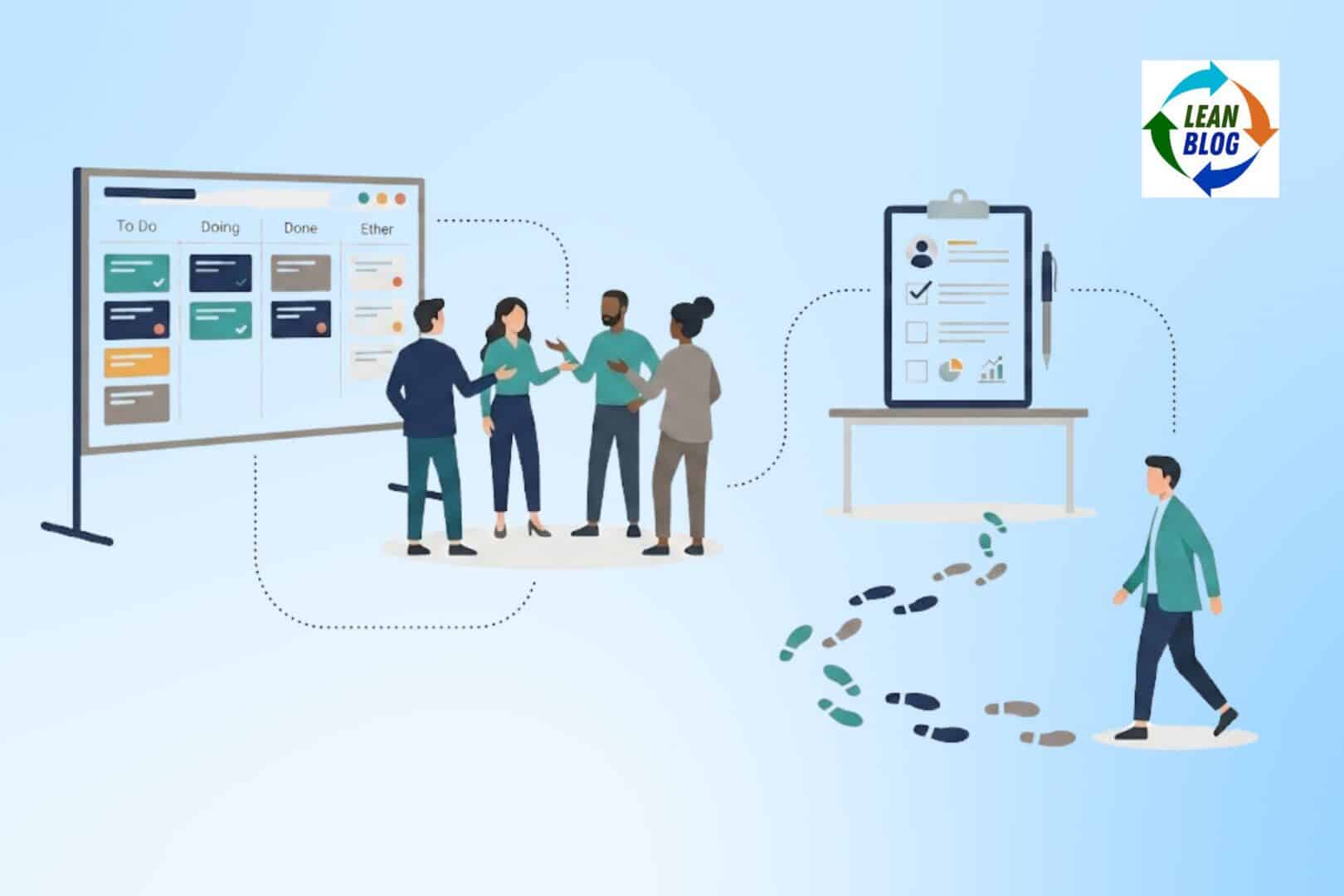
TL;DR: Lean daily management is the system that makes improvement happen between the projects — visual boards, huddles, gemba walks, leader standard work, and strategy alignment working together. The boards don’t do the work. The leadership behaviors do. Most Lean…

TL;DR: Organizations invest in teaching people to see problems and solve problems — but skip the middle step: making it safe and worthwhile to speak up about them. I’ve seen blank huddle boards in hospitals. Cards and markers sitting untouched.…

TL;DR: Kaizen means “change for the better.” Everyone improves their own work, one small change at a time, using the scientific method. It’s not a suggestion box — it’s collaborative, fast, and action-oriented. Success depends on leadership engagement and psychological…
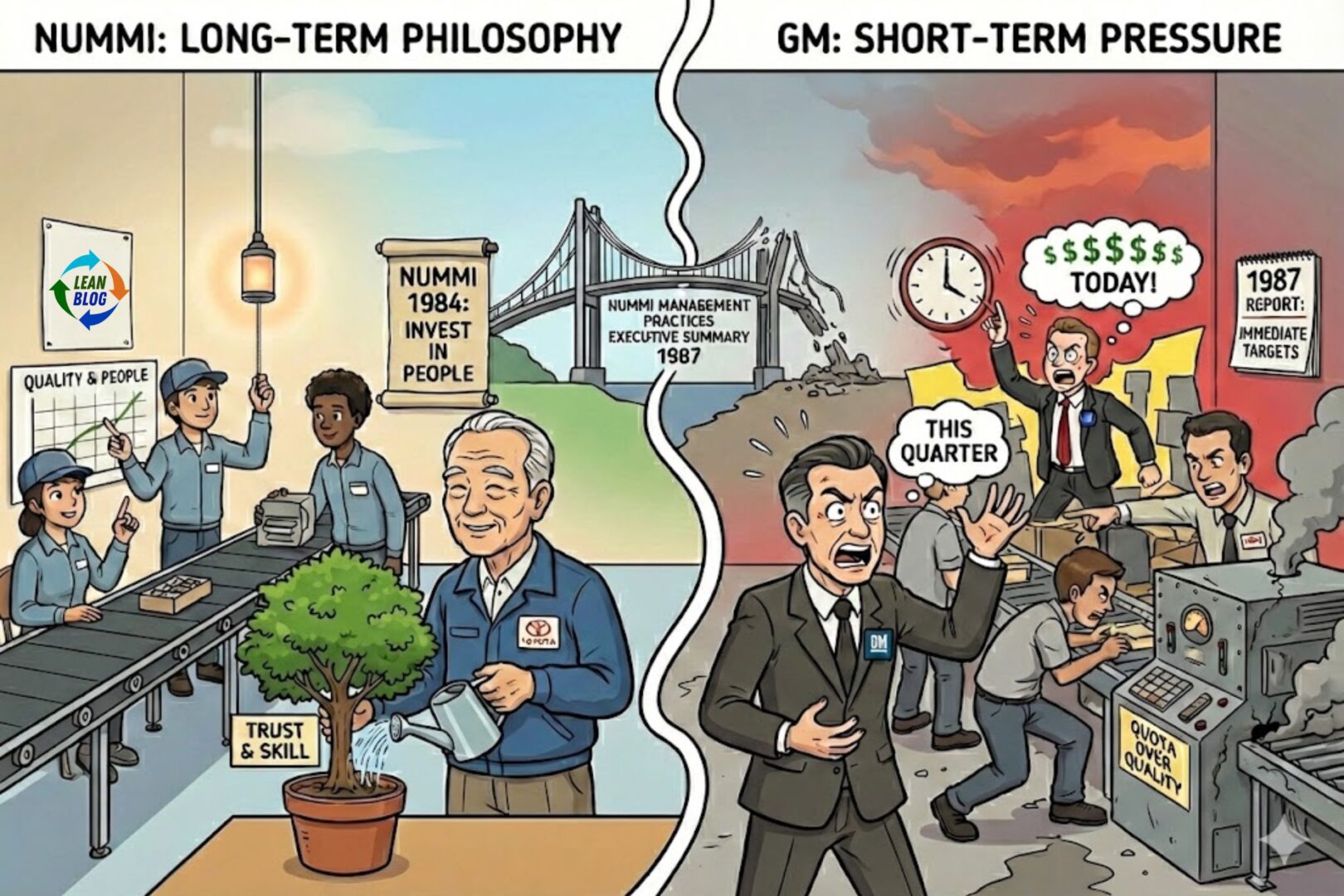
TL;DR: GM said it believed in long-term thinking. NUMMI actually practiced it. A 1987 GM executive summary admitted that short-term financial pressure drove decisions at GM far more than at NUMMI. The difference wasn’t philosophy — it was system design.…